

Pitmasters Agree On One Thing When It Comes To The Best Way To Season Brisket
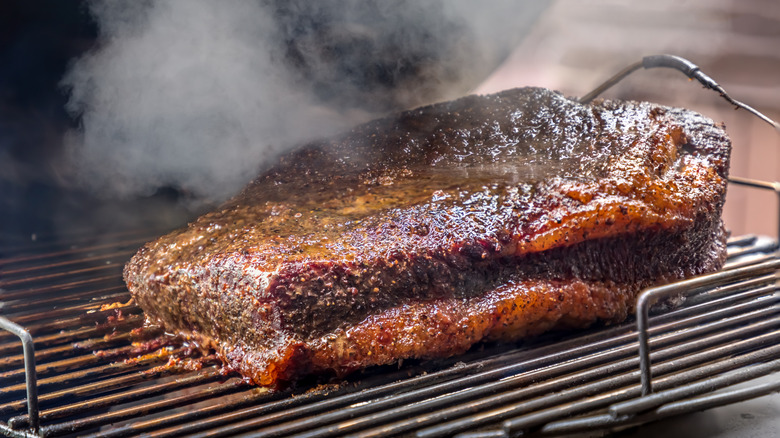
Brisket is ridiculously good. In fact, if barbecue had a throne, there's a good chance brisket would be sitting right on top of it. Smokey, tender, and slow-cooked to perfection, it's one of the best cuts of beef to ask your butcher for. But preparing brisket requires patience. It can take more than 13 hours to cook at 225 to 250 degrees Fahrenheit, which is the best oven temperature for juicy and flavorful brisket. Still, time and temperature aren't everything. Seasoning matters just as much. And if there's one thing several pitmasters agreed on in an exclusive talk with Chowhound, it's that the best brisket typically starts with nothing more than good old salt and pepper.
Jorge Thomas, trained chef and butcher, and founder of Swaledale Butchers, stated that a simple dry rub of salt and pepper applied a day ahead can do wonders for brisket. It will allow all the spices to work their way into the meat and also help develop a proper bark (the crispy outer layer). "The main thing is seasoning it properly and giving it time to sit before it goes near the smoker," he added.
However, Ryan Mitchell, a pitmaster and co-founder at True Made Foods, pointed out that while salt and black pepper are the ideal brisket seasoning, garlic powder can also be a worthwhile addition. "The only acceptable seasoning blend for brisket is sea salt and black pepper, maybe some garlic powder," Mitchel shared. However, he warned that "Whatever you do, don't ever put a seasoning rub that contains sugar on a brisket or any red meats."
Don't be afraid to get creative with your brisket seasoning
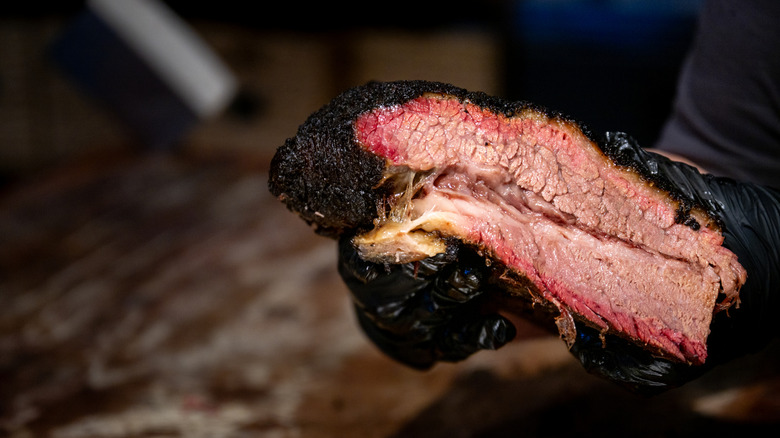
While sugar can overpower the bark and mask brisket's true flavor, Cynthia Monroe, a Spiceology culinary associate and American Culinary Foundation Certified Executive Chef (CEC), emphasized she isn't afraid to use it. "I lean toward the sweet and spicy direction. Brown sugar, smoked paprika, salt, red pepper, granulated garlic, granulated onion, and cayenne," Monroe explained.
Amy Mills, owner of Illinois' 17th Street Barbecue, said adding lemon pepper in a simple salt, black pepper, and garlic rub is a great way to give brisket a brighter note. She uses this seasoning mix beyond brisket too, adding it on anything that calls for salt and pepper, like eggs and vegetables. According to Dylan Clay, founder of Barbecue FAQ, seasoned salt is yet another worthwhile addition to salt and pepper, whether you make a homemade blend or pick a store-bought option like Lawry's.
Christie Vanover, champion pitmaster plus CEO and founder of Girls Can Grill, said kosher salt, one of the salts experts recommend having in the kitchen, is her go-to seasoning option. Some cumin and a few chilies can also work. "I use ½ to ¾ tablespoon of rub per pound of raw, untrimmed brisket," she highlighted. Finally, Jed Hanson, executive chef at PS Seasoning, advised seasoning generously, regardless of the blend you choose — there's no such thing as adding too much seasoning to brisket, after all. "Brisket has a lot of surface area, which also means a lot of meat," he concluded. "You need enough seasoning to build a flavorful bark."