

This Common Grilling Tool Can Spell Disaster If You Use It In The Rain
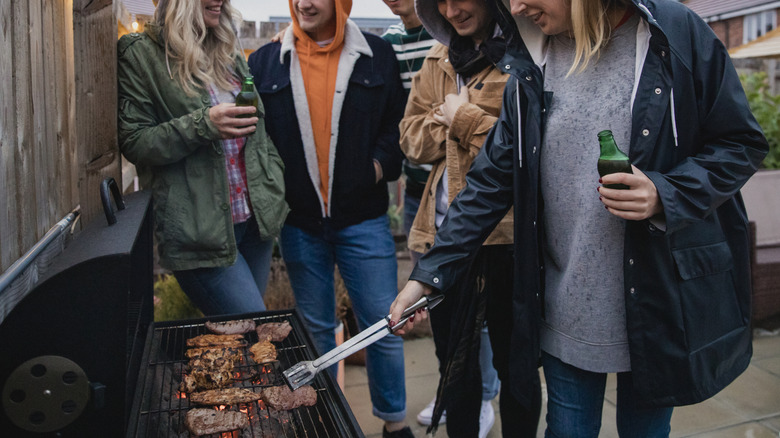
Grilling when it's nice out is easy enough, but doing it on a rainy day is a different story. Things can go south very fast if you don't observe proper safety measures while grilling in the rain. Chowhound spoke exclusively with two outdoor fire experts to find out how to avoid any nasty accidents when cooking in inclement weather. The verdict? Be careful with the lighter fluid.
Joe Bassett, founder of Valiant Outfitters LLC and The Valiant Wilderness Collective, says bluntly, "Lighter fluid plus the frustration of lighting a fire in the rain can be a volatile mix." He advises that a bit of patience when lighting up a campfire or the grill will give you a better outcome. Bassett also mentions the common mistakes people are making: dumping too much lighter fluid on wet wood, and not waiting for it to be fully absorbed before taking a lighter to it with their face hovering over the grill. "That's when eyebrows disappear, and bad decisions become cautionary tales," he says.
And Chris Emery, publisher of the Ordealist, has the same sentiments. He explains, "The real danger is adding fluid to coals that are already lit. Flame can run up the stream back to the can, and suddenly, you're holding a torch or the can explodes." Because of the continuous dousing, vapor eventually accumulates, and waiting a bit for it to evaporate can help avoid a bigger fire. To learn how to grill like a true master, you have to conquer cooking in the rain.
Starting your grill safely on a rainy day
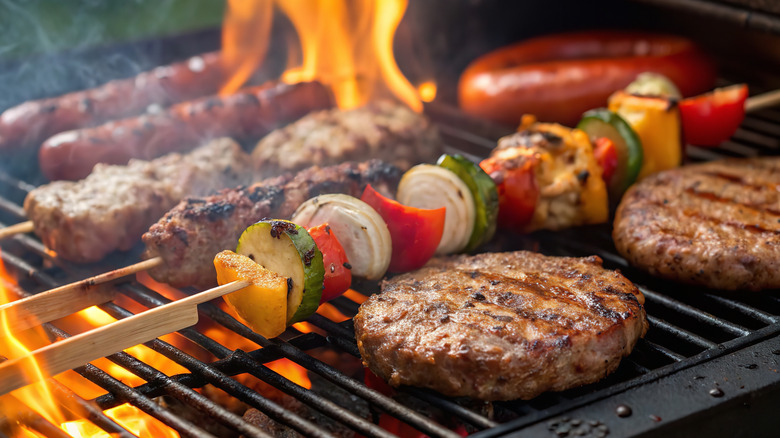
To prevent the rain from dampening your plans and grill successfully and safely, avoid a grilling mistake before you even start. Instead, both experts advise being open to a little change of plans. "The best plan is to skip the open fire," Chris Emery says. "A camp stove lights right away, works in rain and wind, and doesn't need dry wood."
That said, if you really want to use a campfire or grill, take precautions. "Only add accelerant to a cold, unlit pile, then cap the can and set it well away before you strike a match," Emery advises. If you prefer another way, try dry fire starters. Joe Bassett enumerates, "Feather sticks, fatwood, birch bark, cotton balls with petroleum jelly, or even dry inner wood shaved from dead standing timber ..." Using these types of kindling can make a difference, as they can easily catch fire even if the environment is damp.
Rather than focusing on starting a fire, Bassett further advises to focus instead on protecting your ignition. There are many ways to do it, like seeking shelter with a roof. If the rain is accompanied by strong wind, find a way to obstruct it by using something like a tarp. But, pay attention to what you're using as a shield and ensure it stays a safe distance from the grill.
And if you're still not convinced, here's an interesting insight from Bassett: "Firecraft is less about flame and more about patience. Anybody can make a big fireball. The trick is building a sustainable fire that doesn't also qualify as a survival story."