

How Much Of The Beef In Your Fridge Comes From The US?
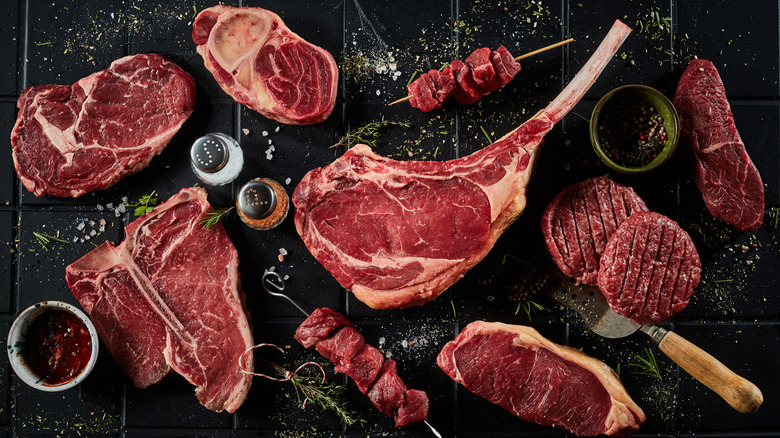
Shoppers who purchase beef from the grocery store are given choices that come from the United States as well as from international trade partners. It can be challenging to discern where each cut of beef originated, as there are numerous complex trade issues that affect the makeup of the U.S. beef supply. But there are a few things that can help you purchase meat from a preferred source.
In 2025, roughly 83% of beef consumed in the U.S. was produced domestically. The U.S. first set a record in 2023 for beef imports, which have increased in recent years, with imports currently more than double the amount imported in 2011. Domestic production in 2025 was down 4% at 26 billion pounds, the lowest since 2016. These issues have led the U.S. to import more beef, which accounted for 17% of the supply in 2025, and up to 18% through 2026. If you're curious about where the U.S. gets its foreign beef from, a list on Statista breaks down beef imports as follows: Brazil (24%), Australia (21%), Canada (16%), New Zealand (12%), and Mexico (11%). It's important to note that the percentages account for the total of imported beef, not total beef sold.
The demand for beef is high, as Americans consume a large amount of beef. The U.S. Department of Agriculture suggests the average American consumes roughly 67 pounds per year. The high demand for beef in the U.S. is one factor that leads to higher prices. Higher production costs, tariffs, and smaller cattle herds also contribute and are among the reasons beef is so expensive in 2026.
Domestic beef production and knowing the origins of meat
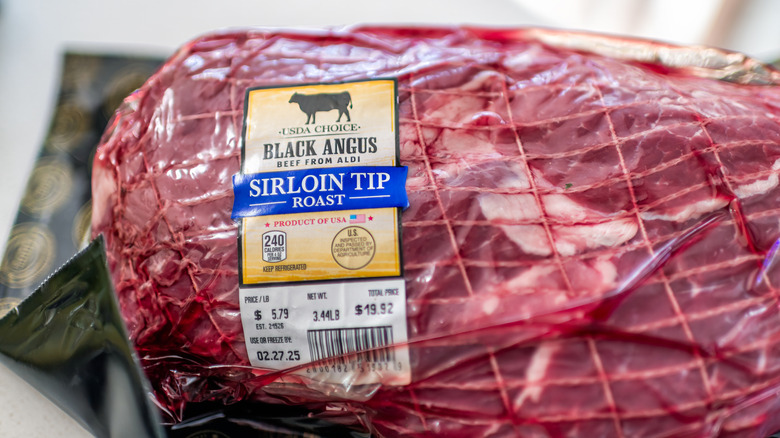
Despite the current upward trend of U.S. beef imports, the USDA predicts the potential for a rebound of domestic beef production. Although domestic production may continue to decline until 2027, it is predicted to increase through 2034. Until then, you can check where your beef comes from using the label.
If you check the USDA Inspector label, you will find a number called the EST number, or establishment number. When referenced against the Meat, Poultry, and Egg Product Inspection Directory, the number shows you where the product was packed. Unfortunately, the program that reveals the source of some produce, fish, shellfish, and meats, called COOL, or Country of Origin Labeling, doesn't apply to beef. Instead, as of January 2026, under a voluntary program, beef suppliers can utilize a "Product of USA" label. What the "Product of USA" label actually means is that under specific guidelines, suppliers can claim that a beef product was born, raised, slaughtered, and processed in the U.S.
If you really want to buy meat that is raised and produced in the U.S., one way is to purchase from a local farm or ranch. Look for one that either supplies finished beef products or will sell you meat you can have processed by a third party. You can also order from an online retailer specializing in U.S. beef or locate a reputable butcher in your neighborhood who can tell you whether their products are locally produced.