

What Those Dots On Your Oven Window Are For
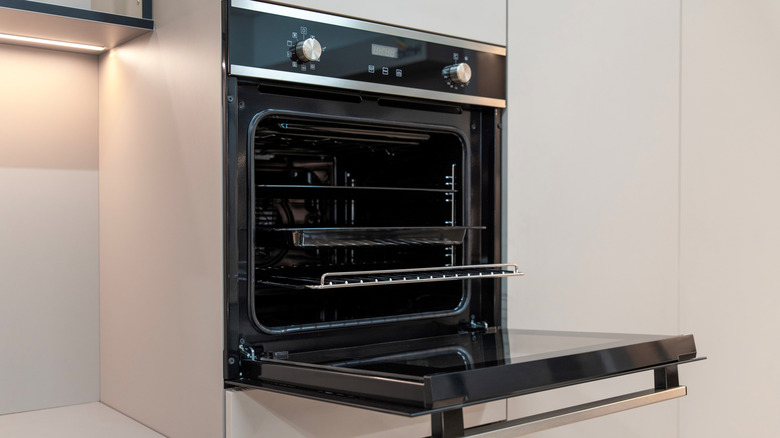
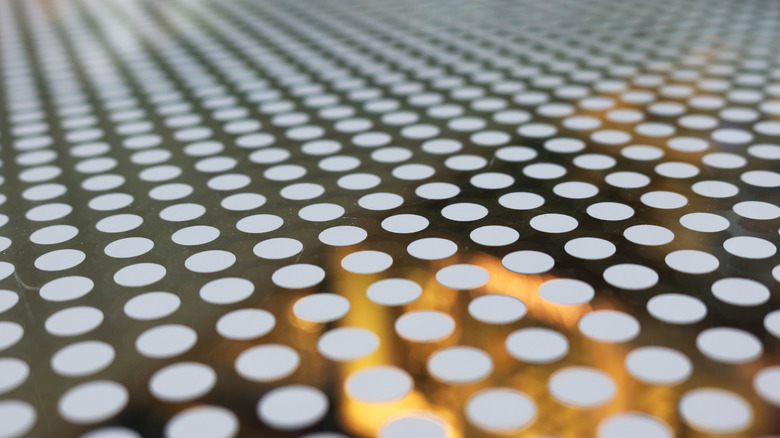
Get up close to your oven and you may see that the door is partially covered in a grid of small dots. These specks are usually dark brown or black, and they're not just a decorative feature. They're called ceramic frits, and they're there to keep the glass (and by extension, you) safe from overheating.
Ceramic frits are made from powdered, colored glass (or glass mixed with pigment). They're placed onto the larger oven door glass panel in whatever pattern the manufacturer wants, and then baked at a high temperature until they melt and fuse onto the glass panel, typically on the part of the glass that faces out of the oven. This also means that they're permanently there and they can't be scrubbed off, as you may have noticed if you've tried cleaning an oven door with a scrubber.
How ceramic frits work centers around the crushed glass. This crushed glass basically has a huge number of tiny exposed surfaces (they're just all smooshed together in the dot), and these draw in the heat from the oven and radiate it outward into the room, keeping the rest of the glass from absorbing the full heat of the oven. The reason the frits draw the heat, and not the oven glass, is that the frits also have compounds mixed in that conduct heat, so heat gets drawn to the dots and not the rest of the glass.
What else to know about ceramic frits
Ceramic frits for ovens have been around for over half a century now. A company called Shatterproof Glass Corp patented an oven door design that featured them in 1975, although the company can't claim to have invented the entire idea, as they've been used in other non-oven settings since at least the '50s or '60s. (For example, ceramic frits are used on car windows for distributing heat more evenly so they don't crack.) The original glass-crushing idea behind frits dates back even further, perhaps as far as 6,000 years ago. There's not really any publicly known history about how Shatterproof Glass Corp developed the idea, but it seems that the brand was likely building on pre-established knowledge of how the powdered glass in frits worked.
If you've looked closely at your oven, you may have noticed that there are probably two glass panels in the door — and this might have you wondering why the frits are necessary. This is because although the inside panel is designed to catch most of the oven's heat (typically up to 550 degrees Fahrenheit), it will still radiate a lot of it onto the outer panel. Accepted temperature limits for the oven door are generally around 152 degrees Fahrenheit, so the dots work to keep the door panel below that. You won't see them on every oven, as there are other methods for keeping the door panel cool, but if you do have them, know that they're saving you from an unfortunate burnt hand.