

Here's What You'll Get If You Order Your Martini 'Bruised'
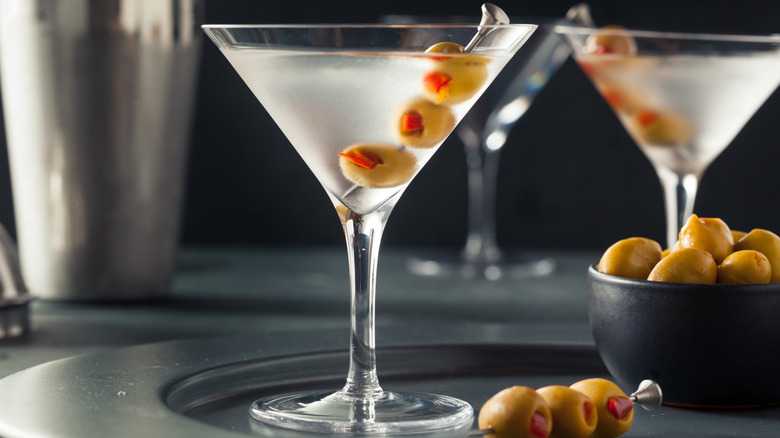
It's tough to think of a cocktail better known in pop culture than the martini. James Bond's request for a "martini; shaken, not stirred," exists in the collective head of nearly every generation. What you may not know is that ordering a martini can get as complicated as one of those elaborate coffee orders baristas dread most.
One option is to request your martini bruised. But what exactly does that mean? Will your bartender pummel the bottle of gin or vodka (perhaps the first option to think of when ordering a martini)? Close, but not really. A bruised martini is one that's been shaken vigorously enough to break up the ice in the shaker and served with those broken ice pieces floating atop your cocktail.
Bruising in the bartending craft is a term dating back to at least 1917, in reference to preparing mint juleps by first dropping in mint at the bottom of the glass and muddling it. This is seen by some as ruining the cocktail by forcing the oils and scents out of the mint leaves, leaving the drink homogenous or even bitter from the released chlorophyll. Critics of the practice believed the mint was to be placed atop the mint julep only to titillate the nose, and referred to muddling it as bruising the mint. Over time, the term expanded to include the idea that you could bruise gin, causing it to lose its herbal and aromatic properties. The definition further evolved to explain that certain cocktails should be stirred to avoid bruising the core spirit.
How bruising affects your martini experience
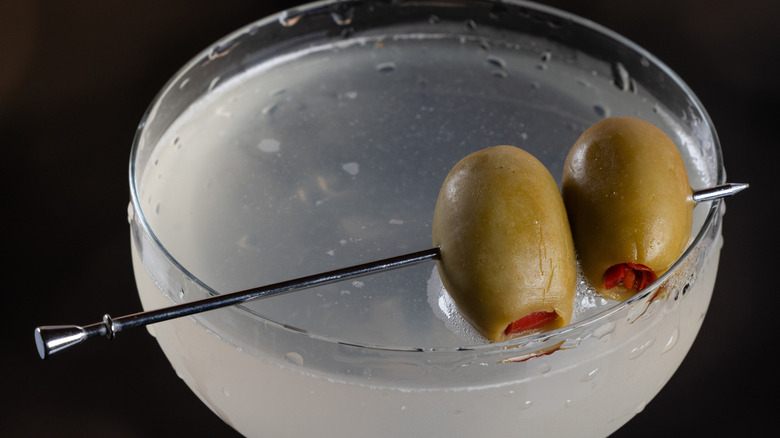
There are real differences that result from stirring or shaking a cocktail: appearance, mouthfeel, taste, and yes, scents. Stirring delicately blends the spirits and mixers together to create the cocktail's flavor, dilutes the drink to reduce burn, and chills it so every sip is cool to the touch. Stirring yields a nearly transparent martini and maintains the smooth and oily texture that coats your tongue and throat as you sip. Shaking is a more active process in which the cocktail ingredients, including ice, are locked away in a cobbler or Boston shaker and forced to mix through the bartender's shaking rhythm.
Shaking the cocktail introduces air into the preparation, which you see as bubbles and that slightly cloudy appearance of a dirty martini. This aerated cocktail stays cold longer, and its texture is more velvety than silky-smooth. Turn up the intensity on your shake to break up the ice inside and bruise the martini. Bruising can soften the stronger aromas, or top notes, and the alcohol's burn. Advocates of not shaking martinis or gin-based cocktails in general wish to avoid this effect at all costs, but the truth is, it happens with most shaken drinks thanks to the added air and dilution of the gin with the ice. Speaking of dilution, avoid fine-mesh strainers when pouring a bruised martini to ensure the ice shards end up in your glass for ice-cold sips that further mellow and smooth out the cocktail. And there you have it, a bruised martini worthy of any secret agent.