

If You Want To Use Less Oil While Cooking, Follow This Simple Tip
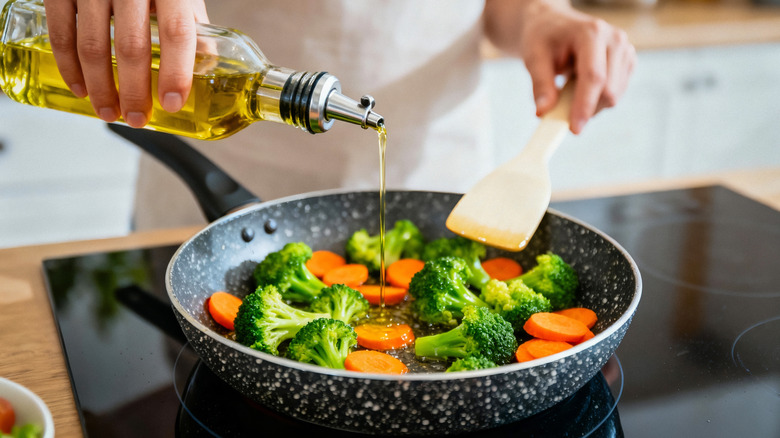
Cooking advice regarding oil can feel decisive. Some say to drink good quality olive oil on its own by the spoon, whereas others eschew cooking with certain oils entirely. But there is a happy medium between both ends of the spectrum and that is to simply replace some of the oil with a liquid such as water, broth, or even soy sauce. If you've ever tried to saute veggies without heavy oils and ended up with burnt garlic or onions, this is the trick you need.
You could be cutting back on oil because of calories, allergies, or for the simple fact that some oils become unpleasantly bitter and smoky at high temperatures, especially once they are taken past their smoke point. By swapping in or topping up your oil with small amounts of liquid as you cook, you can bypass these issues. The liquid will add moisture and keep your food from drying and sticking to the pan or burning.
This is a trick that works best when stir-frying or sauteing in a pan and especially for foods that naturally release some moisture as they cook, such as lean meat, tofu, onions, mushrooms, zucchini, and peppers. As the foods release their water, they help add additional moisture to the pan which prevents sticking. You can still add a small drizzle of oil at first and then supplement it with little splashes of your liquid of choice as and when the vegetables start sticking.
The liquid choice actually changes the flavor more than you might expect
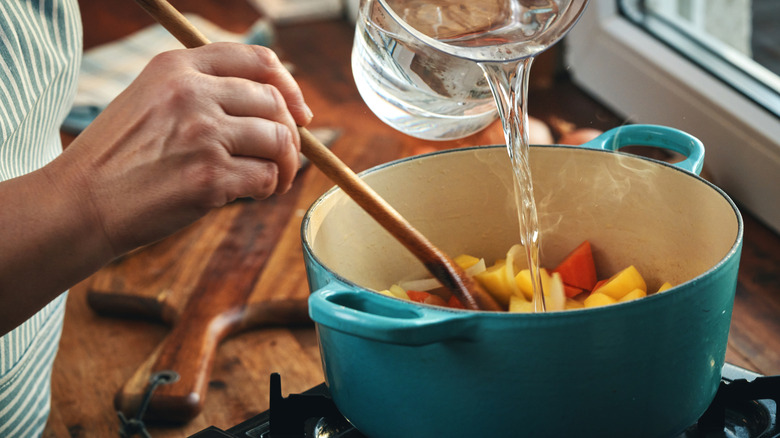
An important detail in nailing this trick is knowing that not all cooking liquids behave the same way in a pan. Water is, of course, very neutral and works best when the goal is simply to prevent sticking without changing flavor. Broth, on the other hand, adds savoriness and depth, which is especially beneficial when cooking things like grains, mushrooms, and greens. If you're torn between using broth or stock, broth tends to be a little lighter and more seasoned, and it will be easier to saute with, whereas stock may be a little too rich and thick. Soy sauce is a quick way to throw in some concentrated flavor and saltiness. Some people even roast their vegetables with a little wine which helps to deglaze the pan as well.
If you add too much liquid at once, the vegetables will steam instead of brown so pour it little by little, one to two tablespoons at a time, using a nonstick pan if you can. With this method, you can go fully oil-free, but it's also good to use it in addition to some fat — oil is great for adding flavor and helping food brown properly after all. Once the browning is under way, swap to liquids like water, broth, or soy sauce so you can keep things light without compromising too much on flavor.