

How To Give Burgers A Crispy, Caramelized Crust Without Burning Or Overcooking
We may receive a commission on purchases made from links.
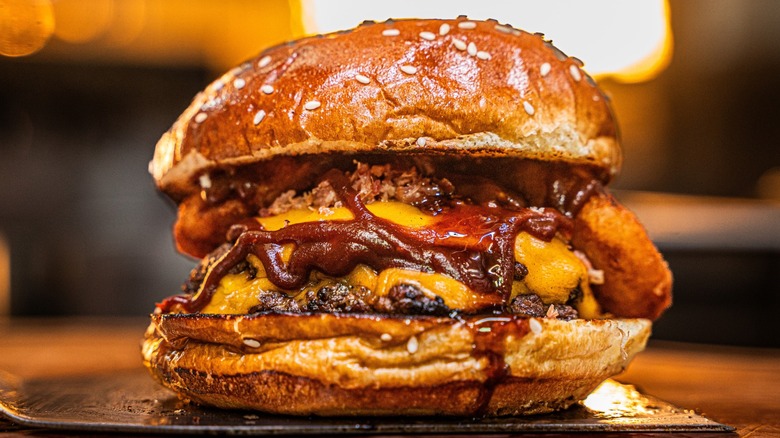
Most homemade burgers are just "eh," if we're being honest. But you want the kind your favorite burger joint sells. You know what we're talking about: crispy and deeply browned on the outside and juicy in the middle. The kind you actually dream about before you make it. That doesn't mean you're stuck only eating burgers out for the rest of your life. The difference between the average home burger and a drool-worthy restaurant burger comes down to two things you can easily handle at home: heat and surface contact.
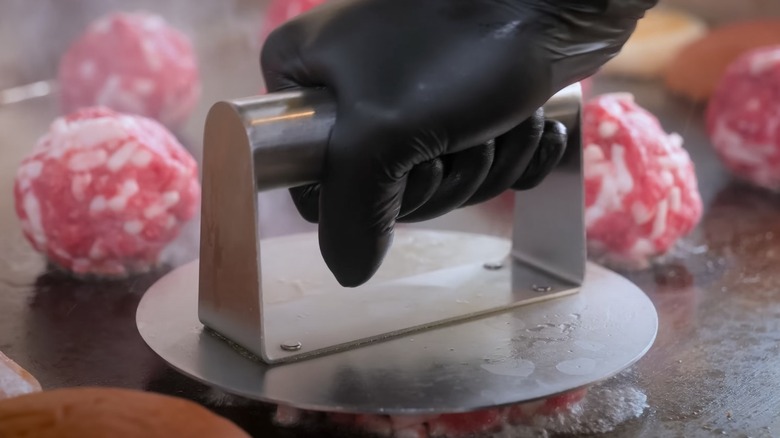
First, forget that standard rule of thumb about handling the meat gently. The trick is to smash it. Not gently press it down, but, like, actually smash it hard against a very hot surface. A sturdy spatula could work, but be prepared to put some muscle into it. If you want to get almost guaranteed results every time, grab yourself a burger press.They aren't that expensive. You can get a cast-iron Lodge burger press for around $20.
The science behind why this method works is something called the Maillard reaction — a fancy term for the chemical process that happens when the proteins and sugars in meat hit high heat. That's what gives you the browning, crispy crust, flavor, and aroma you're striving for. It also explains the problem with a thick, rounded patty. It mostly steams itself in the pan. A smashed patty has maximum contact with the hot surface, so the Maillard reaction can happen across the whole burger at once. That's how you get those crispy, caramelized edges that put a regular burger to shame.
How to maximize the Maillard reaction
Picking the best ground beef for burgers matters more than you think. An 80/20 blend (that's 80% lean meat and 20% fat) is the sweet spot for smash burgers. The fat renders as it cooks, which keeps the meat juicy on the inside and crispy on the outside. An 85/15 mix works too, but don't go too lean. If there's not enough fat in your ground beef, you'll end up with a dry burger.
You also need to use the right pan for the job. A cast-iron pan works great, as it holds heat well, which is excellent for searing meat. Plus, it's about as close to a diner griddle as you'll get at home. The trick is letting it preheat for at least 10 minutes. Stainless steel pans can work if you don't already have a cast-iron pan, but never use a nonstick pan. It just can't handle the higher heat you need for smash burgers without damaging the nonstick surface. Whether cooking a burger on cast iron or stainless steel, get the pan screaming-hot (we're talking 450 to 500 degrees Fahrenheit) before the beef goes anywhere near it.
The last thing is when you flip the burger. This is where people get impatient and blow it. The rule is one flip only, but you have to wait for the right moment to flip your burgers for the crispiest crust, so rushing things is not the way to go. The crust needs to be fully set before you flip. When the edges of the patty look browned and the burger lifts cleanly from the pan without any resistance, flip it. If you're prying it up, put the spatula down and walk away for another minute. When it comes to perfectly caramelized smashed burgers, patience pays off.