

Are Pickles Actually Beneficial For Your Gut? The Answer Depends On What Kind You're Eating
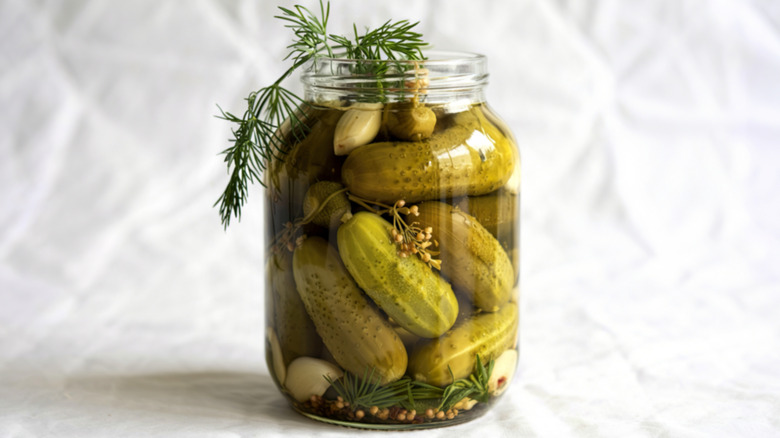
Savory (or sweet), tangy, and absolutely delicious, pickles are the snack many people reach for the second they spot a jar waiting on the fridge door. And let's not even get started on their incredibly satisfying crunch. But there's more to pickles than just their flavor. First of all, they're loaded with sodium (Na), which kind of helps explain why we might crave them when our bodies need electrolytes. They are also a great source of vitamin K and can even support gut health. However, the latter largely depends on the types of pickles you're eating. Fermented pickles are the ones that contain live bacterial cultures, which are also known as probiotics.
Even if you try out the best expert-approved technique for super-crunchy homemade pickles, without undergoing lactic acid fermentation, they will not provide the same gut health effects. Traditionally, fermented pickles are made by submerging the vegetables in salty brine at room temperature for several days to a couple of weeks. This triggers a natural process during which "good" bacteria break down the veggies' sugars and turn them into lactic acid. As the fermented pickles develop their unique tangy flavor and the lactic acid builds up, they create an environment in which harmful bacteria simply cannot survive. This entire process is completely different than just pickling them, which just means soaking them in an acidic liquid (usually vinegar) to replicate the flavor.
You'll never find fermented pickles on regular grocery store shelves
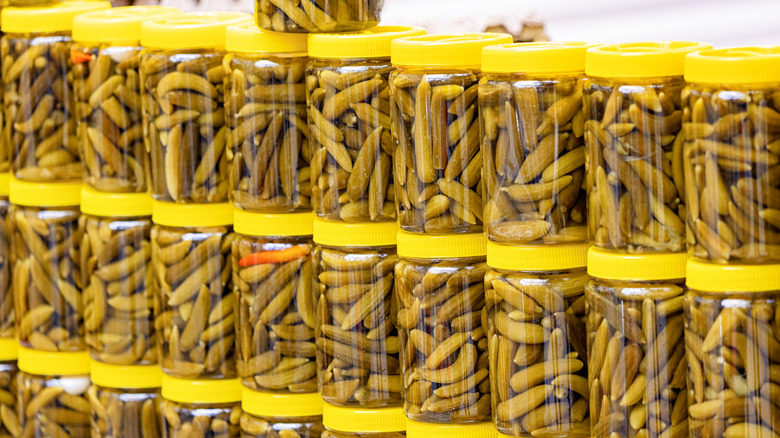
Fermented pickles are not shelf-stable at room temperature, which is why they're never kept on standard supermarket shelves. Instead, you'll find this gut-friendly food in the refrigerated section of your grocery store. With that in mind, when looking for real fermented pickles, keep in mind to check the label. Most of the time, naturally fermented pickles are clearly labeled as lacto-fermented on the packaging. In contrast, if the brand mentions vinegar or pasteurization, they've likely just been pickled. On another note, if none of this has been indicated on the label, look for any bubbles. As a result of bacterial activity, naturally fermented pickles tend to form a fizzy or cloudy brine.
Once you get your hands on a jar, start by consuming one pickle per day to support your gut microbiome. You can eat them whole, cut them into spears and roll them up with cream cheese and ham for a fun appetizer, or add them into a delicious tartar sauce that benefits foods beyond just fish. With that in mind, try not to go overboard, no matter how tasty they are. You may easily end up feeling bloated, super thirsty, or even end up with stomach discomfort. Remember, moderation is key.