

What The Average Steakhouse Was Like In The 1800s
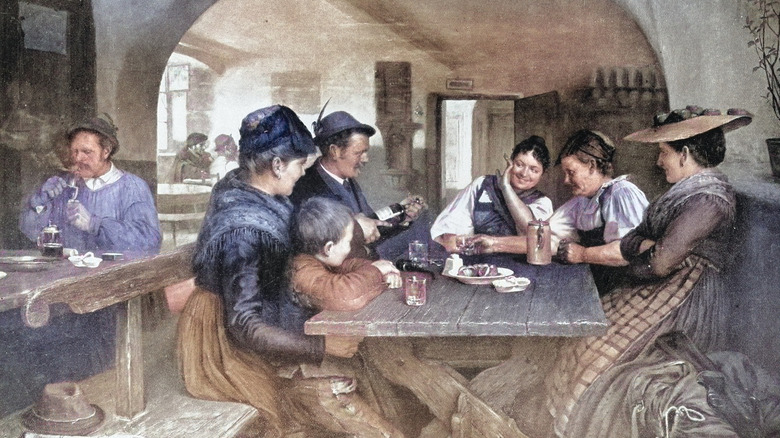
Life in the 1800s was certainly different than it is today, but the love of great food has been around forever. While steakhouses are considered an upscale dining option in the modern world, this wasn't always the case. The earliest steakhouses in the U.S. were known as chop houses. Chop houses were designed for men (women were typically only served when with a male companion in the 1800s) and were typically dusty, no-frills restaurants where they could enjoy grilled meat and beer or liquor after a day of work. The idea came across the pond from London, and quickly became popular in New York.
Beefsteak banquets also began to take hold in New York in the 19th century, and were often used as fundraisers. They weren't exactly restaurants, and they offered a more upscale environment than a chop house. Beefsteak banquets provided guests with an absolutely massive amount of steak (often all-you-can-eat) accompanied by beer. Fun fact: utensils weren't served at beefsteak banquets, and attendees were expected to dig in with their bare hands. Eventually, the hifalutin, upscale atmosphere of beefsteak banquets were combined with the hearty, warm-you-to-your-bones food offered by chop houses, and the modern steakhouse was born. In the latter half of the 1800s, what we think of as modern steakhouses began to show up in New York City, and eventually, out west.
What people ate, and how they acted, at steakhouses in the 1800s
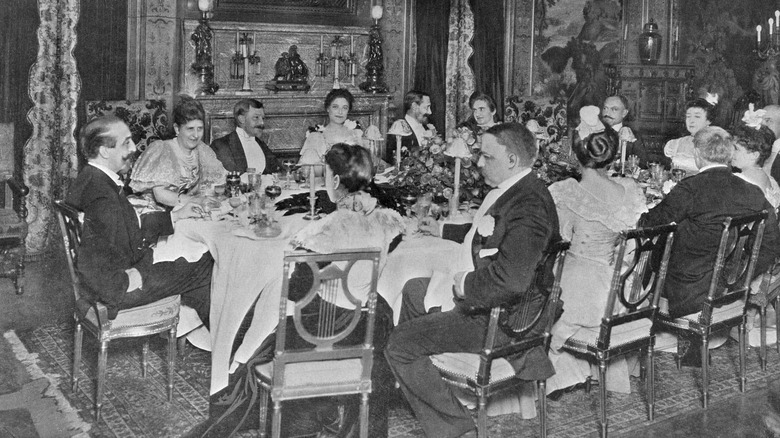
While the vibe of steakhouses as special occasion restaurants hasn't changed since the modern version got its start in the late 1800s, the menus certainly looked a little different. A special event menu from Delmonico's steakhouse in New York City dated April 23, 1880, offered several items that would make today's steakhouse diners raise an eyebrow, including mock turtle soup, plum pudding, and maraschino jelly. The entrees, however — including roast ribs of beef and chicken with mushrooms — weren't too far off from what you might see on a modern steakhouse menu.
As steakhouses evolved from chop houses to the more upscale, modern versions we're used to today, the expectations restaurants had for diners changed as well. Dining etiquette rules of the time required that diners eat in moderation (eating a ton was considered grotesque, while eating too little was considered rude). Controversial topics were to be avoided while dining, and it was important to include the entire table in conversation, rather than talking with just one other guest at the table. Noise control was also key — chewing or drinking loudly was frowned upon, and diners were never to take bites so large that they would be unable to participate in conversation.
Steakhouses from the 1800s that are still around today
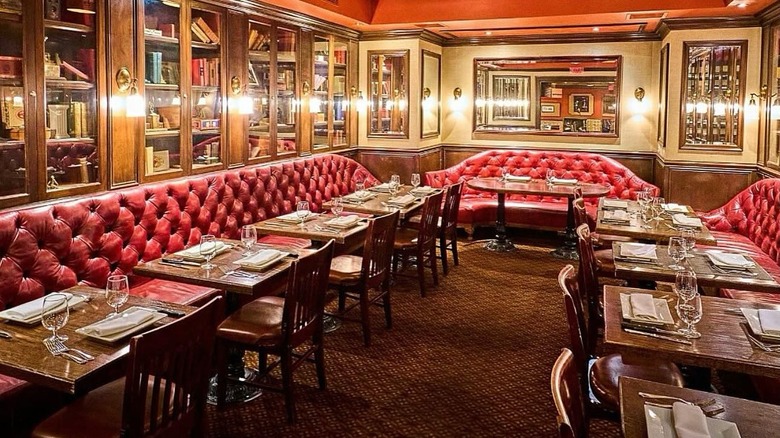
Want to travel back in time and check out some of the oldest steakhouses in the United States? You've got a few options (especially if you happen to live on the East Coast). Old Homestead Steakhouse in Manhattan's Meatpacking District is the oldest continuously running steakhouse in the U.S. The restaurant got its start in 1868, and serves portions so big it had to invent the doggie bag to send leftovers home with patrons.
Keens Steakhouse (once called Keen's English Chop House), another Manhattan gem, opened in 1885. Anthony Bourdain treasured the joint, saying he didn't believe any steakhouse could ever top Keens. The restaurant's old-school decor makes you feel like you stepped back in time. It's loaded with Abraham Lincoln artifacts, and the rustic fireplace, low lighting, and vintage signage create an uber-cozy vibe.
Not on the East Coast? No worries. Denver's Buckhorn Exchange was established in 1893, and it's a carnivore's paradise. The walls are a showcase of taxidemery, and the menu is loaded with fascinating options, including rattlesnake, Rocky Mountain oysters, and Colorado lamb. The building truly looks like something out of an old western movie.