

How Water pH Levels Affect The Texture, Flavor, And Color Of Your Food
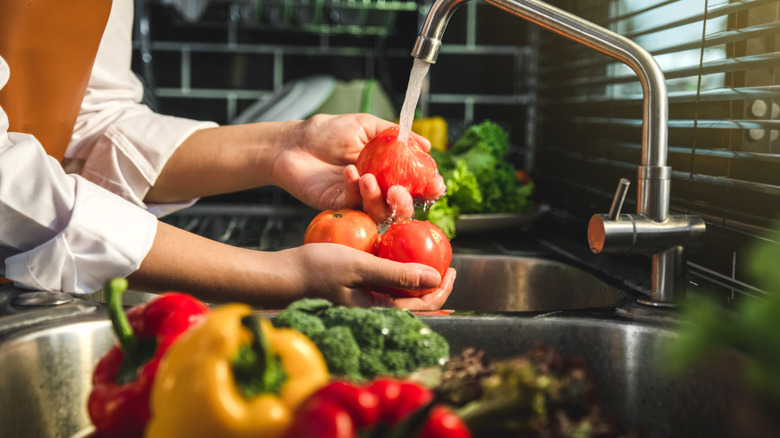
If you've ever traveled from New York to California, then you might have noticed how the espresso tastes smoother, the pasta hits different, while the ice cream is creamier than ever. But it's not like there's actually something in the water there, right? Well, sort of. Southern California tap water typically boasts a pH (concentration of hydrogen ions in water) between 7.5 and 8.5, which means it's more alkaline and richer in minerals. By contrast, New York City's water has a slightly less alkaline pH of around 7.2.
Believe it or not, these tiny differences can have an impact on how food actually tastes, smells, and looks. Yes, even looks: Water pH can alter pigments like chlorophyll and anthocyanins, making green veggies look brighter or duller and shifting red or purple foods, like cabbage or berries, toward blue. Bryan Quoc Le, founder and CEO of California's Mendocino Food Consulting, a firm specializing in food science services, highlighted in an exclusive conversation that water pH levels can truly impact food quality. "Certainly extreme levels of pH change are going to affect the quality of food quite a bit, but that's also for specific foods as well," Bryan Quoc Le told Chowhound.
For instance, tap water affects your home-brewed coffee more than you think. Highly alkaline water can make it flat and heavy, and overly acidic water can turn it intensely sour. Le added that tea is also highly sensitive to water pH, since alkaline water causes it to appear cloudy, while acidic water raises its bitterness. And other dishes are impacted by pH, too: "Most tomato-based sauces, for example, are going to be mostly acidic anyway, so any added water is going to be negligible," Le stated. "However, things like dough are going to be more impacted because of how sensitive gluten protein is to pH."
The answer to a water pH issue is hiding in your pantry
Bryan Quoc Le emphasized that off-tasting foods and drinks are the first indicator that your water pH is imbalanced. In addition, a lingering metallic flavor could also point to the same issue. "High pH gives ... many off flavors," Le said. "You'd want to compare it to distilled or deionized water to see if it's truly the pH of the water you have on tap." While drinking alkaline water is generally considered safe (though it can taste sweeter sometimes), very high-pH water can cause digestive problems and nausea. Acidic water, on the other hand, can be corrosive and may leach metals, such as lead and copper, from plumbing. If consumed, this can pose serious health risks.
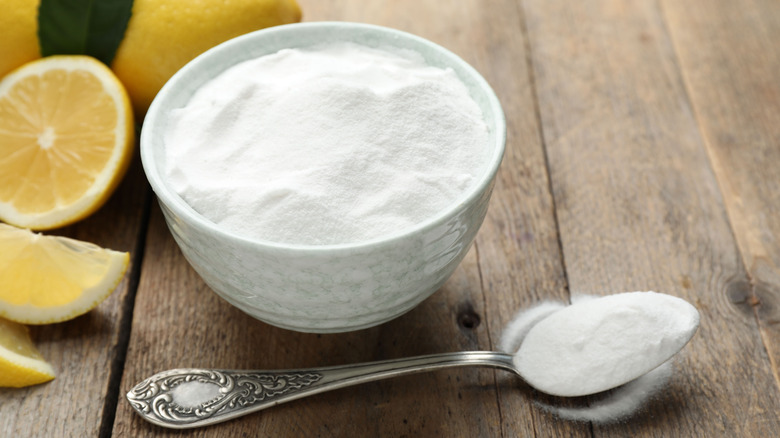
For those unsure about their tap water pH levels, Le said a pH meter or test strip can quickly provide the answer. And in case your water pH does turn out to be off balance, he recommended a few quick fixes with common pantry staples. "You can use a bit of vinegar or lemon to counteract any higher pH issue, or inversely, if your water is a bit acidic, you can use a very small amount of baking soda to correct it," Le noted.
The important thing, though, is not to go overboard. Even a tiny pinch is more than enough to noticeably affect the quality of food. "pH can be tricky business, and even small corrections or small amounts can have a big impact, again depending on the food," Le concluded.