

2 Ways To Use Potato Peels In Your Garden For Better Soil
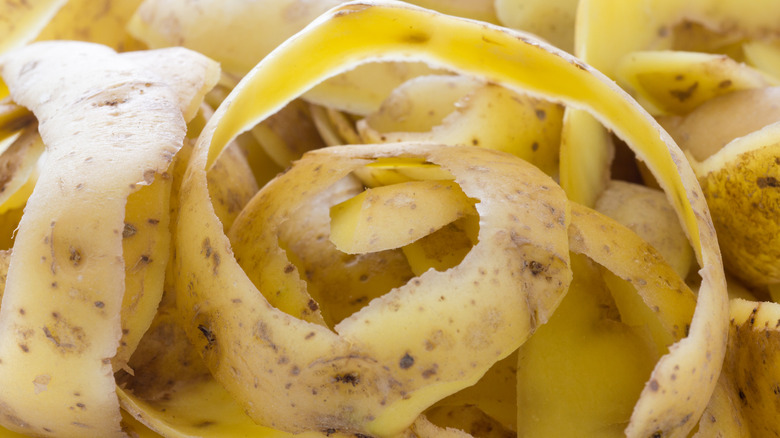
Potato peels make the best snacks. One particularly tasty way to repurpose potato peels is frying them into a wonderfully savory, crispy treat. What's more, a retro potato peel pie and potato nachos are among the absolute best uses for potato peels. However, their true potential extends well beyond the kitchen. They're actually packed with nutrients that can benefit garden soil. In fact, there are two simple ways to put these leftover scraps to good use: composting and turning them into "potato peel tea."
Don Nicholas, executive publisher for Food Gardening Network and GreenPrints Magazine, revealed in an exclusive conversation that composting potato peels can offer great benefits for garden soil. "As potato peels break down, they help support beneficial microbial activity and contribute to improved soil texture over time," Nicholas stated. Soaking potato peels in water for a couple days and applying the strained potato peel tea to plants is another great solution. "While this can provide a small nutrient boost, it should be viewed as supplemental nutrition rather than a replacement for compost or balanced soil care practices," Nicholas added.
Meanwhile, C.L. Fornari, National Garden Bureau member and host of The Garden Lady, a weekly call-in radio program on WGBH Boston, exclusively told Chowhound that organic matter can do wonders for garden soil's structure, drainage, and health, whether it comes from potato peels, oak leaves, or coffee grounds. "You're well off to compost all of your vegetable scraps and leaves, and use that compost on your garden," Fornari explained.
Bury your potato peels deep in the compost pile to prevent sprouting
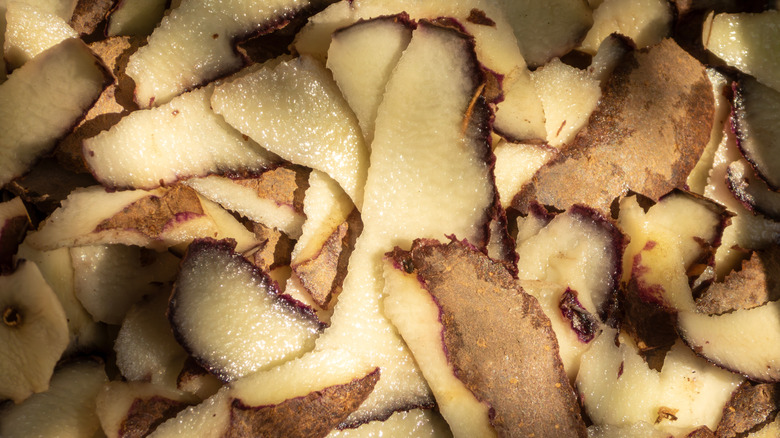
Potato peels contain high amounts potassium, phosphorus, magnesium, and many other trace minerals that are crucial for vigorous plant growth. Don Nicholas, author of "Soil Care Secrets A–Z" and fellow member of the National Garden Bureau, explained that "adding [potato peels] to a well-managed compost pile allows them to decompose safely and evenly while blending with carbon-rich materials such as dried leaves, shredded paper, or straw."
Composting potato peels is quite simple, and it's one of the easiest ways to reduce food waste. However, it's crucial to bury them at least 6 inches deep to avoid sprouting and to trigger quicker decomposition. Moreover, keep the compost pile moist at all times and turn the pile frequently (every three to four days). This process introduces oxygen into the pile, which builds heat throughout it and helps the peels decompose faster.
Although many gardeners consider the compost pile a gold standard, Nicholas shared several other composting methods. "Small amounts of potato peels can be buried directly in garden beds if done carefully," Nicholas said, stressing that proper soil coverage and moderation are essential. "Gardeners using raised beds or container gardens should be especially cautious because undecomposed scraps can create odor and moisture problems in confined spaces."
Mishandling potato peels can attract pests to your garden, or worse
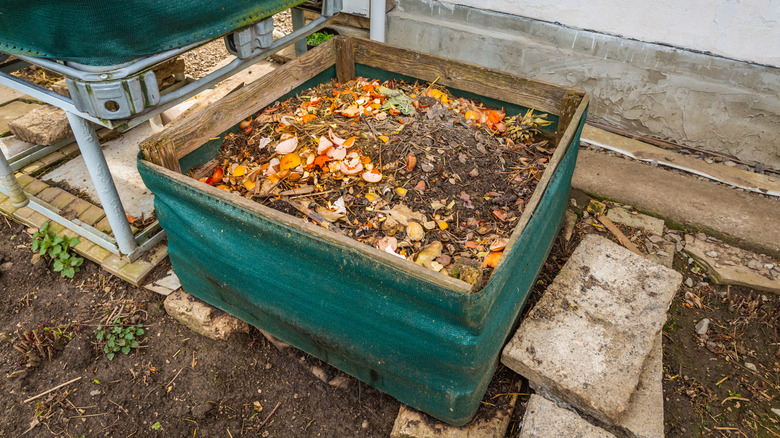
You can't just use dirt from your backyard to grow a vegetable garden. You also need healthy humus in the soil, which is where composting comes in, but improper handling of compost can cause more damage than you think. According to C.L. Fornari, uncovered fresh scraps of potato peels can quickly attract rodents, flies, raccoons, and other garden pests if not handled properly. "For this reason and more, it's far better to compost potato peels with other organic matter and not put them raw into your garden," Fornari elaborated.
Don Nicholas agreed that composting potato peels before using them in the garden is the safer approach: "Even better, compost them first in a properly maintained compost system where heat and microbial activity help break them down efficiently." Additionally, to avoid fungal issues caused by excess moisture, Nicholas advised against leaving large amounts of raw potato scraps on the soil surface.
Moreover, potatoes belong to the nightshade family (along with tomatoes, peppers, and eggplants) and "diseased potato scraps could theoretically harbor pathogens," according to Nicholas. Blight is one of the worst among them since it can cause infested plants to rot within a few days. "Composting at proper temperatures greatly reduces this risk and is generally considered the safer approach," Nicholas concluded.