

6 Uses For Leftover Cabbage You've Probably Never Thought Of
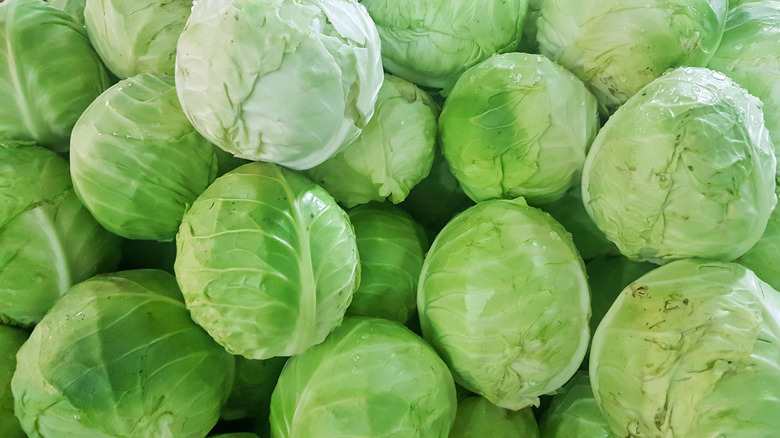
As a professional chef, I'll be the first to admit that cabbage isn't normally the vegetable that most people get excited about when they see it on a menu. It's relatively one-note in terms of flavor, doesn't typically photograph well when cooked, and oftentimes, it ends up half-used in the back of the fridge until it's secretly tossed away in the compost bin. However, from my perspective, cabbage is one of the most underrated, versatile, and affordable veggies out there that can be used in a myriad of ways.
One of the benefits of this food is that it lasts a long time in the fridge. If stored properly, it can last upwards of one to two months, which gives you plenty of opportunities to use it up. And after years of working in kitchens around the globe, where wasting ingredients just isn't an option, I've learned how much you get out of a leftover head of cabbage. So, here are six uses of it you've probably never thought of, from whipping up a tasty okonomiyaki pancake for lunch to making your own jar of homemade sauerkraut.
1. Make an okonomiyaki

If you've got a head of cabbage wilting away in the back of your fridge, put it to good use and make okonomiyaki, a savory Japanese pancake that's equal parts crispy, chewy, and delicious. Traditionally, the base of an okonomiyaki is savory batter made from wheat flour, eggs, and dashi stock (bonito fish soup stock) that's then mixed with a large amount of finely shredded green cabbage. You can also find people adding it to thinly sliced pork belly, grated daikon radish, scallions, seafood, and a whole plethora of other vegetables. Part of its name literally translates to "as you like," and that's exactly the mindset you should be following: Toss in whatever you've got on hand, whether that's leftover cabbage, zucchini, carrots, or maybe even some shredded chicken from last night's dinner.
You can find these tasty pancakes throughout Japan, where they're commonly served as street food. However, its roots run deeper in the Kansai and Hiroshima regions, where these two cities are known as the epicenters of the dish, creating two distinct variations. The primary difference is that Kansai mixes all the ingredients into a thick, fluffy pancake, while the Hiroshima style layers thin crepes with cabbage, noodles, and meat, resulting in a hearty, more complex dish. Whichever way you decide to make it, it's a great way to use up any leftover cabbage you've got on hand.
2. Use it to make homemade sauerkraut
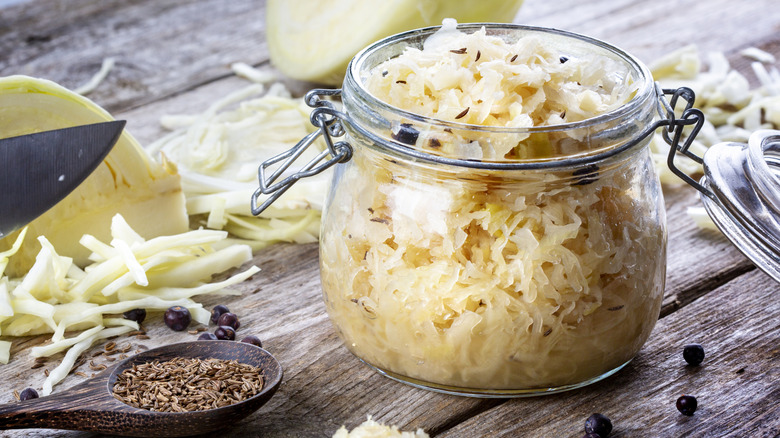
That sad, semi-dried out, lonely cabbage won't save itself, but you want to know what will? Transforming it into a tangy, acidic jar of sauerkraut. For those of you who don't know, sauerkraut is finely cut raw cabbage fermented with lactic acid bacteria, giving it a distinct tangy flavor and a long shelf life. It's heavily associated with German cuisine and is a staple dish used throughout Central and Eastern Europe, where it's commonly served with bratwurst, pierogies, and in salads.
All you need to make sauerkraut at home are three simple ingredients: salt, cabbage, and patience. Since sauerkraut is a type of fermented food, it takes a bit of time for it to develop — typically within a one-to-six-week period, depending on how tangy you'd like it to be. Similar to the recipe for Korea's version of fermented cabbage, kimchi, the longer it ferments, the more nuanced and sour its flavor profile becomes. To start, thinly shred your cabbage, mix in the salt (about 2% by weight of the cabbage), then tightly pack it into a jar, seal it, refrigerate it, and let time do its thing. The salt will naturally draw out the liquid from the cabbage, creating an efficient brine for it to ferment in — that's it. Enjoy it with grilled meats, hot dogs, or sandwiches, or just eat it straight from the jar.
3. Whip up a stir-fry
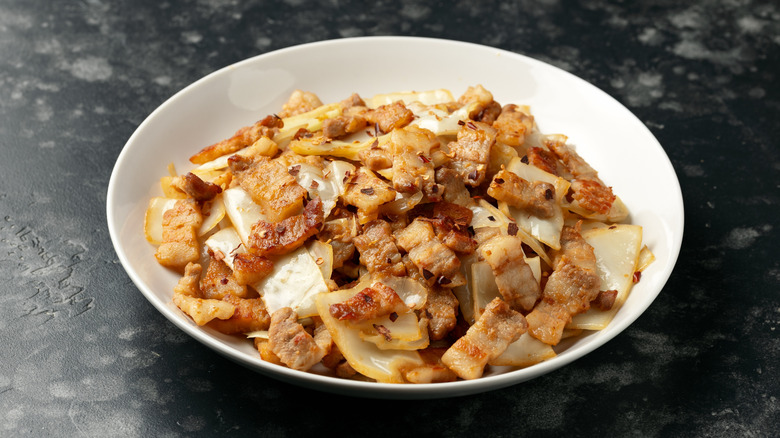
Another option to use up leftover cabbage is to incorporate it into a stir -fry, specifically shousi baicai, or "hand-torn cabbage." This classic Sichuan dish features irregular pieces of hand-torn cabbage that are stir-fried over high heat with pork belly, minced garlic, dried chili peppers, Sichuan peppercorns, soy sauce, and black vinegar. It's commonly served as a side dish in restaurants and households throughout Sichuan province, where it's beloved for its balance of heat from dried chilis, acidity from black vinegar, and numbing sensation from Sichuan peppercorns, resulting in a slightly tangy, spicy, and aromatic flavor. It's the perfect side dish, whether you're building a menu for your Lunar New Year party or just looking for an easy veggie-forward dish to serve alongside a bowl of steamed white rice.
The cabbage is typically cooked in a wok until it's tender yet slightly crisp, aiming to avoid a mushy, watered-down texture. But if you don't have a wok at home, don't fret — you can easily make this dish in a seasoned cast-iron skillet for a similar effect, or, in a pinch, a non-stick pan will do just fine. Looking to keep it simple? Skip making the shousi baicai, and instead just roughly chop your cabbage, and sauté it in a lightly oiled skillet over medium-high heat with some minced garlic, soy sauce, toasted sesame oil, chili flakes, salt, and freshly ground black pepper for a quick, easy side dish.
4. Use leftover leaves as a natural wrap for steaming
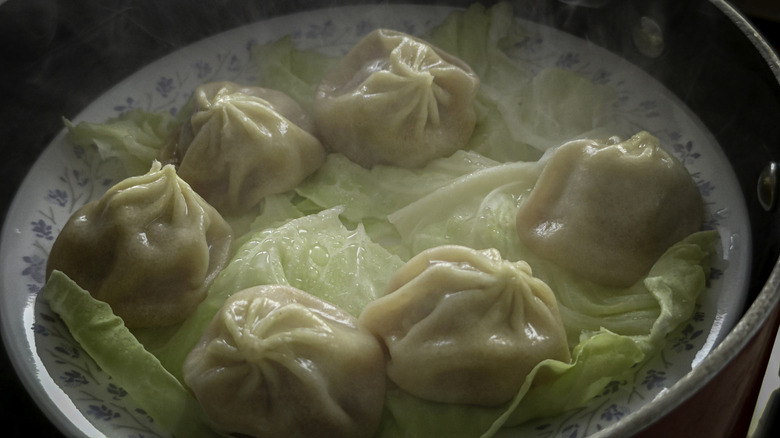
If you've got some leftover cabbage, try wrapping seafood or meat in a large leaf and steaming it over your stovetop. While it might sound a bit odd, the cabbage leaf creates a natural, aromatic barrier that efficiently seals in the moisture while infusing a subtle sweet cabbage flavor. All you have to do is layer a few torn cabbage leaves in a steamer basket to prevent them from sticking, place your cabbage-wrapped protein on top, and then let the steam do its magic. Depending on what you're cooking, in about 7 to 9 minutes, the leaves will have become tender and almost translucent, holding all of the savory juices inside.
The beauty of this steaming method is not only its resourcefulness but also its versatility. Whether you fill it with a flaky white fish filet, seasoned ground meat, or even a medley of minced vegetables, it's a great way to transform a wilting head of cabbage into an elegant dish while staying true to the "waste not, want not" ethos. If you want to take it a step further, you can even use the cabbage leaves in lieu of parchment paper the next time you're steaming a basket of veggies, dumplings, or bao buns.
5. Prepare a pot of cabbage soup
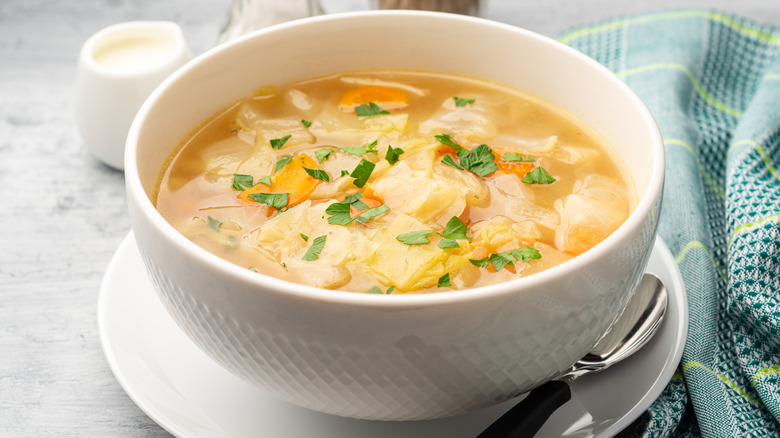
It might sound a bit like something your grandmother made, but cabbage soup is one of the most underrated comfort foods out there. It's hearty, comforting, and super cheap to make, and depending on what you're adding in, it can easily come together in under an hour.
If you want to keep it simple, start with a soffritto (a mixture of minced carrots, celery, and onions) and sauté it down with a bit of butter or olive oil until softened and fragrant. Once that base is lightly golden brown and has fizzled, add in your shredded cabbage and let it sauté before pouring in a flavorful chicken or veggie broth and a splash of lemon juice for brightness. From there, you can add a bundle of herbs, spices, protein (like shredded chicken or tofu), and additional vegetables you have lying around in your fridge. This is an easy and simple way to transform some leftover cabbage into a meal that easily feeds a whole family without having to sacrifice on flavor.
6. Put together a pot of colcannon
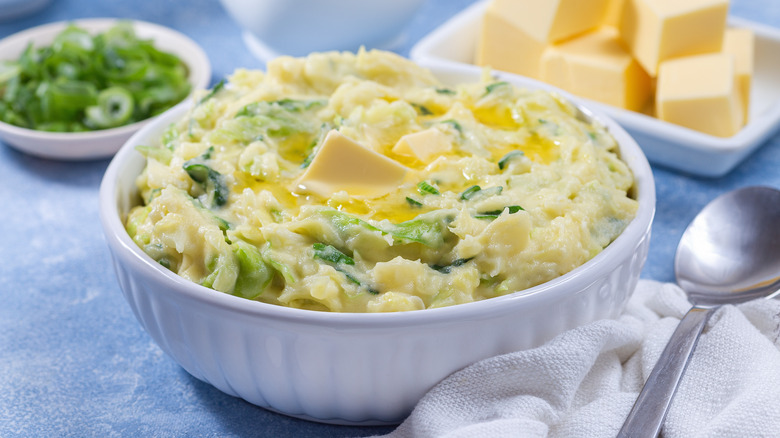
If you've got half a head of cabbage sitting in the fridge, you can easily whip up a classic dish: colcannon, a dish made of mashed potatoes mixed with cooked cabbage, spring onions, milk or cream, and loads of butter. It's a traditional Irish dish, with its name stemming from the Gaelic term "cál ceannann," translating to "white head cabbage." It's typically served piping hot with a depression in the center of the pile to hold an extra knob of melted butter for diners to dip their forkful of potatoes in for a richer bite. It's especially popular on St. Patrick's Day and Halloween, when it's commonly served with corned beef and sausage. However, you can serve it with whatever you want; it's exceptionally good served alongside some marinated and seared lamb chops or for breakfast with perfectly fried runny eggs on top.
While cabbage and mashed potatoes are the typical norm, different regions around Ireland put their own twist on the classic dish. In some counties, you can find people adding kale or collard greens instead of cabbage, giving it a darker green hue and earthy, savory flavor. Occasionally, people will use sauteéd leeks or even minced cooked bacon as a savory, crunchy topping. Feel free to make it your own by adding whatever herbs, veggies, or spices you have on hand that you want to use up.