

For A Leaner Pot Roast That's Still Tender And Juicy, Reach For This Specialty Meat
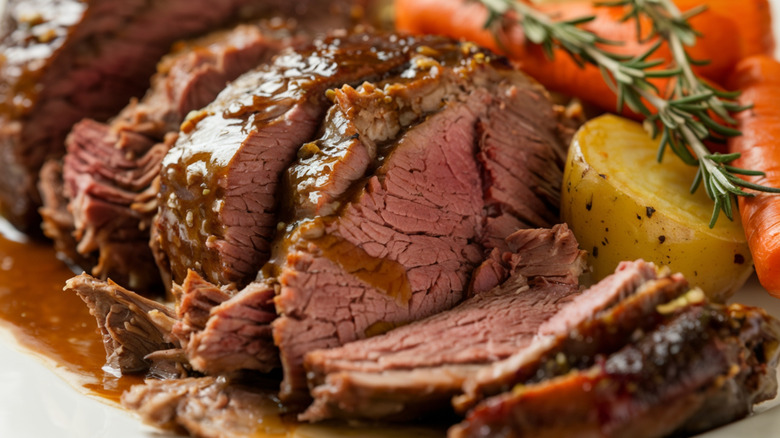
Pot roasts take time, patience, and plenty of skill. But when everything comes together after hours of simmering, the result is totally worth the wait. The meat is soft, juicy, and falls right off the bone. The veggies are rich and full of flavor. Combine the dish with some crispy fried Brussels sprouts covered in pomegranate glaze or even creamy cauliflower mash (some of the best sides to serve with pot roast), and you've got yourself a meal that's hard to beat. That is, of course, if you pick the right meat cut. Although traditionally beef is the classic choice, there's a specialty alternative that makes pot roast much leaner: bison.
In an exclusive talk with Chowhound, Brian Walter, executive chef at 87 Sussex, a fine-dining restaurant in New Jersey, said that chuck (the animal's shoulder area) or brisket are the best bison cuts to use for pot roast. Walter, who has been trained in classic French cuisine, recommended choosing whole cuts as they're best suited for searing and braising. He also stressed the importance of proper heat management, and explained that the ideal cooking temperature for bison pot roast is between 275 and 300 degrees Fahrenheit.
"Bison is leaner and has a more robust, deeper flavor than beef, so control is critical," Walter told us, sharing some useful tips for cooking pot roast with this meat. To begin with, while braising (or simmering the meat in liquid) is crucial to help soften its fibers, too much liquid can actually ruin the final result. So, rather than fully submerging the meat in liquid, Walter suggested using a bit of fat to braise.
The vegetables matter just as much as the meat
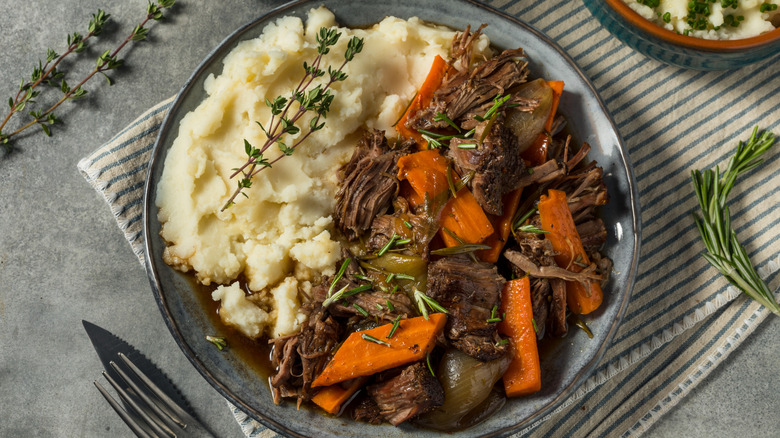
Similarly to how a great wine starts in the vineyard, a pot roast begins long before the simmering process. In fact, the first step involves a hard sear to create a rich crust. Brian Walter suggests throwing in the classic French mirepoix of carrots, onions, and celery, and then adding tomato paste for some depth of flavor. Afterward, a dry, full-bodied red like Cabernet Sauvignon or Merlot is a great pick to deglaze the pot, before you add the stock, along with your preferred herbs and the seasonings you think belong in your pot roast.
Yet, although the bison cut is the star of the dish, Walter emphasized that neglecting the mirepoix is a massive mistake. "Don't treat the mirepoix like it's just there for flavor in the sauce," he pointed out. Walter advised against cutting the vegetables too small, as they need to hold their shape rather than end up mushy during the long braising process. For a bit of extra richness, let the veggies develop color and collect the flavorful fond from the pan.
Some of the most important braising steps are cooking the meat slowly, keeping the pot partially covered, and letting the roast rest in the braising liquid before you plate it up. That said, Walter had one last piece of advice. "Bison doesn't forgive heavy hands. Respect the lean profile, control the heat, and build flavor in layers," he concluded. "Done right, it eats cleaner and more refined than beef."