

The Key To Thriving Tomato Plants Is Hiding In Your Bathroom Cabinet (But There's A Catch)
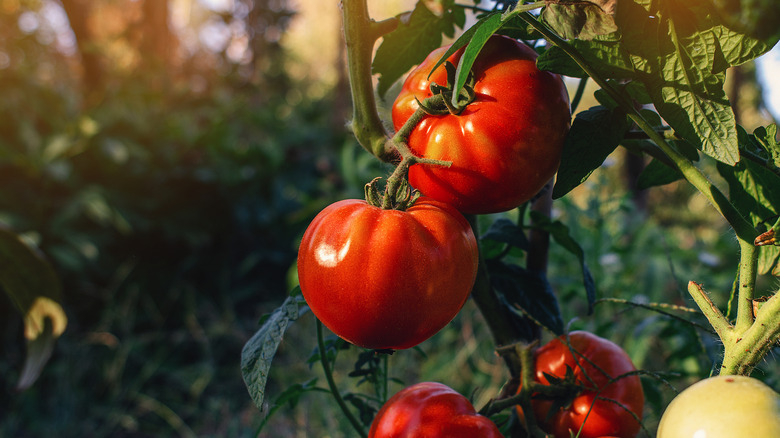
Thriving tomato plants is something every home gardener hopes for. Whether you're slicing them for a sandwich, cooking a basic all-purpose tomato sauce, or adding them to a wonderfully refreshing Greek salad, home-grown tomatoes always shine. But soil issues are perhaps one sneaky reason your tomatoes aren't thriving. Thankfully though, there's a quick fix that can address several common problems, and it involves none other than good old Epsom salt. The catch, however, is to dilute it in water before use; otherwise, it may have adverse effects.
Even though you might be skeptical to use Epsom salt on your tomato plants, in reality, this common bathroom product can do much more than just soothe your muscles and neck pain. In addition to being a great tomato fertilizer, it can also be utilized as a natural exfoliant and a pest repellent.
Commonly known as magnesium sulphate, the natural form in which it is found in nature, Epsom salt supports photosynthesis, or rather chlorophyll production. This means it can correct your tomatoes' magnesium deficiency, since chlorophyll molecules contain magnesium at their core, and as a result produce greener, healthier, and stronger plants. What's more, it aids the absorption of nutrients (like phosphorus) and supports flower growth and seed germination. It can also increase tomato yields. So, if you notice that your tomato leaves are becoming yellow, it may be time to test your soil and turn to Epsom salt if you find the magnesium levels lacking.
Tips for best treating tomato plants with Epsom salt
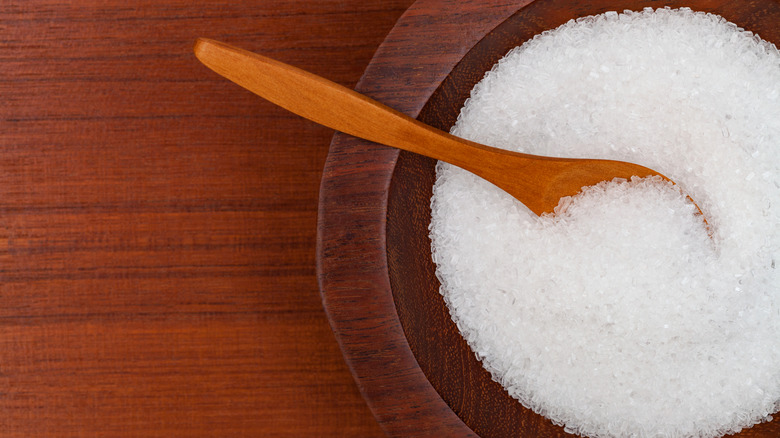
If, instead of getting the sweetest, juiciest home-grown tomatoes, they appear yellowish, weak, pale, or otherwise unhealthy, it's safe to say they could be lacking magnesium. And that is your cue to reach for Epsom salt. To safely use it on your tomato plants, simply add a small amount of it (you don't need more than a tablespoon) to a gallon of water. Then apply the mix either to the soil around the plant (to improve the soil's magnesium content) or onto the leaves as a foliar spray for faster absorption.
Keep in mind, however, that the latter should be done with caution, because over-application can burn the leaves and ruin the tomatoes' nutrient profile. For best results, make sure to spray the tomatoes either in the early morning or late afternoon. Repeat the treatment every two to four weeks throughout the growing season, although you may want to stagger when you apply your Epsom salt solution to the soil versus the leaves.
If your garden soil could benefit from higher magnesium levels before planting the tomatoes, you can also add a small amount of Epsom salt directly into your soil. Mix it well for better distribution, and then plant your tomatoes. In case you're new to gardening, this bathroom staple can help your tomatoes. However, it's important to pay close attention to your plants after using Epsom salt. If you're uncertain whether to reapply or the right dosage, a soil test can always settle your doubts and provide a clear answer.