

Always Follow This Serving Rule When Plating 'The Poor Man's Ribeye'
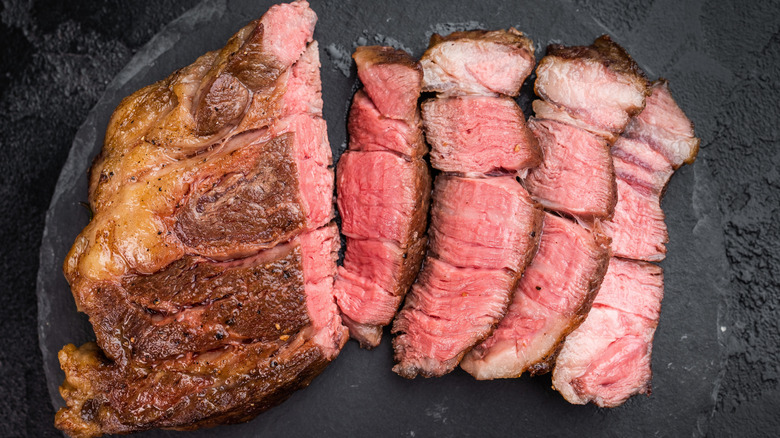
There are many flavorful steaks that won't break the bank and can be served for a special dining occasion. For the steak lovers looking for a budget-friendly yet tasty alternative to a pricey ribeye, there isn't a cut much better than the "poor man's ribeye." In addition to cooking it properly, there's a serving rule that will help make your dining experience top-notch: pre-slicing.
Chuck eye steak, known as the "poor man's ribeye," is best when served pre-sliced for one big reason: the meat's texture. Chuck eye is taken from the fifth rib of the cow's upper shoulder, a hardworking muscle that's an extension of the ribeye muscle from the rib section. It has a distinct beef-forward flavor similar to ribeye, yet has less marbling, so it's leaner, making it a tougher piece of meat. Once you've cooked chuck eye in a way that begins to make it more tender, slicing the chuck eye steak in advance harvests the tender pieces of ribeye-like steak from the connective tissue that runs throughout the meat. This way, the diner doesn't have to hunt for the tender bites, making the experience feel like eating a high-end steak without the higher price tag.
More tricks for serving and preparing chuck eye steak
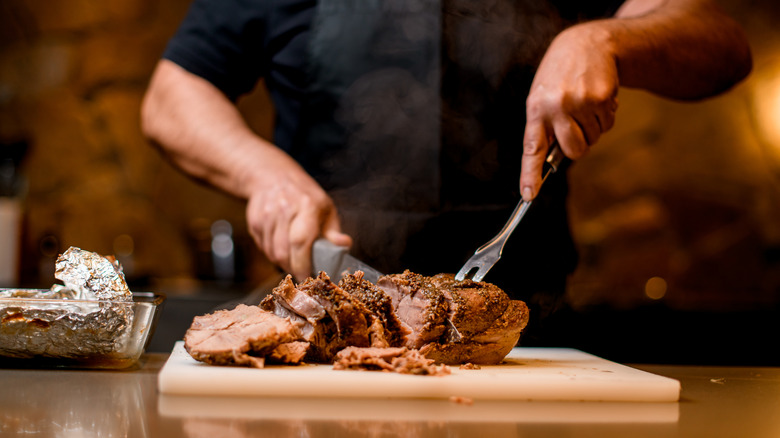
Another serving suggestion that will help you to achieve steakhouse results from "poor man's ribeye" is to let the meat rest for five to 10 minutes after cooking before slicing into it. Though it's tempting to dig right in, letting the meat rest will allow the juices to redistribute and maintain a moist texture. With the right treatment, this budget steak cut can rival a ribeye.
In addition, well thought out preparation can help a chuck eye steak become tender. Marinating the steak in an acidic liquid will tenderize it by breaking down some of the muscle fiber. A chuck eye steak is also heated differently than most dishes that are based on chuck. While meat from the cow's chuck section is often cooked for long periods in a braising liquid or as a roast, a chuck eye steak cut benefits from quick, high heat on a grill or on the stovetop and cooking it to medium rare, or to an internal temperature of about 125 degrees Fahrenheit.
Creating steakhouse flavor using a chuck eye steak that typically costs $4 to $6 less than a ribeye, or even more than that for premium cuts, may be well worth the scant extra work if you're hoping to dine well for less. In choosing chuck eye over ribeye, you may be substituting a melt-in-your-mouth texture with a simply tender bite, and the flavor will be beefy instead of having a ribeye's buttery richness, but enjoying a chuck eye is a mouthwatering experience that steak lovers will enjoy.