

The Apple Variety That's Better Cooked Than Eaten Fresh
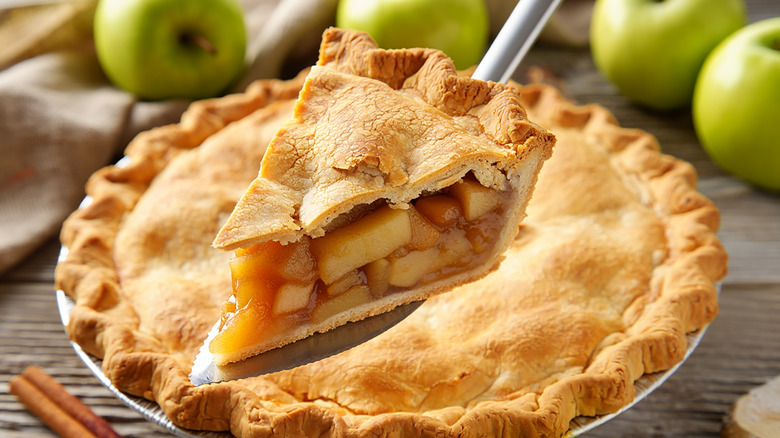
In the debate around which apple variety makes the best baked goods, smokehouse apples are at the top of the list. Home gardeners and small-scale farmers love the smokehouse apple not only because it can last up to four months in cold storage, but also because it's pretty perfect for baking into three-ingredient puff pastry apple pies, turnovers, muffins, and many other treats. With medium-firm, crisp flesh, tangy sweetness, and just the right amount of juice, they're the perfect texture to become tender when baked or sauteed without going mushy. Their tanginess prevents desserts with added sugar from becoming overly sweet, while their moderate juice levels create a gorgeous syrup, preventing them from being either watery or dry. This is opposed to the experience of eating them out of hand, which isn't exactly unpleasant, but they're definitely not the best snacking apple of all time, as some may find them too crunchy or tart.
The smokehouse apple was identified in 1837 by William Gibbons, a farmer local to Millbrook, Pennsylvania, who discovered them thriving next to his smokehouse, hence the name. While Gibbons didn't invent this apple, he was among the first to sing its praises enough to generate public interest, which is why it's still around nearly 200 years later, despite its fairly unromantic appearance: These apples are squat and bulbous with a "rusty" peel bespeckled with matte brown patches. Though you probably won't find smokehouse apples in your neighborhood grocery store, there's a chance you'll spot them at your local farmers market starting in early September.
Getting the best flavor from smokehouse apples
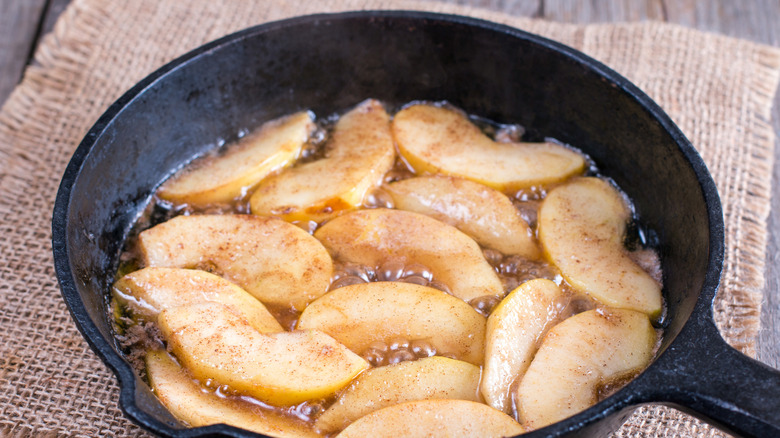
Though smokehouse apples begin appearing on trees in mid-July, they take up to three months to become fully ripe, and are best picked in September, or even October. Plucking a smokehouse before it's fully ready is likely to yield an unpleasantly hard, sour, dry apple. Additionally, this can be an easy mistake to make due to their mottled appearance showing a mix of brown, golden yellow, rusty red, and green even when they're ready to be plucked.
That's why timing may be the best way to tell when your smokies are ready to be plucked. Apples harvested in the first few weeks of September will likely be fairly crisp and acidic, but with fresh, juicy apple cider notes. In fact, apples harvested at this time are often pressed for cider in addition to being cooked down into baked goods, butters, and pie filling. However, if you're able to leave some apples to develop until mid-October, you'll be rewarded with a richer, sweeter fruit that tastes just as good eaten fresh as it does folded into your favorite autumn dessert.
Of course, October in Pennsylvania and other areas where these apples grow may become too cold to leave your smokies on the branch. The good news is that their flavors continue to develop in cold storage. Root cellars and cold rooms work well, but there's also a technique for keeping apples crisp in the fridge.