

The Underdog Veggie That's Packing More Potassium Than Bananas
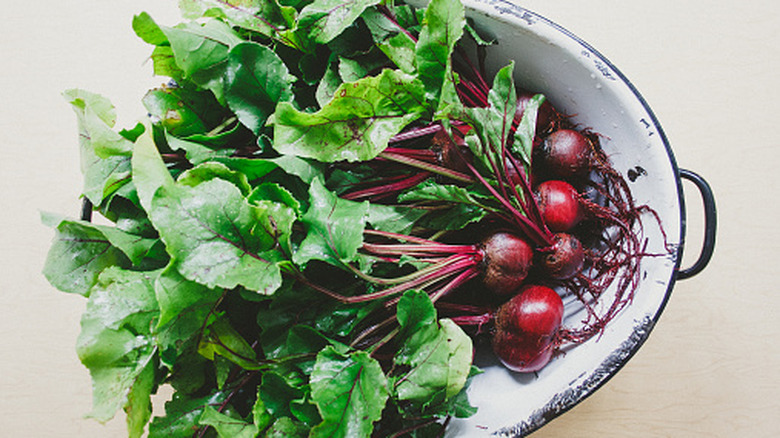
If you buy a bunch of beets at the supermarket, you're often getting two vegetables at once: the actual beets (probably what you were looking for), but also the leafy stems or beet greens, which many people chop off and throw away. But it might be worth keeping them, as they're a truly excellent source of potassium. At 369 milligrams per 100 grams, raw beet greens have more potassium than ripe bananas, a food commonly listed as a good source of the mineral. (Avocados, watermelon, and apricots are a few other commonly recommended sources of potassium.) If you're curious about cooked beet greens, 1 cup contains about 1,309 milligrams of potassium; in terms of the National Institutes of Health standards, that's about half of the daily adequate intake for adult females and a third for adult males.
The benefits of potassium are clear. Eating more of it helps your body flush out excess sodium, and it also reduces tension in the walls of your blood vessels, helping to lower blood pressure. Dietary surveys show that people in the United States generally consume less potassium than recommended, due to not eating enough fruits and vegetables. While potassium supplements are available, they don't always offer much of the mineral.
Of course, beet greens may be a little more finicky to shoehorn into your diet than peel-and-eat bananas (although for the record, you can eat beet greens raw in a salad). But they're tasty and easy to work with. They're not tough and in need of a long cooking time like collard greens, and they don't have the bitterness associated with some leafy greens — they're a bit like a sweeter Swiss chard.
What to do with beet greens
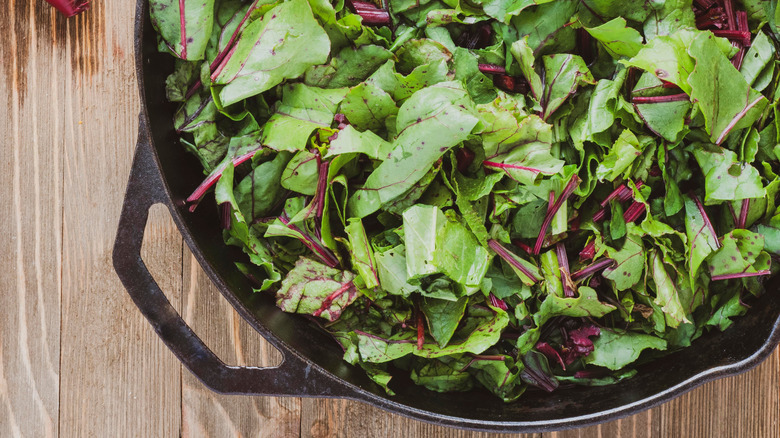
Probably the easiest way to prepare beet greens is to saute them. Heat up some olive oil in a pan and cook them with some garlic and maybe chili flakes for a little kick. Once the greens hit the pan, they only need maybe two or three minutes to cook; finish them with some lemon juice or vinegar. You can use those sauteed greens in a pasta, grain bowl, or fold them into scrambled eggs at breakfast. They could also go into soups or be blended into pesto with some nuts, oil, and garlic: Really, any application that calls for other cooked greens like spinach, chard, or kale is probably a solid bet.
There's one thing to pay special attention to, and that's the stems. They're tougher and may need a longer cooking time than the leaves, so you may want to separate them and start sauteing them earlier. However, if you're okay with some crunch, you can cook them all together too. The stems often have a bright red color, so they can also add a vibrant hue to your dishes.
When it comes to raw beet greens, you'll probably want younger leaves, which are smaller. These can work as the leafy greens in a salad. Simply mix in some chopped herbs and prepare a classic vinaigrette for a flavorful, potassium-packed side.