

Slippery Oven Knobs? Here's How To Completely Remove That Grease And Grime
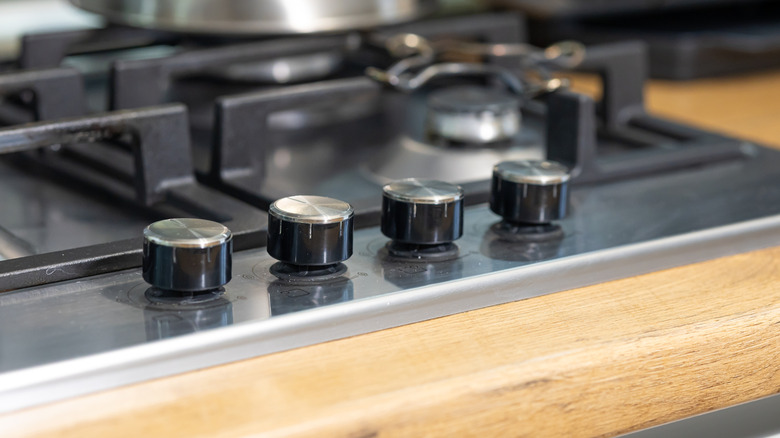
There is nothing worse than a grease-laden stovetop and oven. And sometimes it may seem like there is no amount of scrubbing that will rid its knobs of the caked-on mess. But there are a few tips and tricks that you can use to tackle this issue. It just takes a little patience, planning ahead, and some basic cleaning supplies you likely already have on hand.
First, make sure you begin at a time when others won't need the stove. You'll want to plan for around an hour of cleaning to be safe and double-check that your appliance has removable knobs (if it doesn't, we'll cover another cleaning method later). This is partly because you'll need to fully remove the greasy knobs, rendering the burners unusable. Ensure the stovetop is still off once removed, then place the knobs in a container of warm, soapy water to help break down grime. While the knobs soak, you may as well also use a butter knife to clean the gaps between your stove and countertop.
If you choose to submerge the knobs, don't leave them soaking for more than 15 minutes. If the knobs sit for too long, you may risk damaging their surface coating and markings. That said, soaking might not be the best option for your appliance's knobs if they feature any parts or materials that shouldn't get wet. In that case, you can use the soapy water mixture to wipe off the knobs directly and place them on a towel to dry. In the meantime, use a soft cloth to clean the surface underneath. Allow all components to dry entirely before replacing your clean knobs on the stove.
Other cleaning tips to consider
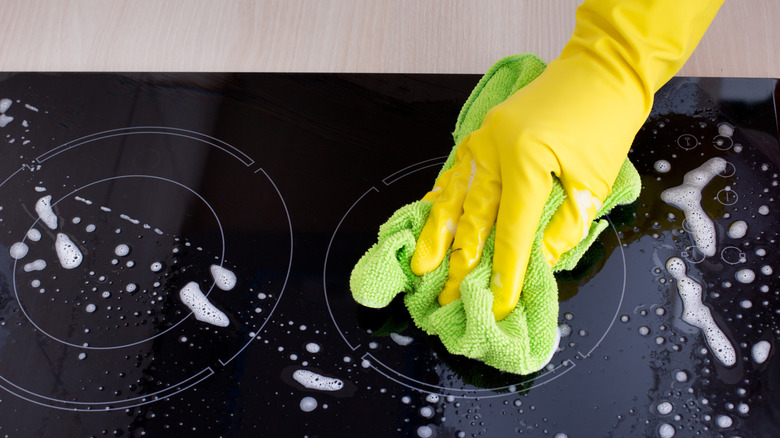
To avoid future grease buildup, it's best to add stovetop knobs to your monthly kitchen cleaning routine, and quickly wipe them down at least once a week. The more often you tackle this area, the less often you'll have to deep clean it. In instances where you cannot remove the knobs, you'll need to adjust your technique and use a toothbrush or a cotton swab. Small, detail-oriented tools will help you clean them without having to disassemble the stove, which isn't always practical.
When cleaning your stovetop, take care to use gentle, non-corrosive or eco-friendly, natural cleaners. Besides dish soap, something as simple as vinegar could help break down stubborn grease. The same goes for avoiding rough sponges or steel wool, which can result in a huge cleaning mistake when it comes to glass stovetops. Heavy-duty cleaners can be dangerous and damage your appliance. If you aren't careful, you may strip the finish off your knobs and the surrounding areas.
On that note, you should never use glass cleaner to clean your stovetop, or its knobs for that matter, as it could damage these surfaces. Not everyone is aware of these nuances, which is why you should always confirm a cleaning product's compatibility with your appliances before you tackle your chores. When in doubt, it's always best to start with warm, soapy water.