

4 Fallout Shelter Canned Foods Popular During The Cold War
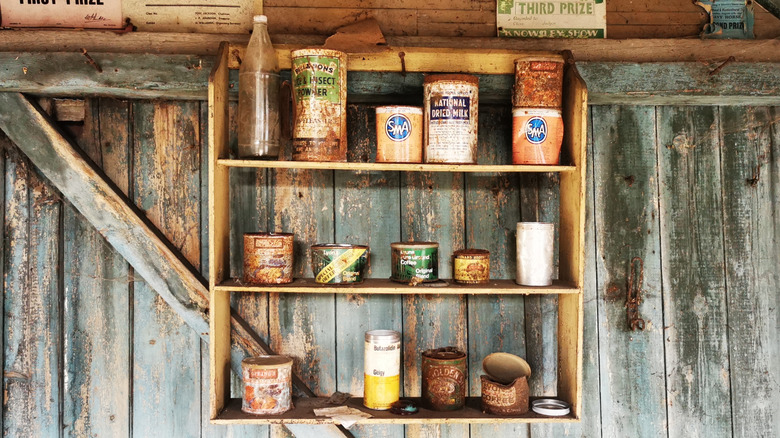
The Cold War lasted for decades and had many Americans scared about the potential of a nuclear attack from the Soviet Union. This prompted the development of fallout shelters — contained, often underground living spaces where people escaping a nuclear blast could wait for weeks (or more) for the fallout to end. These shelters were primarily built in the 1960s after President John F. Kennedy urged Americans to create them for protection. Of course, fallout shelters had to be stocked with supplies to meet basic needs, including food. Since no one knew whether nuclear warfare would actually occur, stocking shelters with long-lasting canned foods was key to preparing to spend a ton of time underground.
We did a deep dive to learn more about the types of canned foods that were stocked in Cold War-era fallout shelters and what we found was ... interesting, to say the least. A publicly issued pamphlet from the Department of Defense encouraged Americans to prepare by stocking up on familiar foods, stating that "they are more heartening and acceptable during times of stress." Let's take a look at exactly what preppers stocked in their fallout bunkers when the threat of nuclear war seemed to be looming.
Multi-purpose food powder was a must-have
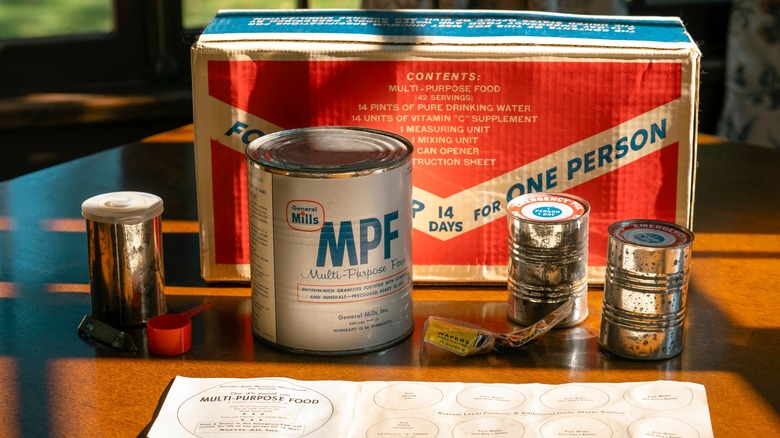
Also known as MPF, multi-purpose food was a fallout shelter staple. The company didn't develop the substance specifically for the Cold War, rather, it was created as a way to help Europeans struggling with malnutrition and hunger following World War II. What was multi-purpose food, exactly? The brainchild of California-based restaurant owner Clifford Clinton, biochemistry professor Dr. Henry Borsook, and French cook Madame Solange Berczeller, the powdered stuff was a combination of dehydrated vegetables, seasonings, and soy grits.
General Mills went on to manufacture multi-purpose food for the masses, distributing it in large white cans. According to a vintage ad (via Cornell University Library), MPF was "virtually non-perishable," even after the can was opened. The ad lists several different ways to consume MPF, including mixing it up with a glass of tomato juice, mixing it with dry milk and cold water to create a cereal (the company recommended adding a bit of brown sugar to sweeten it), and adding it to hot water with a bit of soy sauce for flavor. The ad also states that it's fine to eat dry MPF as is if necessary.
While MPF certainly doesn't sound like the most appetizing apocalyptic meal, it kind of made sense. It could turn into several different meals and each 2-ounce portion provided over a third of an adult's protein needs as well as a third of the minimum daily requirements for many nutrients, including vitamins A and D, iron, calcium, iodine, and thiamine. A 4 ½ pound tin cost $2.50 in the 1960s (equivalent to about $28 in 2026), bringing each serving to $0.07 (worth about $0.78 today).
Spam was a simple, reliable protein source to stockpile
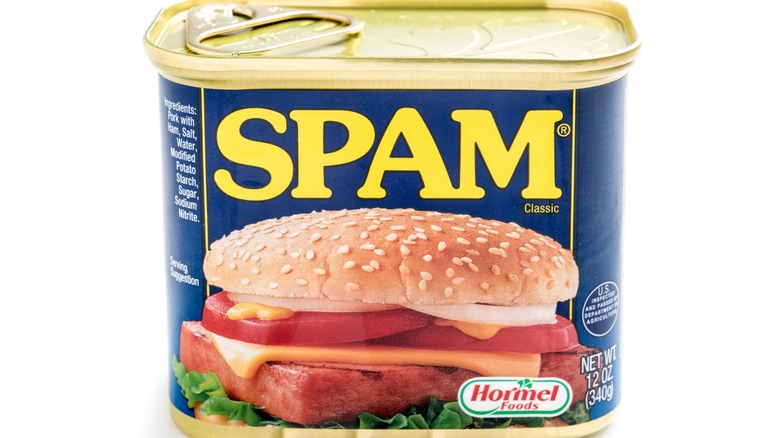
Canned meat was on the short list of the foods the U.S. government recommended for fallout shelters, and it makes sense. Protein is an essential nutrient, and canned meat — like Spam — packs a punch (a 2-ounce serving offers 7 grams of protein). Many people turned their noses up at Spam at the end of World War II, but the canned meat saw a resurgence of popularity in the '60s. While there had long been a rumor that it would stay fresh forever, which Hormel acknowledges on its website, the company recommends sticking to the "best by" date on the bottom of each can.
Since Spam is fully cooked before it's canned, no heat source is required to prepare and eat it — an important factor when would-be survivalists thought about how they'd create meals underground. A meal suggestion from Marie Adams, a Charlotte News food editor who ran a column that focused on recipes that could be made underground, included cold slices of Spam topped with a brown sugar glaze, a cold vichyssoise made from condensed soup, crackers, canned tomatoes, and canned fruit. While it may not have been one of the recipes that can take Spam to the next level according to our modern tastes, the familiar salty, savory flavor of a Spam-heavy dinner may have provided a sense of comfort and satiety in the event that Americans had to hunker down and wait for nuclear fallout to pass in the 1960s.
Canned deviled ham was a mid-century staple in both standard and fallout pantries
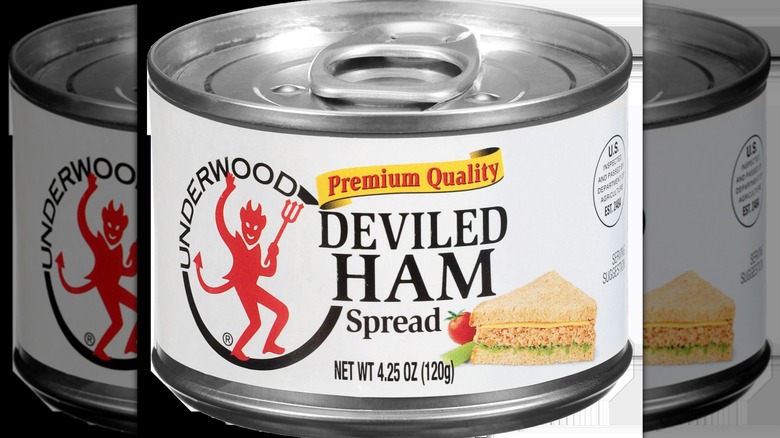
A holdover from the Great Depression, ham salad — commonly known as deviled ham — was once the star of dinner parties and yet another fallout shelter staple. Marie Adams was a major fan of the potted meat — specifically, the Underwood brand. The sandwich spread was versatile and could even be enjoyed on its own in a pinch. However, Adams recommended mixing deviled ham with tabasco sauce and mayonnaise before spreading it on crackers (another mainstay of fallout shelter pantries).
Deviled ham also did the job of providing a large amount of calories without requiring a ton of storage space. A ¼ cup of the stuff (half of a can) offers 180 calories and 8 grams of protein. While multi-purpose food did a good job of providing essential vitamins and minerals, which deviled ham is certainly lacking in, this filling canned meat could help provide the necessary calories to keep energy levels up. If you've never given deviled ham a try, you might want to pick some up next time you're at the store — the vintage spread is salty, savory, and totally deserving of a comeback.
Canned juices were a go-to item for many
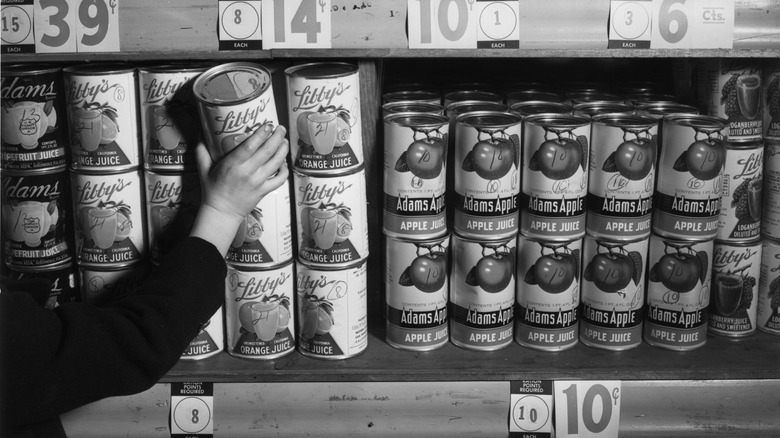
Think about how often you end up tossing produce that sits on your counter. Fresh fruit simply doesn't last for a long time, but canned fruit juice offered a way to enjoy the taste (and the vitamins) that people would miss during their time in the shelter. While some people stockpiled canned water (it was sold at the survival stores that started to pop up during the Cold War era), it makes sense that canned juice was easier for the average person to get their hands on, offering a reliable, non-perishable way to stay hydrated.
In addition to providing a simple way to stay hydrated, juices could also provide essential vitamins while people were stuck underground, and there were a variety to choose from. A Cold War era bunker that was explored in 2013 had a supply of pineapple juice. Tomato juice could be enjoyed on its own or alongside fallout-shelter-friendly recipes — this was really a thing. Marie Adams recommended serving a glass of tomato juice alongside her deviled ham salad.