

These Beautiful Flowers Will Help Your Zucchini Grow Bigger Than Ever
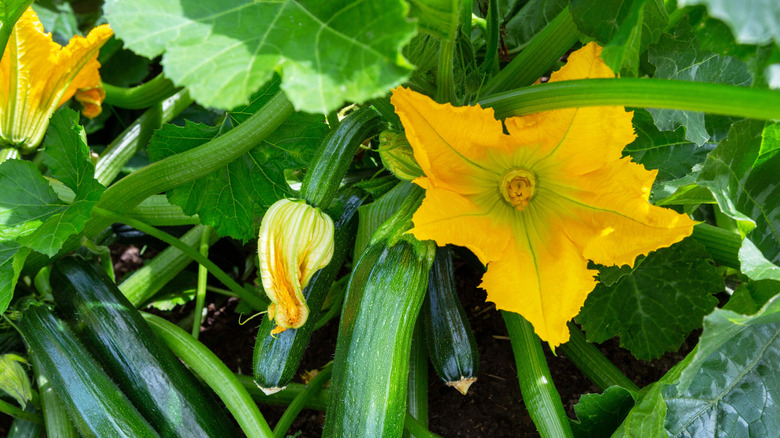
Whether you're a first-time gardener trying to avoid the mistake of overplanting or starting a container garden with limited space, you can't go wrong with zucchini. These beautiful summer squash first produce sturdy vines studded with silky, yellow flowers before transforming into the delicious fruits of your labor. Additionally, a well-tended grouping of vines almost always produce more zucchini than you need, meaning you have plenty of home-grown veg to freeze, jar, or pickle for a taste of summer sun during the long, cold winter.
Of course, that's assuming your zukes pollinate properly and remain pest-free, something made much easier by embracing the practice of companion planting in your garden. In particular, zinnia flowers are an excellent companion for zucchini, not just because they align alphabetically, but also because zinnias' gorgeous, brightly colored petals attract all the right bugs to your garden. This fosters healthy pollination and helps deter and eradicate pests, such as vine borers, squash bugs, aphids, and cucumber beetles.
Zinnias do this by bringing in various pollinators, including bees and butterflies, along with beneficial predatory insects such as ladybugs, parasitic wasps, and lacewings. The pollinators are more likely to service your zucchini blossoms if they're already enjoying the zinnias. The promise of nectar is also a draw for the aforementioned predatory insects since they feed on it to help keep their energy high for hunting down and predating common garden pests. Zinnia petals are also edible, and are perfect for natural confetti on desserts.
Planning the perfect zinnia and zucchini garden plot
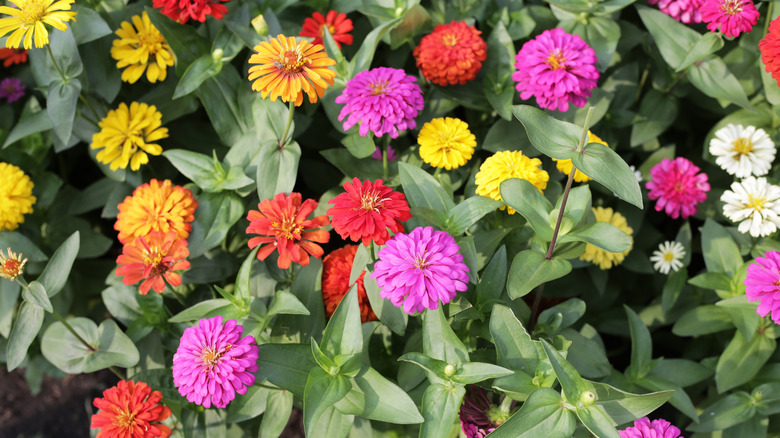
Since both zucchini and zinnias are annuals (they don't reseed themselves), adding them to your garden means you need to replant them each year. This may mean saving seeds from the previous year's plants, or purchasing seeds or seedlings annually to start your garden once spring comes. As with most companion plants, these beautiful blossoms and summer squash also have similar growing requirements, which lets them thrive in the same garden bed. About six hours of full sun per day and rich, well-drained soil should have both plants blossoming in no time.
However, if you plan to plant these companions in a container, add a trellis for your zucchini and position the container so the sun falls across the foreground of the container, on the zinnias, with the trellis also in full sun. Otherwise, the trellis may cause shadows that stunt zinnias. Similarly, certain zinnia varieties can grow up to 3 feet tall. Whether you're gardening in containers or a ground plot, leave enough space between zukes and zinnias that the zuke blossoms get lots of light. Planting a border of zinnias around your zucchini is beneficial anyway, since pests likely eat them first and leave your squash alone. With these guidelines in place, you're almost certain to have a bountiful harvest for making vegetarian lasagna and beautifully crispy zucchini fries in the air fryer.