

Tips For Scoring The Best Ribeye On Supermarket Shelves
We may receive a commission on purchases made from links.
Rich, buttery and undeniably tender, ribeye is often considered the gold standard among beef cuts. Because of its high intramuscular fat content (also known as marbling), it comes as no surprise that ribeye steak is the perfect cut for grilling, pan-searing or even broiling. Still, how do you actually choose the best ribeye when supermarket shelves are loaded with dozens of options that look identical? This is where Brad Baych, professional chef, butcher, and author of "Primal Cuts: A Butcher's Guide to Selecting, Preparing, and Perfecting Beef," provided valuable insight.
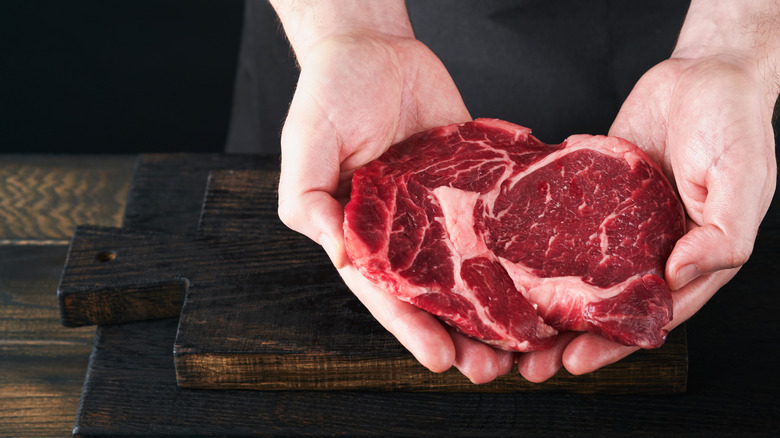
"When shopping for a pre-cut ribeye I look for the biggest spinalis muscle," Baych told Chowhound. Also known as the ribeye cap, the spinalis muscle is typically found at the ribeye's outer edge and is a strong indicator of a premium cut. He explained that this particular muscle is small and runs along the top of the ribeye, but what it lacks in size it makes up for in flavor. "It is well marbled and might be the best bite of steak on the whole cow," Baych pointed out. Marbling is perhaps the ultimate flavor carrier in a cut of beef, which is probably why ribeye is one of the most popular steak cuts, and why the size of the ribeye cap is a good predictor of flavor. According to Baych, the spinalis is just one of several factors to look at when picking a ribeye.
Bone-in ribeye steaks tend to be packed with more flavor
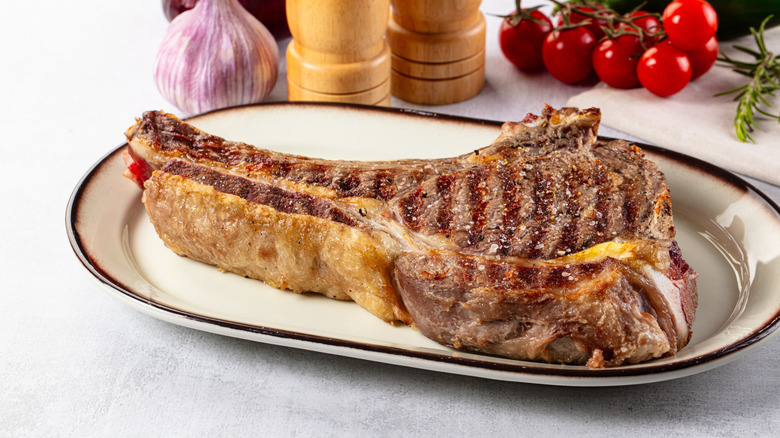
When asked about what else shoppers should look for when buying a ribeye, Brad Baych, who is also the voice behind the Butcher Wizard platform and YouTube channel, noted that they must decide between bone-in and boneless ribeye. "Steaks cooked on the bone can be more flavorful and are less prone to overcooking," he said.
The bone doesn't actually add much flavor to your ribeye, but it changes how it's cooked. It works like an insulator, protecting the meat around it from the heat and slowing down the cooking process. As a result, the meat next to the bone will remain 5 to 10 degrees Fahrenheit cooler than the middle of the ribeye. This, in turn, will reduce the chance of overcooking and help the meat stay juicy and moist. On the other hand, a boneless ribeye cooks more quickly, so it's better if you want it ready sooner. Ultimately, choosing between bone-in and boneless comes down to personal preference. As long as you avoid the mistakes everyone makes when cooking ribeye steaks at home, you'll end up with a delightful steak.