

For The Fluffiest Bakery-Style Cupcakes, Reach For This Type Of Flour
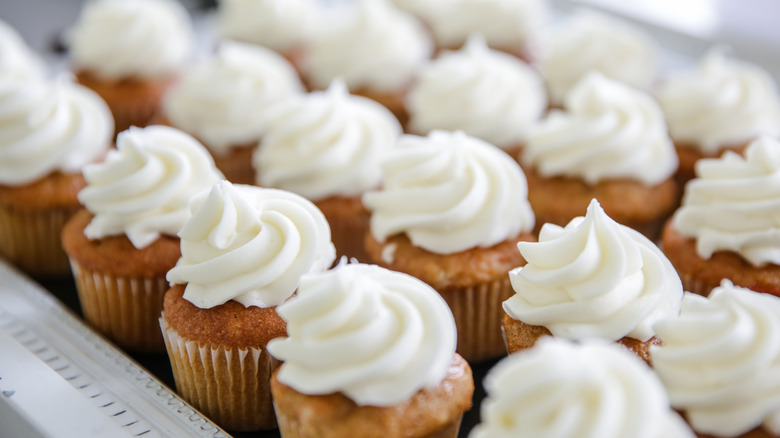
Baking is scientific and can easily go wrong if you even slightly deviate from a recipe. This is especially the case when it comes to cupcakes and different types of flour. Many bakers keep all-purpose flour stocked up as it's useful across many recipes. But a simple flour swap can make all the difference in the texture of your cupcakes. For fluffy cupcakes with the delicate, light crumb you'd find at a bakery, swap all-purpose flour for cake flour in your next bake.
Not all flour is made the same. Many varieties contain different types of wheat with varied protein content percentages. Cake flour is made with soft wheat, meaning it contains a higher starch content and less protein than any other type of flour. For instance, all-purpose flour contains around 8% to 12% protein (depending on producer). Meanwhile, some brands of cake flour contain just 6% to 8% protein, though other brands can contain up to 10%.
Once you combine your flour with water, it forms gluten strands. Because higher protein percentages create more of these strands, the resulting cupcakes will be denser. If instead you opt for cake flour, the end result is less glutinous and less chewy. This type of flour has a finely milled, silken texture, and its low protein-to-starch ratio increases its absorbency. This, along with the chlorine gas used to whiten the flour, is what results in a lighter, moist bake. You can use cake flour across most delicate recipes to achieve a light crumb. However, for hearty, ingredient-packed treats like carrot cake cupcakes, stick to all-purpose flour to provide the necessary structure.
Other tips to ensure a fluffy bake
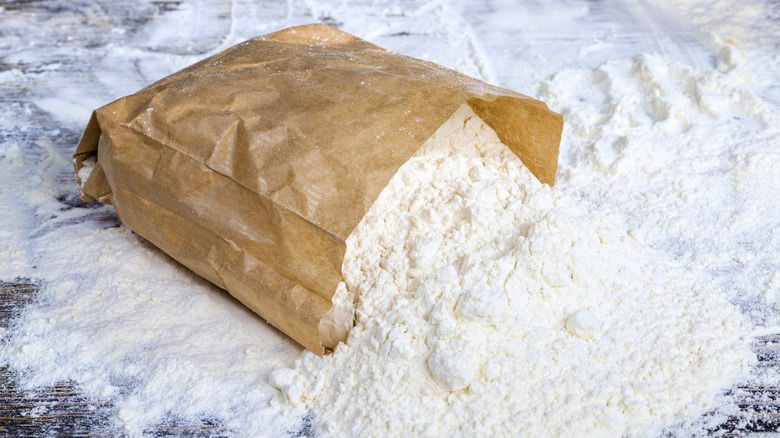
Cake flour, being very fine, tends to form clumps that will negatively impact your cupcakes' texture. This is why it's essential to sift it before incorporating it into your batter, especially if it's been sitting in your pantry for a while. After that, it's important to not over-mix your batter. This can cause cupcakes to come out too chewy and less fluffy due to over-strengthened gluten structures. Though under-mixing is also not ideal, some bakers even maintain that it's better to leave your batter a bit under-mixed than to risk over-mixing it. Just make sure to blend out flour lumps to avoid a gritty result. And when you go to fill your cupcake liners, use the kitchen scale technique for perfectly portioned cupcakes.
It seems obvious, but you'll get fluffy cupcakes by baking them at the right temperature. If your oven is too low, they're more likely to come out short and less spongy. If the oven is too hot, cupcakes can bake unevenly and expand into unwanted shapes. Alternatively, to give your oven a break, make cupcakes in half the time by steaming them on the stovetop. They'll be tender, moist, and spongy, though they can get soggy if you aren't careful.
If you don't have cake flour on hand at all, simply remove 2 tablespoons per cup of all-purpose flour and swap with corn starch, sifting them together well. Corn starch is near devoid of protein, acting to balance the overall amount in the flour. This isn't an exact swap for cake flour, but you'll get an airier result than if you were to use all-purpose flour alone.