

Here's Why Fast Food Fried Chicken Is So Darn Good
We may receive a commission on purchases made from links.
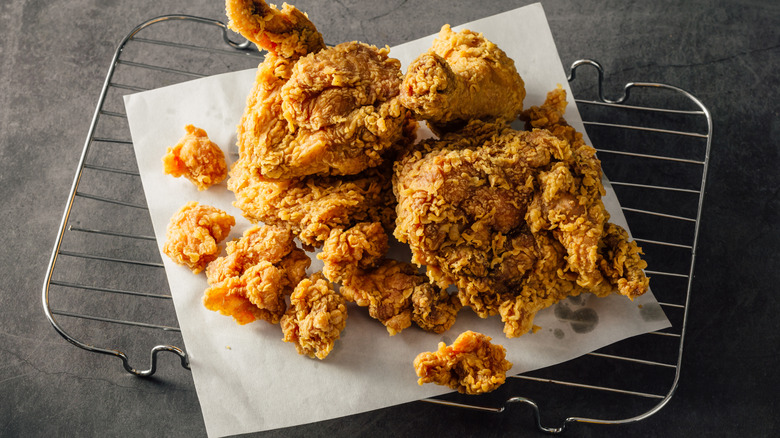
Crispy and crunchy on the outside, and tender and juicy on the inside, fried chicken is salty, savory, packed with spices, and always hits the spot. So, you can't really go wrong with it, whether you choose the simple classic fried chicken or the sweet and spicy Korean fried popcorn chicken that became an instant obsession the moment you tried it. However, no matter how carefully you try to recreate the recipe at home, there's something about fast food fried chicken that always makes it tastier.
According to Chip Carter, the producer and host of the National TV, YouTube, and classroom series, "Where the food comes from," experience is one factor that makes fast food fried chicken so flavorful. "They do it all day every day," Carter emphasized in an exclusive talk with Chowhound. "What's more, they're starting with a recipe that teams of people with virtually unlimited resources worked unknown time to develop and perfect." The specialized kitchen equipment they use also makes a difference. They have deep fryers big enough to fully submerge chicken, as well as access to large quantities of quality oil for frying. Of more importance is the fact that they are able to control the temperature of oil precisely, which Carter says is crucial for good frying.
Clara Park, chef and founder of eat cetera philly culinary school, also agrees. She told Chowhound that fast food chains like Popeyes have industrial fryers which allow as precise as 0.1 degree temperature control. Seasonings are of equal importance, monosodium glutamate (MSG) in particular. "MSG, the king of flavor enhancement, is the reason why fast food, Chinese food, and any other food that has MSG in it, tastes so good," Park said.
Some fast food chains use MSG in their recipes
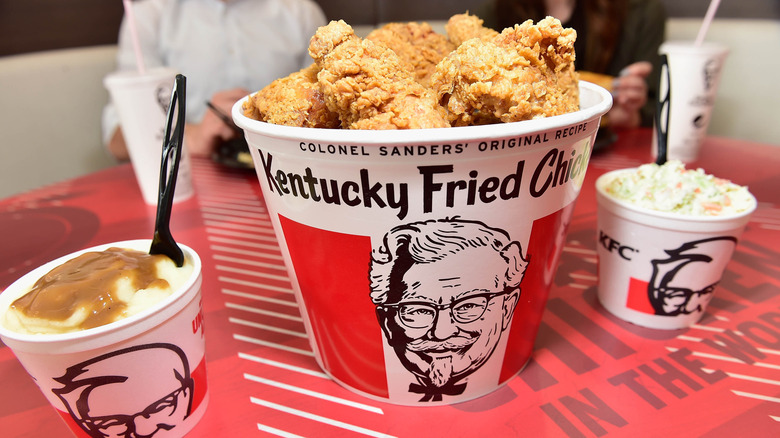
Many fast food chain restaurants use MSG in their food, particularly in fried chicken. KFC, Chick-fil-A, and Zaxby's are just a few examples of joints that use this seasoning in certain dishes. MSG is a common additive that boosts the umami flavor of food. Naturally found in foods like parmesan cheese, mushrooms, and asparagus, this odorless white crystalline powder, which closely resembles table salt or granulated sugar, was first extracted in 1908 from seaweed broth by Japanese professor Kikunae Ikeda. He later patented it after discovering its effect on the soup's flavor. "Consider it an umami bomb powder that makes everything taste better," Clara Park said. "I've used it on meats, vegetables, and even to kick up salad dressing because it is magic."
Even though MSG developed a negative reputation in the late 1960s over toxicity claims, the US Food and Drug Administration (FDA) considers it safe in typical amounts (which don't usually exceed 0.5 grams per serving). "In reality, MSG has gotten something of an unearned bad rep; it's a natural food substance, it comes from fermenting beets or sugar cane or molasses, you know, the same way we make booze," Chip Carter pointed out, adding that it's been used for ages. "Some people are sensitive to it, but that doesn't necessarily make it bad." If you'd like to use MSG to make your fried chicken, Carter recommends mixing it into the flour or base seasoning, or simply sprinkling it on the meat itself.
The secrets home cooks can steal from fried chicken chains
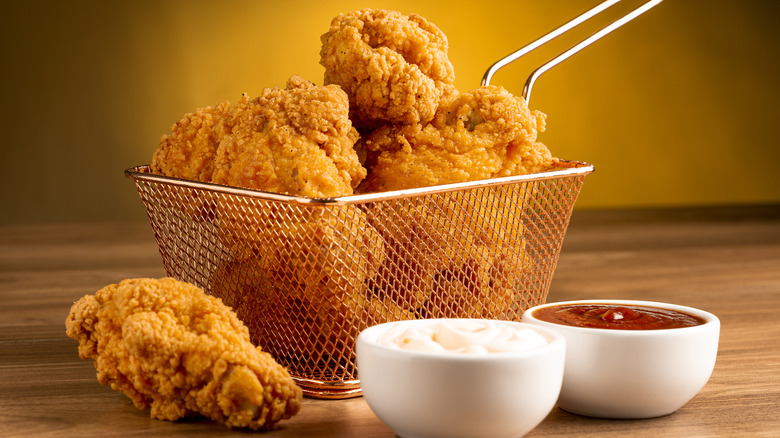
While home cooks can try, matching the flavor and texture of fast food fried chicken is practically impossible. It's even harder without a commercial kitchen or a deep fryer. However, according to Chip Carter, a very heavy skillet, preferably cast iron, can noticeably improve the final result. This is because cast iron's great heat retention will keep the oil temperature steady and deliver evenly cooked chicken. "Don't use light pans or aluminum, frying chicken is heavy duty work and needs heavy duty performance," he stated.
Using a neutral, high-heat oil, like peanut oil is a must for the flavor, texture, and stability. Still, the one thing that truly matters is cooking the chicken at (and maintaining) the right temperature. "You want to fry chicken between 325 to 350 degrees," Carter stressed. "If the oil isn't hot enough when you start, your batter or breading starts soaking it up. That's going to make a greasy, non-crunchy mess." However, Carter's advice is to start at a slightly higher temperature as it will drop slightly once the chicken goes in. So, preheat the oil to 375 degrees Fahrenheit, reduce the heat once you add the chicken, and keep it consistent with a deep fry thermometer. This Craft911 thermometer with a pot clip from Amazon is a decent choice.
Carter also suggested experimenting with batters and coatings for a more unique taste and texture. Combining various techniques, layering methods, as well as seasonings, will result in a more flavorful crust. "Let your inner Julia Child run wild," he concluded. "Anything that sounds good as a pre-season probably is, and there's a lot of that in restaurant fare."