

Old Curtain Rods Are The Key To Creating The Cutest Indoor Herb Garden
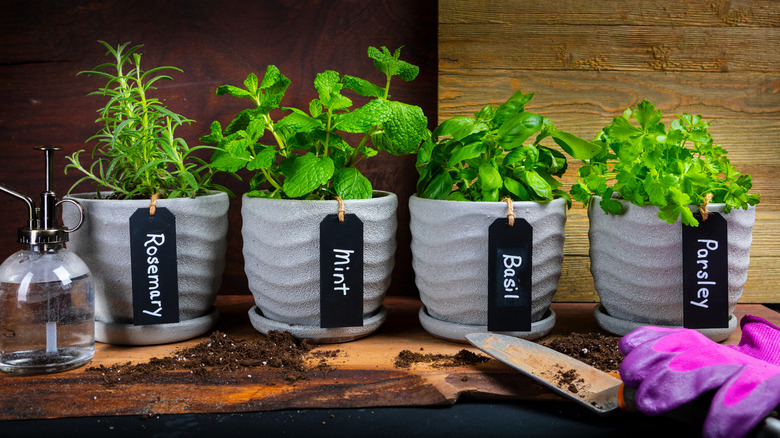
Growing your own herbs is a practical hobby to pick up, as fresh herbs can turn grocery store olive oil into liquid gold, make simple pasta dishes feel gourmet, and make the air in your kitchen smell fresh just by being there. While many kitchens have convenient bay windows or sunny sills above the sink perfect for crafting your very own indoor herbal tea garden, other spaces may require a little creativity and thoughtful planning when it comes to finding the right space for your plants.
For instance, if your sink's window is your cat's favorite place to nap or you only have tall windows with narrow sills, a set of old curtain rods is the perfect way to work around these problems. Simply install each rod across the window instead of above it, and suspend your herbs on it in small hanging planters. You can either use a single rod, if your window is fairly short, or arrange several rods ladder-style down the length of the window. To hang your plants, place the containers in sturdy macarame planter nets made of nylon cord and use either S-hooks or shower curtain hooks to suspend them from the rods.
This solution not only allows you to easily cultivate fresh herbs all summer long, but also keeps your plants safe from little ones and pets. It even provides a lush and leafy privacy screen for your window. Just be sure to install the curtain rods with enough room between them that the planters don't interfere with the herbs growing above or below — between 10 and 12 inches should work.
Choosing the right planters, labeling, and more
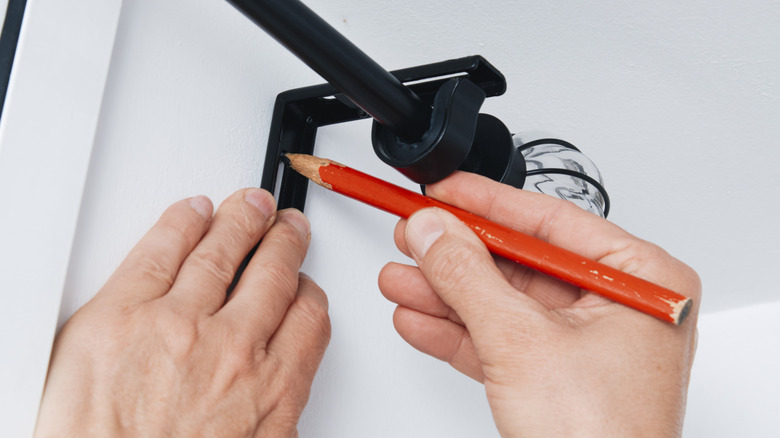
When installing the curtain rods for your hanging herb garden, it's crucial that you use strong brackets that are screwed into the wall or window frame. Avoid using adhesive strips, which can only hold so much weight and may cause your garden to come crashing down when you least expect it. Additionally, if you don't have ready access to old curtain rods, feel free to use any other sturdy rod, such as a wooden broom handle or thick dowels. Think about spray painting these items to help coordinate them with your kitchen's decor.
Something else to think about is the type of planters you'll use. Ceramic and glass jars both work well, as they're sturdy and won't fall apart as plastic containers or planting bags might. Just be sure to add pebbles to the bottom of each container for drainage, as adding drain holes would just make a mess under your window.
Once your herbs start to sprout, it'll be easy to tell them apart, but prior to that you'll need to label them. A swipe of chalkboard paint on your containers allows you to write the herbs' names and later repurpose the containers for other things. However, you can also use the good old popsicle stick trick to label each herb until they start to grow.