

How 14th Century Italians Made Gnocchi Without Potatoes (Cheese Lovers Listen Up)
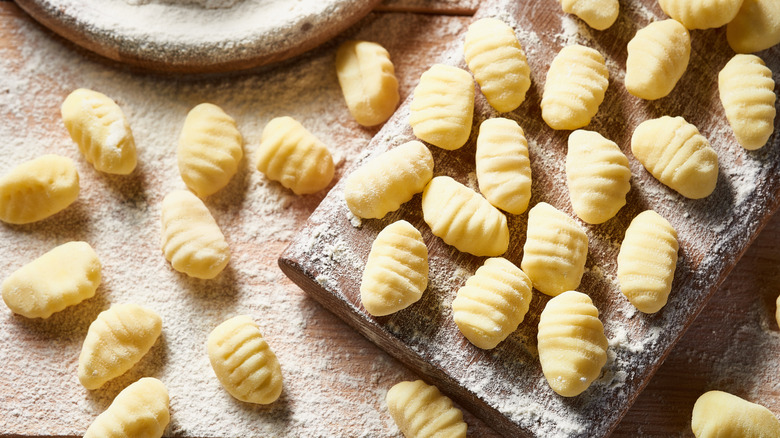
The soft and pillowy bites of potato we know and love as gnocchi today looked a little different in 14th century Italy. Back then, potatoes hadn't made their way into European kitchens and so, Italians originally made these dumplings with something they did have plenty of: cheese. But gnocchi, which is not actually pasta, is pretty flexible — these days, it's not uncommon to find recipes for the likes of cauliflower or pumpkin gnocchi. And so a cheese-based dumpling is not that wild when you think about it. In fact, gnocchi di ricotta still exists today and is possibly the most modern-day version of this 14th century dish.
There may not be many recipes from this time, but from what's available in the archives, it seems like cheese gnocchi was made by mixing soft fresh cheese with egg yolks and flour. Some of the original texts don't specify the exact cheese to use, only calling for some kind of fresh cheese, (presumably what was available at the time). There seems to have been much less perfection involved as well — no pressing grooves into the dough with a fork. Instead, the lumps of cheesy dough were spooned into the pot before being lifted out and sprinkled with grated cheese.
What makes the 14th century version of gnocchi different
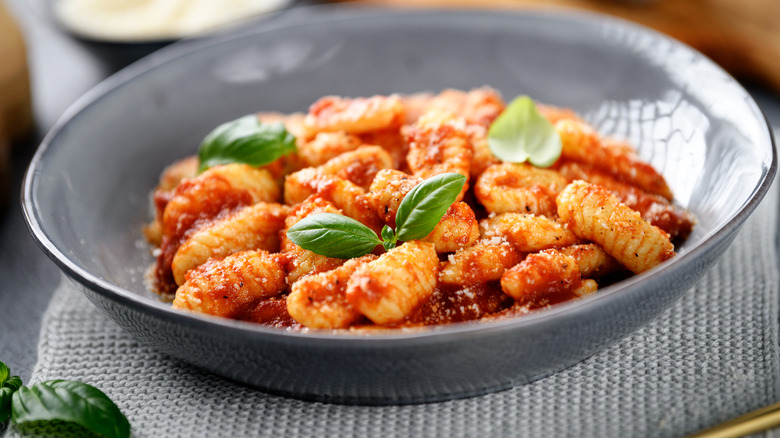
Arguably, the biggest difference in cheese-based gnocchi is the structure. While today, it's potatoes and Italian 00 flour that makes gnocchi so pillowy, using cheese as the base will make the dough behave differently from the start. Fresh cheese is softer and more fragile than boiled potato, which is probably why recipes called for spooning out little lumps and dropping them straight into the water, as opposed to trying to form them into a specific shape. To recreate this recipe at home, that lack of uniformity is just part of the appeal, making the whole process also much easier. Simply mash fresh cheese (something like ricotta or goat cheese) until it's soft, add egg yolks, and keep adding flour until the dough is soft, sticky, and ready to drop into boiling water. You'll know the gnocchi are done cooking when they float to the surface.
There's some clear overlap with dishes like malfatti — translated to "badly made" — which are rustic spinach and hard cheese dumplings from the Italian regions of Tuscany and Lombardy. While they are not identical to the 14th century cheese gnocchi, they are close in spirit — poorly shaped and therefore, less polished, a technique that is much more interested in flavor than perfection.