

This Ground Beef Browning Mistake Causes Your Meat To Lose So Much Flavor
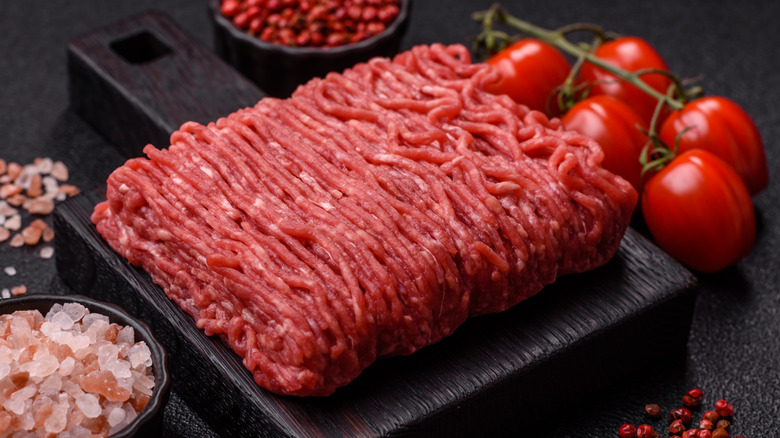
Browning ground beef always seems like it's going to be the easiest step in a recipe. The primary aim is right there in the name: you're basically just trying to get the stuff to lose its bright red hue. But if you let that baseline browning be the only goal without additional consideration, you're going to leave a lot of potential flavor on the table — or off it, as the case may be. The simple act of stirring that many of us do almost as a reflex while we try to brown is actually doing more harm than good. The real key to getting more flavor into your browned ground beef is actually to do less: less stirring, less scraping, and generally less moving around the pan for optimal color and flavor.
You need the meat to make meaningful contact with the heat to incite the Maillard reaction. The Maillard reaction is one of the reasons why meat changes color when it cooks. And that color change also brings about the roasty, toasty flavors that a lot of your meat preparations need. Jostling the ground beef around all hither and thither instead of letting it be to sizzle and sear inhibits the Maillard reaction, stymies your color development, and thus robs those crumbly protein bits of their tasty potential. Leaving it alone, particularly in the crucial early moments, is a better bet. But it still requires a strategy.
Setting yourself up for better browned beef success
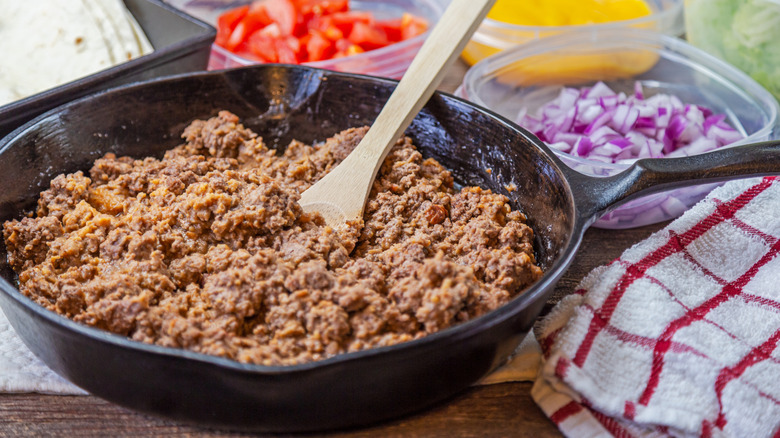
The path to perfectly browned ground beef every time begins before you even get it in the hot, oiled pan. You should always pat it dry first to remove as much errant moisture as possible before you truly get cooking. You'll also need to fight the urge to break it all up at once, which will release yet more moisture. Moisture, of course, enables steaming, steaming inhibits the Maillard reaction, and inhibiting the Maillard reaction hinders your flavorful browning. You can press the ground beef to expand across the pan, but try to keep it more or less intact at first. You can create the crumbles of your heart's content a little later.
Once one side of the ground beef has developed some nice color, you can use your wooden spoon, spatula, or whatever other tool to break it into slightly smaller sections and flip. Once the other side is good and browned, you can satisfy your itchy breaking finger and get to hacking it all down to size. Go ahead and stir now, too — you've earned it, and it'll let you see if there's still any pink that needs additional time on the heat. You should end up with beautifully browned ground beef achieved via little more than some extra patience and restraint. And simply doing less has got to be the easiest of all the ways to add more flavor to your ground beef.