

Can't Get Your Garden Tomatoes To Ripen? This Could Be Why
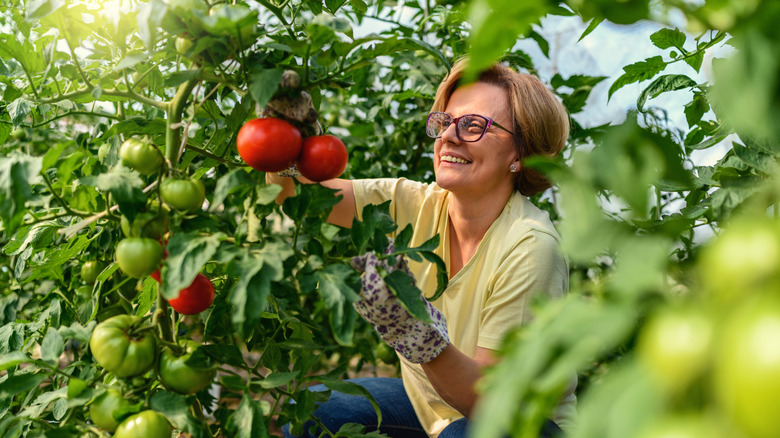
Sweet, slightly acidic, and incredibly juicy, tomatoes bring the best out of many recipes. Whether fresh and added to a classic Greek salad with cucumbers, onions, Kalamata olives, feta, and a drizzle of olive oil or simmered into a traditional marinara sauce for pastas and pizzas, they're wonderfully versatile. However, tomatoes can be incredibly tricky to grow in a home garden — even if you pick cherry tomatoes, the easiest tomato variety for beginners to grow. This means that rich, well-draining soil, at least six hours of direct sunlight per day, as well as temperatures ranging from 70 to 85 degrees Fahrenheit, are essential for their proper development. But does too much heat affect their ripening?
According to Philip Longo, owner and creator of Earth, Nails & Tails, an online platform focused on practical gardening and DIY home projects, tomatoes are highly sensitive to heat. "Once tomatoes are growing, they will still ripen in hot weather, but the key is to provide them consistent moisture via watering so they always have access to the water and nutrients they need to ripen," Longo shared in an exclusive conversation.
Temperatures above 95 degrees Fahrenheit cause heat stress in tomato plants, and disrupt the photosynthesis process and their hormone balance. High temperatures significantly limit the production of red pigments, such as lycopene and carotenoids, in tomatoes. This, in contrast, either slows down the ripening altogether, or causes the fruits to turn orange while the inside remains green. In such cases, it might be smart to harvest them and let them ripen indoors.
Can tomatoes really ripen indoors?
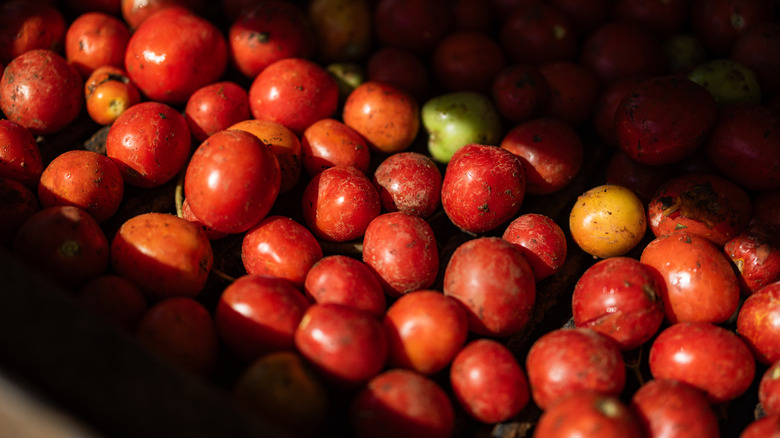
If the heat wave is only temporary, then you could easily avoid damage to your tomato harvest with this simple watering method: just water them at the base to fully soak the soil. However, if the extreme heat is expected to last for a longer period of time, the best option is to pick the tomatoes and leave them inside your home at a temperature between 70 and 75 degrees Fahrenheit. "Once the tomatoes start to blush and get to the 'breaker stage' [at] 30%-50% true color, they can be picked and brought inside [to] finishing ripening," Philip Longo told Chowhound. "This also helps to keep them from pests!"
If you're left wondering how on Earth tomatoes can ripen once they're off the plant, it's because they're climacteric fruits (as are apples, bananas, melons, and avocados). Simply put, this means they continue to ripen even after they're harvested because of the increased ethylene production (also known as the ripening hormone). Once the release of ethylene begins, it continues until the fruit reaches full maturity. This is the reason why putting a ripe tomato next to a green one speeds up the ripening process. On that note, Longo suggested that placing the tomatoes that have reached the breaker stage together in a paper or grocery bag can speed up the process and promote faster ripening. "All the tomatoes will release ethylene gas and be captured in the bag, which will help them to ripen faster," he pointed out.
How to ripen tomatoes indoors the right way
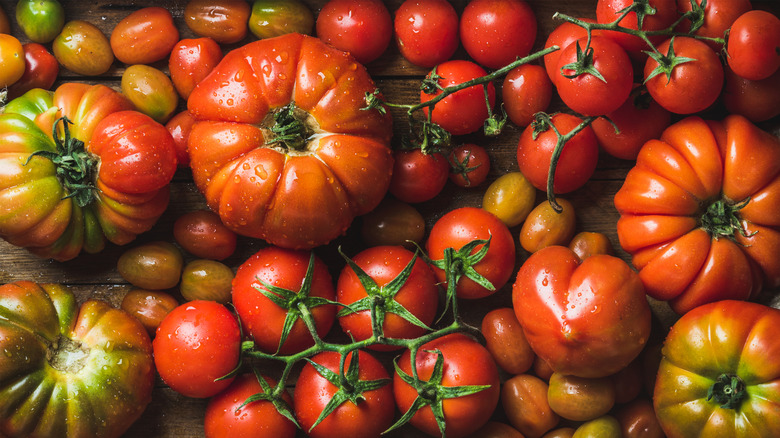
Once harvested at the breaker stage, it's crucial to know whether you should store tomatoes at room temperature or in the fridge. To finally settle the debate, Philip Longo recommended avoiding fridge storage. "I would advise against putting tomatoes in the refrigerator as it completely alters their flavor and texture," he explained. Instead, he suggested keeping them at room temperature for as long as possible, especially if they haven't fully matured yet. This is because cold temperatures cause the cell walls in tomatoes to break down, reduce enzyme activity, and delay their ripening. As a result, they become mushy, watery, and lose much of their texture and flavor. "Pick them and ripen them as needed for the best tomato eating experience," Longo stated.
He then explained that keeping the tomatoes on a flat surface is the best way to store them indoors. "When storing tomatoes indoors, it's best to put them blossom side up, stem side down, as they will ripen bottom to top," Longo recommended. With this method, you limit airflow and moisture loss and promote ripening because the stem scar (the mark where the fruit was attached to the plant) is sealed against the surface. "This will keep the bottom from getting soft and mushy as the top ripens," Longo concluded.