

Can You Eat Bruised Potatoes?
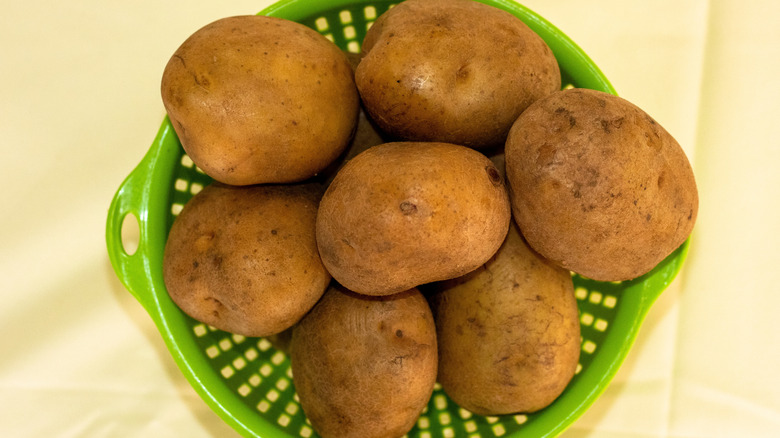
If you didn't already know, potatoes can be bruised just like any other softer produce. Bruises on potatoes are not always immediately visible, as they can be under the skin, but when you're peeling or chopping a potato, you may see an unsightly spot that's typically somewhere between light gray and black. If you drop or damage a potato yourself, be aware that bruises may also take a couple of days to show up. There are also skin-level bruises (called "shatter" bruises, in industry terminology) where the skin has been blemished or damaged, and a tough, scar-like surface will appear to "heal" the break.
The good news is that you generally won't need to throw that spud away. Bruised potatoes are generally safe to eat, but you should cut away any discolored areas to be safe, since bruises can look similar to other issues. In the case of a shatter bruise, you may want to be a little more attentive. If the lesion has healed over, the potato is probably safe to eat (as long as the interior appears normal, aside from any minor damage around the original bruise). However, an unhealed bruise, where the skin is still broken or soft, may let microbes in and could be worth throwing away, especially if it's a big bruise.
Bruising compared to other defects on potatoes
Bruising isn't the only thing that can go wrong with potatoes, so it's worth being able to tell the difference between it and other possible issues with your spuds. Perhaps the most likely mix-up is confusing a bruised potato with a rotten one. If part of the potato is rotting, it's more likely to be a red-brown or even cream-beige color. It'll also be soft, sometimes to the point of being mushy. Wrinkly potatoes may also be starting to rot or decay. They can also smell bad — though the exact smell can vary and depend on what's biologically happening in the potato. It could be anywhere from fishy to musty, but if it doesn't smell like a potato, that's a red flag.
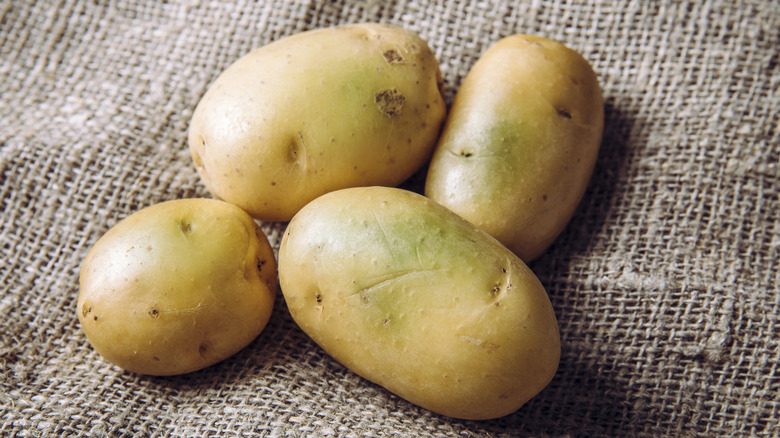
Other common potato problems don't really share characteristics with bruising, but here's what you should know just in case. A potato that's sprouting is not the same as bruising, and is likely okay to eat as long as you cut the sprouts off. But older sprouts that have grown out a bit need to be thrown away. If your potatoes have a green hue, it's from exposure to light, not bruising. The green can indicate the presence of a toxin, solanine, so potatoes that have a lot of green should probably not be eaten.