

Forget Potatoes, Give This Humble Vegetable The 'Melting' Treatment Instead
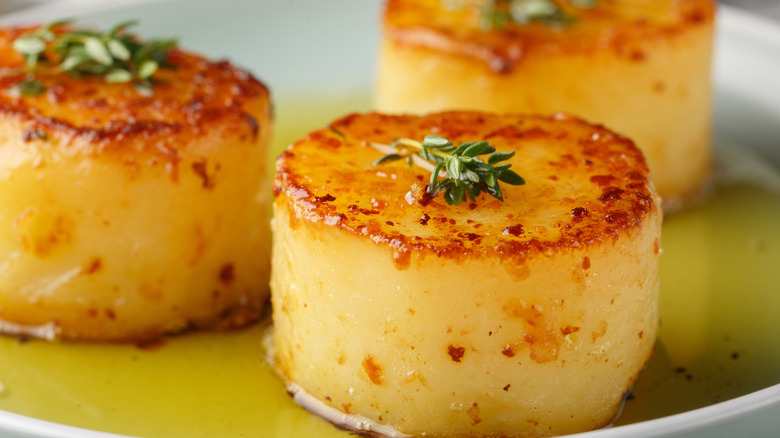
Some vegetables, like potatoes, respond beautifully to lengthy cooking — transforming from waxy and inedible to yielding, pliant, and delicious morsels that are fit to be the star of any plate. Potatoes have long been lavished in French culinary tradition, often being prepared in a "fondant" style (which simply means "melting"). In this case, the potatoes are seared at high heat and then braised for a longer period of time. But perhaps it is time for potatoes to step aside. This same technique works fantastically well on another traditionally waxy vegetable: cabbage.
Not only does sturdy cabbage yield nicely to the melting technique, but it also comes with its own health benefits. Cabbage is part of a family of cruciferous leafy vegetables that are low in calories and high in fiber, and associated with everything from aiding digestion to reducing inflammation. Swapping melted potatoes for melted cabbage is not only a health upgrade, but a flavor one as well, as this treatment mellows the taste of the cabbage – much like roasting does to garlic. You are left with the sweet and mild essence of cabbage without being overpowered by it. While many types of cabbage are candidates for melting, green or red cabbage is ideal. Or, try the newer cabbage upstart Caraflex, which is noticeably cone-shaped with a more delicate taste and a less traditional "cabbagey" funk. Just skip Napa, which is usually too delicate for this cooking method.
How to give cabbage the fondant treatment
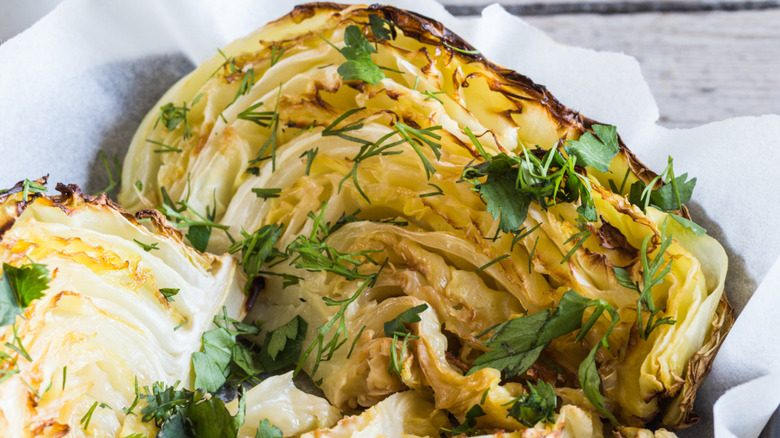
To melt cabbage, it is important to keep its core intact so that the leaves are still attached. Cabbage of choice in hand, start by slicing it into quarters. Then, give each wedge a few minutes to sear in a hot skillet on both sides, so that the edges become pleasingly toasty and charred. Part of the beauty of melted cabbage is its contrasting textures. The exterior will have a bit of crispy bite, and the interior will be tender, yet still a touch toothsome — evocative of a melt-in-your-mouth situation.
After the initial sear comes the braising portion of this cabbage cooking method, which starts with butter and onions that are slowly cooked down on the stovetop. Then, the wedges of seared cabbage are added and lovingly covered in stock to allow the slow cooking magic to happen as the cabbage becomes mild and sweet. You can add herbs of your choice, a bit of honey for extra sweetness, and some sherry or apple cider vinegar for just a bit of bite. Then, let the oven do the work for at least another hour, flipping the wedges partway through. This cooking technique is a bit of a time investment, but the proof is in the eating.