

Say Goodbye To Dry Cakes With This Bakery-Approved Water Trick
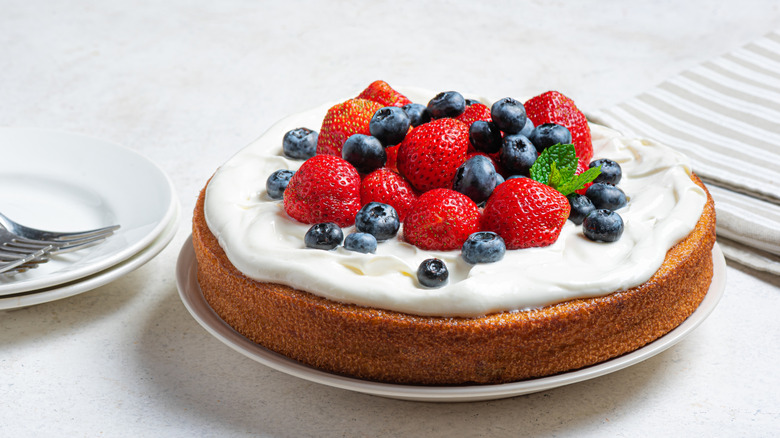
When it comes to baking, filling, and decorating cakes, there are hundreds, if not thousands, of potential variations. A simple Victoria sponge filled with jam and sweetened cream; a spicy ginger cake with cream cheese frosting; a towering wedding cake ... we love them all! But one thing we don't love is a dry cake. Savvy bakers will have a number of tricks up their sleeve for keeping cakes moist, from swapping regular cooking oil with olive oil in the batter to soaking the baked cake in a delicious syrup to revive moisture and flavor. And some cakes can benefit from a bain-marie, aka a water bath. We asked Lynne Just, consumer test kitchen manager at Hamilton Beach Brands, to explain the ins and outs of using a water bath when baking cakes. Just is a pastry chef and ServSafe certified, so she has plenty of experience when it comes to cake-baking best practices.
"A bain-marie, or a water bath, is a technique used to protect a delicate cake," Just explains. If you've ever cooked a cheesecake, you already know how helpful a water bath can be when it comes to reducing cracks. To create a water bath, simply pour your cake batter into one pan, and place that pan in a larger pan full of hot water. "As it bakes, the water helps to regulate the heat and creates steam that keeps the cake moist and prevents it from drying out or cracking," Just says.
When a water bath won't work
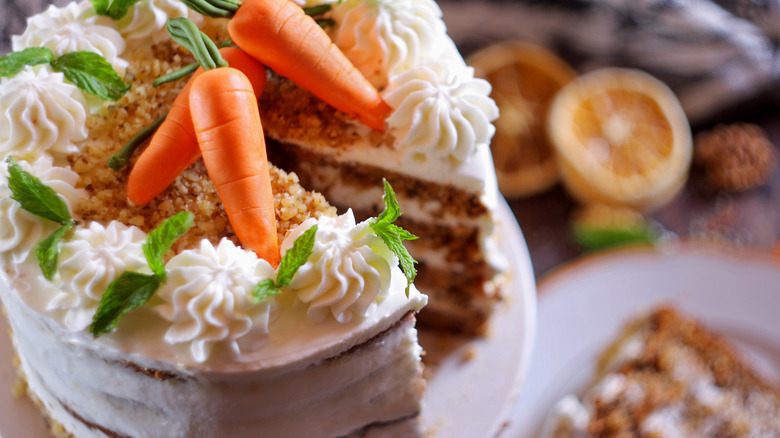
Despite how helpful a water bath can be in some circumstances, not every cake needs the treatment. Lynne Just says that a water bath is helpful for bakes like delicate sponge cakes, Japanese cakes, flourless chocolate tortes, and cheesecakes. On the other hand, more standard cakes (a.k.a. straightforward cakes that don't require fancier techniques like whipped egg whites, etc.) need dry heat in order to reach their full potential. The steam the water bath creates would disrupt the baking process, resulting in a soggy, dense cake. Examples of cakes that a water bath might ruin include carrot cake, apple cake, and pretty much any standard cake with moisture-heavy mix-ins.
However, there is a middle-ground option between a bain-marie or solely dry heat, and that is to place a shallow tray of water on the oven's lowest shelf. "This is a common technique that provides the benefits of a bain-marie — temperature regulation and added moisture — without the cake actually sitting in the water," Just explains. Still, even this additional moisture could be the bane of certain cakes. Just says that you wouldn't want to do this for a cake that is already extremely moist (such as a carrot cake) or something like an angel food cake that depends upon that dry heat to fully rise. "It's important to understand your recipe and ingredients," she concludes.