

What San Marzano Tomatoes Need To Thrive In Your Garden
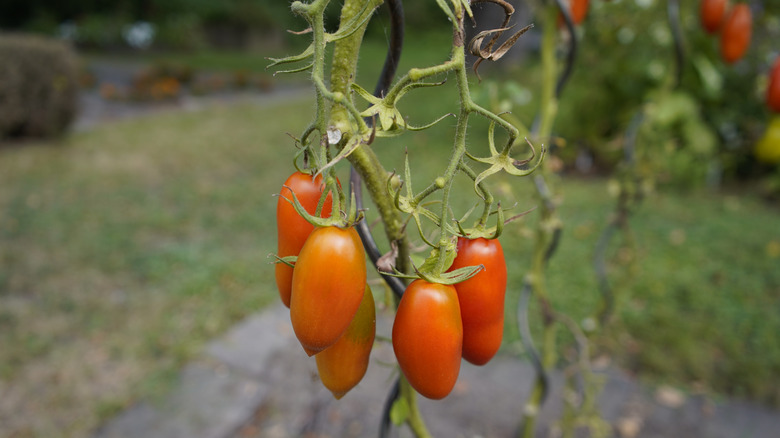
So, you're a gardening newbie, and instead of playing it safe and opting for the easiest tomato variety for beginners to grow aka cherry tomatoes, you decide to set yourself up for a challenge by going with San Marzano. That is completely understandable though. Hailing from the fertile volcanic lands in the vicinity of Naples, these tomatoes are the ultimate go-to cultivar for any classic Italian pasta and pizza sauce. They're rich and naturally sweet, only slightly tangy, and have a distinct umami depth that never leaves your tastebuds unimpressed. But putting them to use in the kitchen is one thing. The real question is: how do you actually grow them in your garden?
The first thing worth noting about this unique tomato cultivar is that it thrives in the sun. Hence, it needs plenty of direct light (sometimes even up to eight hours a day), for proper growth. What's more, in contrast to some varieties that flourish in arid conditions, such as Early Girl, Yellow Brandywine, or even Chianti Rose, San Marzano tomatoes require frequent watering to survive. This essentially means that you'd most likely need to water them up to twice a day, especially during extreme temperatures, or if they're planted in small pots or containers. Another thing to keep in mind is that they need well-drained, slightly acidic to neutral soil, which is preferably high in organic matter. With that in mind, it's particularly crucial to mix in compost or fertilizer before planting them.
When planting, make sure to give each plant plenty of space to grow
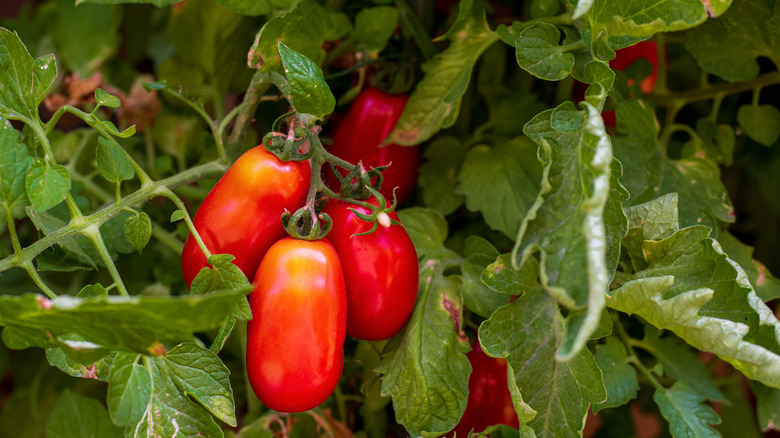
When it comes to temperature requirements, San Marzano tomatoes favor warm climates that support consistent development. The cultivar reaches its full growth potential in temperatures ranging from 50 to 95 degrees Fahrenheit. This environmental factor plays a huge role in both the the size of the fruit and the total yield, as well as the variety's distinctive flavor. If left in shaded areas, they tend to produce smaller harvests and develop weaker plants.
Now, growing your very own is a great alternative if you don't want to splurge on canned San Marzano tomatoes. To do so, you need to start the seeds indoors from late February to March in a warm, bright area. Keeping them on the windowsill will take you a long way in the early stages of development. Once the first leaves begin to sprout, you can transfer them from seedling trays to small pots, and after a few weeks (by early May or so), they will be ready to be transferred outdoors and planted in soil. Keep in mind to give each plant enough room to grow, which is why spacing them 30 to 48 inches apart is the best option.
San Marzanos typically reach maturity within 85 days of transplanting. In practice, this means that once they reach their full size and being turning slightly green or yellow, they're ready to pick. And in case you harvest them too early, just place them in a paper bag, as they are climacteric fruits (aka they continue to ripen after harvest), and let them soften for a few days. All that's left to do then is simply turn them into a sauce that tastes like it's straight from Italy.