

Ribeye Vs T-Bone Steak: Which Cut Is More Affordable?
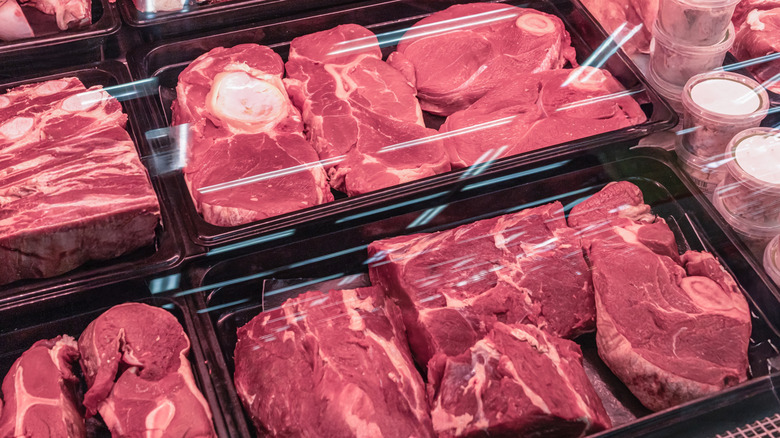
Despite what restaurant marketing might suggest, not all steaks are created equal. Between different cuts and USDA grades, quality and flavor can vary greatly, even among cuts often considered good value for the price. One of the more unique cuts you'll find at grocery stores and butchers is the T-bone, which is basically a hybrid that combines the New York strip and tenderloin (or filet mignon) separated by the bone. Then, of course, there's the ribeye, one of the most popular cuts used by restaurant chefs and home grillmasters alike. The ribeye is known for its marbling — the amount of fat contained in the steak — and is typically a larger cut, especially if it is bone-in.
While most of us already expect to pay a little more for beef, both the ribeye and the T-bone can be on the pricier end. Obviously, the larger the steak, the more expensive it will be. And a Prime-grade steak will almost always be more expensive than a Choice. That said, which cut tends to lean toward the more affordable side? Ultimately, the T-bone tends to be slightly cheaper than ribeye based on pricing at standard grocery stores, local farms, and restaurants. Let's dig into our findings.
Two cuts of steak in one for a cheaper price
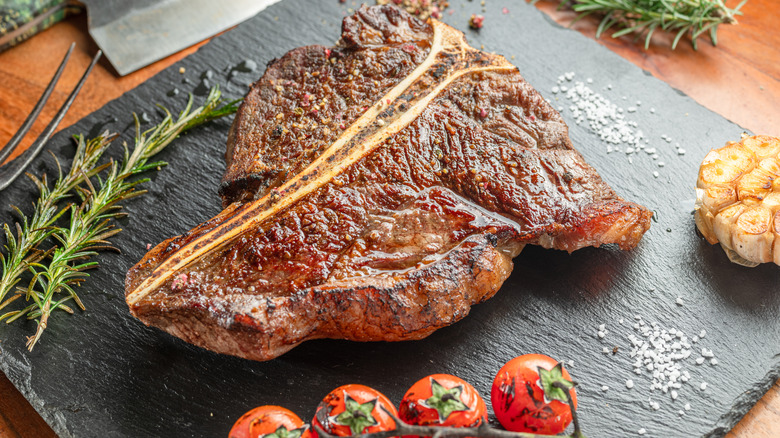
We looked at prices from three of the most popular chain steakhouses – Texas Roadhouse, Longhorn Steakhouse, and Outback Steakhouse. We also researched pricing at two popular grocery store chains, Kroger and Publix, as well as Wingham Farms, a local farm in Oregon. Overall, we found the average price of a T-bone to cost a bit more than $21 per pound, while a ribeye cut prices out at north of $25 per pound.
As expected, with markups, the priciest options come from steakhouse chains. While these steakhouses don't always offer a perfect 16-ounce portion, we did the math to work out the average cost per pound. Ribeyes run between about $28 to $37 per pound at Texas Roadhouse, Outback, and Longhorn, and T-bones are about $24 to $25 per pound (Outback doesn't have a T-bone on its menu). No surprises that grocery store pricing was much cheaper — between $17 to $22, give or take a dollar, based on the cut. And the pricing from a local farm was almost identical, with ribeye costing $18.50 and a T-bone selling for $18 per pound.
Overall, both cuts are comparable in pricing until you start looking at restaurants. The $4 difference between the two is largely due to those markups. For instance, Outback's Rockhampton Ribeye costs $29.99 for a 13-ounce cut – which, when you do the math, adds up to nearly $37 per pound. But if you go the DIY route, you can save a good bit of money. Both cuts pack plenty of flavor and are perfect for grilling. You really can't go wrong with either one.