

The Controversial Food Additive You'll Never Find In Aldi's Products
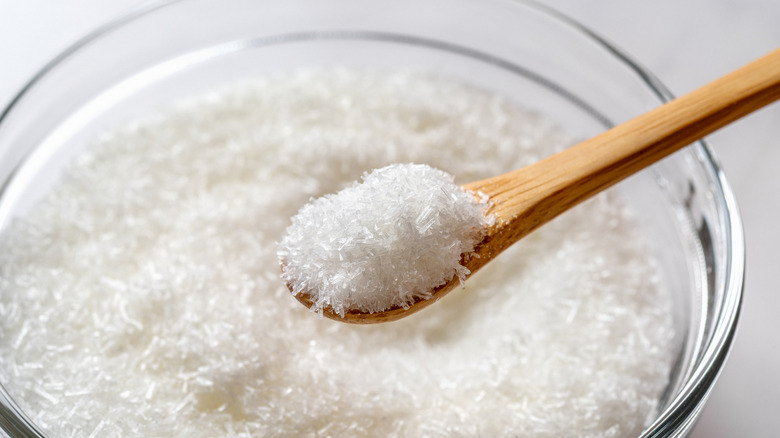
Monosodium glutamate is an odorless additive often used as a flavor enhancer — just like salt, although there are some differences between salt and MSG. MSG is controversial, and that may be why Aldi has chosen to keep this additive out of its exclusive brand foods. "MSG is the sodium salt of the common amino acid glutamic acid. Glutamic acid is naturally present in our bodies, and in many foods and food additives," according to the Food and Drug Administration (FDA). Both MSG and salt contain sodium (although salt has more), and MSG is odorless while salt has a smell.
Aldi notes that MSG is safe per the FDA, and it's often used in savory foods as a flavor enhancer. Aldi noted on its website that it has "opted to remove any added MSG based on our customers' preferences." You won't find MSG in any of Aldi's store-brand foods, so if you want to add it, you'll have to sprinkle it on at home. It seems that the people in charge at Aldi understand that MSG is a naturally occurring sodium salt in foods and our own bodies, but to appease customers, Aldi has decided to avoid it altogether.
Why is MSG controversial?
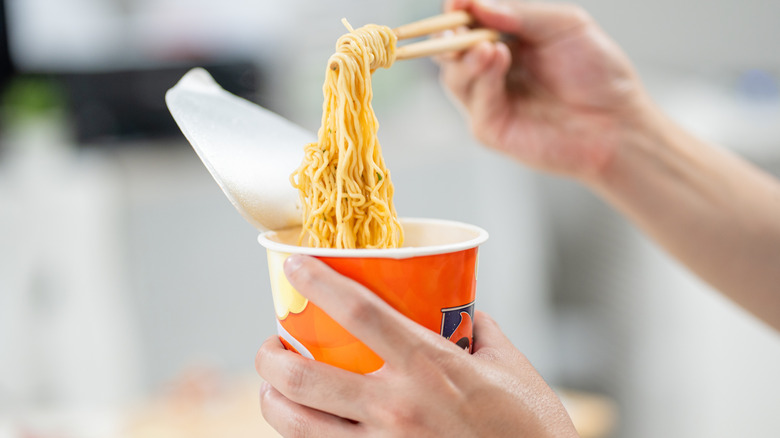
Few ingredients have lived as dramatic a double life as monosodium glutamate. It has spent decades cast as a culinary villain, and, believe it or not, it all started with one letter. In the late '60s, a doctor named Robert Ho Man Kwok penned a letter to the New England Journal of Medicine, and it was published. He described feeling ill after eating Chinese food with symptoms like numbness, weakness, and fast heartbeat. He just wanted to see if others were experiencing the same thing, but it started something he never imagined.
Only a month later, there were 10 responses from other doctors describing an array of symptoms after eating Chinese food, and it became known as "Chinese Restaurant Syndrome." MSG was to blame, they said. These were all anecdotal, something told to them by patients or colleagues, or experienced by themselves. They were all listing different symptoms, and the stories were not the result of any kind of scientific study or research.
The claim was seized upon by the media and amplified by cultural bias. MSG became closely associated with Chinese and Asian cuisines, and it is easy to see that the fear of the additive was fueled by xenophobia. Through scientific research and studies, we now know that MSG is safe to use. Add it to just about any savory food to step up the flavor and enjoy knowing that there's nothing to fear.