

If Your Pot Roast Isn't Turning Out Tender, You're Not Cooking It Long Enough
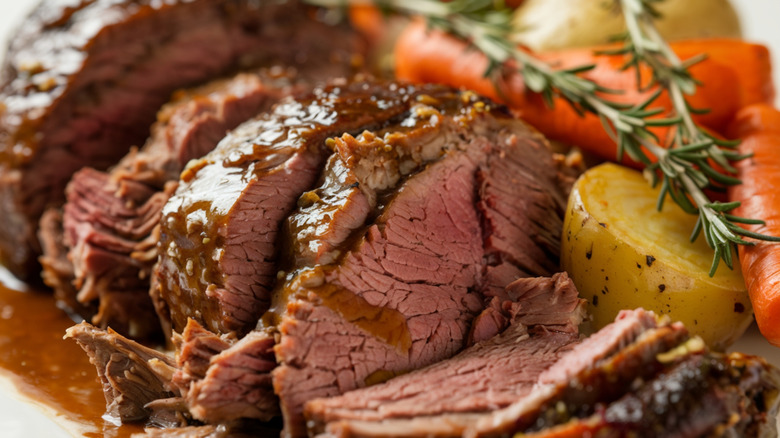
A well-cooked pot roast can either be the ultimate comfort meal or a dried-out disappointment. In theory, it's easy. Just toss a few choice ingredients in your slow cooker or oven and come back later for a delicious dinner. But all too often, that's not what happens. The secret to a tender, juicy pot roast actually lies in the length of time you cook it. Chowhound spoke with Christine Pittman, CEO and founder of COOKtheStory, who shared some valuable advice for cooks wanting to make the perfect pot roast.
Pot roast needs a low and slow cooking method, and the best cuts of meat for that are chuck roast, bottom round, or brisket. These cuts are fairly inexpensive, but are full of fat and connective tissue, which is precisely why a good pot roast takes time. "Unlike a steak, we don't want our pot roast to be rare, because it needs more time for all that connective tissue to break down," Pittman says. In other words, pot roast is a dish you don't want to rush.
Cooking a roast that is too big is also a common mistake, and it's important to adjust your timing in relation to roast size. According to Pittman, it takes 2 to 2 ½ hours to cook a roast that is 2 to 2 ½ pounds, while a roast between 3 to 4 pounds will need 3 to 4 hours. Pittman suggests cutting into the roast to see if it looks done or whether it is tender. If it looks right but feels wrong, give it more time to cook.
Expert tips for the perfect roast
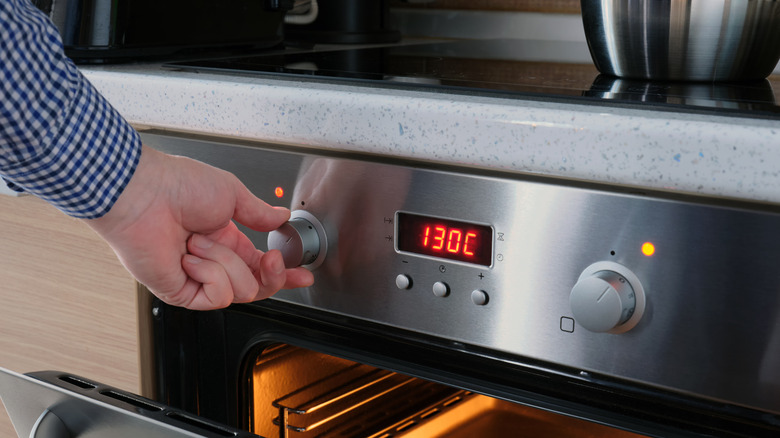
Cooking time aside, don't forget the temperature part of low and slow cooking. Christine Pittman points out many basic pot roast recipes call for cooking at 300 degrees Fahrenheit or lower. Not only is cooking for a longer period at a lower temperature key for breaking down fat and connective tissue in meat, but as Pittman advises, "It's really important that your oven temperature be correct or that you are adjusting for it."
This isn't just important for cooking a pot roast, but for cooking and baking all forms of food. Check if your oven's temperature is off by using an oven thermometer, then adjust things as necessary. If your oven is set to 300 degrees Fahrenheit but your thermometer reads 290 degrees Fahrenheit, raise your cooking temp to 310 degrees Fahrenheit, and recheck the oven to make sure the adjustment has corrected the discrepancy.
Pittman also has a few thoughts on searing meat before cooking it — a popular technique many cooks argue in favor of. "Searing the roast first does not help with tenderness and juiciness," she explains. It does, however, create great flavor thanks to the Maillard reaction, a chemical reaction that occurs as food browns. So if you're searing for taste, go for it, but if you're searing for tenderness, save yourself the time and instead, invest that time in cooking the roast long enough to get it tender and juicy.