

Grow Healthier Herbs This Year With A Genius Pool Noodle Hack
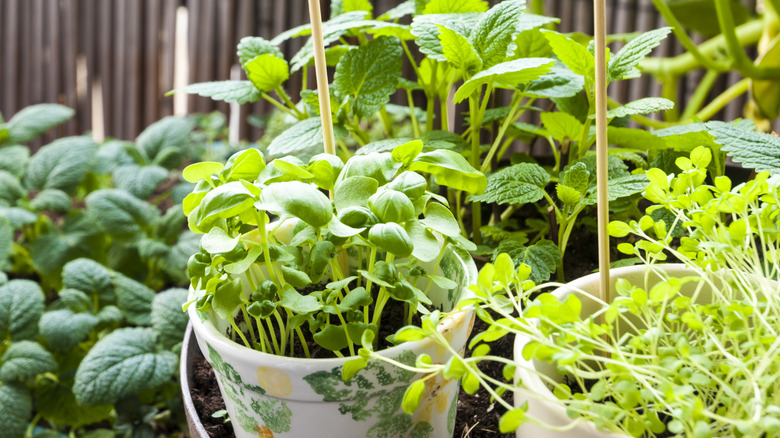
There's nothing like an herb garden to enhance the flavor of your favorite dishes and brighten up your space. It's also fairly simple to craft your very own tea garden right in your kitchen by cultivating herbs like mint, chamomile, and lemon balm in addition to more culinary-focused plants like tarragon, thyme, and basil. This is an especially good project for novice gardeners, as many herbs (particularly mint) quite literally grow like weeds.
While herbs are some of the easiest plants to grow indoors, it's crucial to plant them in well-draining soil and in containers with good drainage. Poor drainage could lead to waterlogged soil, which will destroy your herbs' root systems. Fortunately, something as simple as adding pool noodles to your planters can help prevent that. Just slice an ordinary foam pool noodle into rings or uniform chunks, toss them into the bottom of each planter, cover with soil, and plant your herbs as you normally would.
This works because the foam draws in excess water to move it out of the soil and down through the planter's drainage holes. The pool noodle pieces also retain some water, which will help keep the soil cool on hot days and help keep the soil moist (but not soggy) for longer. This is also an excellent hack for creating a small container herb garden on a budget, as pool noodles are inexpensive (even free if you already have some), and using them as drainage filler means you'll need less soil for each container.
Large vs small containers (and safety concerns)
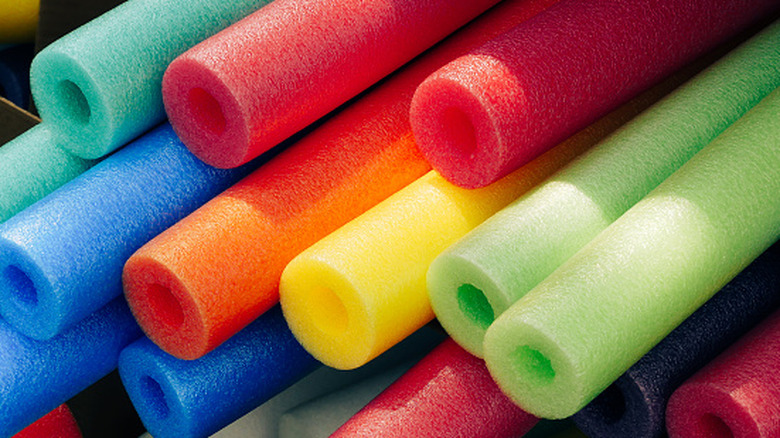
Since this hack is pretty simple, giving it a try may seem intuitive. However, depending on how large your planter is, you may want to strategize a bit to work smarter, not harder and avoid unnecessary setbacks. A small container, such as the vintage teapot you've transformed into a cute planter, will require just a handful or two of foam pieces, while a larger one will obviously need quite a bit more. It's also just fine to cut the pieces for a more petite planter fairly small, but you'll want larger pieces for a bigger planter to fill the space more easily.
In fact, if you have a huge planter, you may be able to get away with cutting your noodles down into quarters or eighths and sliding them vertically into the planter until no more will fit (it's okay if they're a bit loose, as soil will fill in the gaps). As for actually cutting the foam, you'll want to use a very sharp, straight-edged knife like a fresh box cutter blade or a crafting knife.
If cutting into sections, mark them before you start. Work slowly, ensuring the noodle is stable before you start cutting. Wearing a rubber glove can also help stabilize your grip as you cut. You may also want to wear a mask and safety goggles while cutting, as pool noodle foam can be crumbly once cut, and particles could irritate your airways or eyes.