

The Top 5 Kitchen Appliances Raising Your Electric Bill
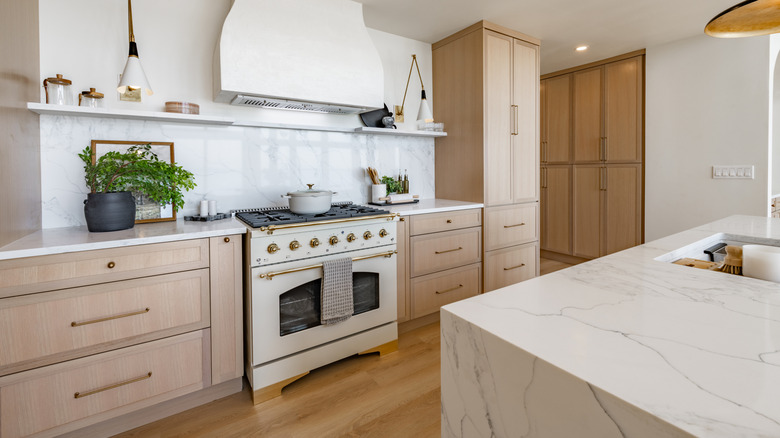
When that electric bill comes each month, are you ever surprised by how much you're paying? It's true that U.S. energy charges have increased in recent years, but some of your kitchen appliances could be making a bigger impact on your electric bill than you realized.
Of course, there are some appliances that need to remain plugged in at all times, such as a refrigerator or freezer. But others (specifically, smart appliances) aren't necessarily benefitting you from remaining plugged in, and they're actually raising your electric bill. Small appliances with auto-starts, large screens or displays, or appliances with Wi-Fi are all impacting your electric bill just by sitting on the counter plugged in. They could be raising those bills by up to $70 per year, and while the savings might not seem like much over 12 months, it adds up through the years.
Unplugging these small appliances with smart functions is an easy fix to help that bill, but they only add up to a fraction of what you pay monthly. It's those larger appliances — especially that ones that are always running — that raise your electric bill the most. Here are five kitchen appliances that are soaking up electricity in your home.
Refrigerator
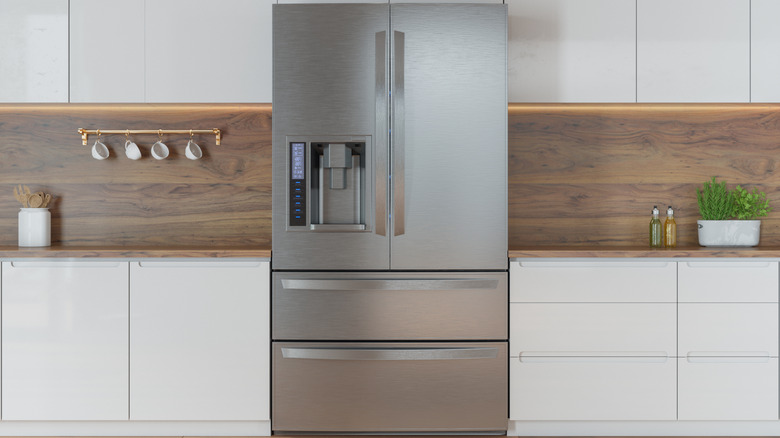
The refrigerator is arguably the most necessary kitchen appliance. The downside is that it's also the most expensive to run in your home. Each month, a refrigerator accounts for around 7% of your home's energy use (via the U.S. Energy Information Administration). And if you don't have an energy-efficient fridge, then it's likely sucking up more electricity than you'd prefer.
These days, look for an Energy Star certified refrigerator — this means it meets energy efficiency guidelines set by the U.S. Environmental Protection Agency or Department of Energy. While the actual savings will vary based on what type of refrigerator you buy, an energy-efficient model can reduce a refrigerator's monthly energy costs by more than half when compared to an older-model fridge. On average, an older-model fridge uses close to $11 of energy each month, while an energy-efficient fridge can use as little as just over $4, depending on its size. You can save money in the long run by getting an energy-efficient model.
Regardless of your refrigerator type, there are a few ways to help reduce that energy usage. Keep the refrigerator between 37 and 40 degrees Fahrenheit, and no colder. Keep the freezer at 0 degrees Fahrenheit. Always double check that the fridge and freezer doors are properly closed, and don't leave the fridge door open for too long, or the refrigerator will have to work overtime to maintain its temperature.
Freezer chest
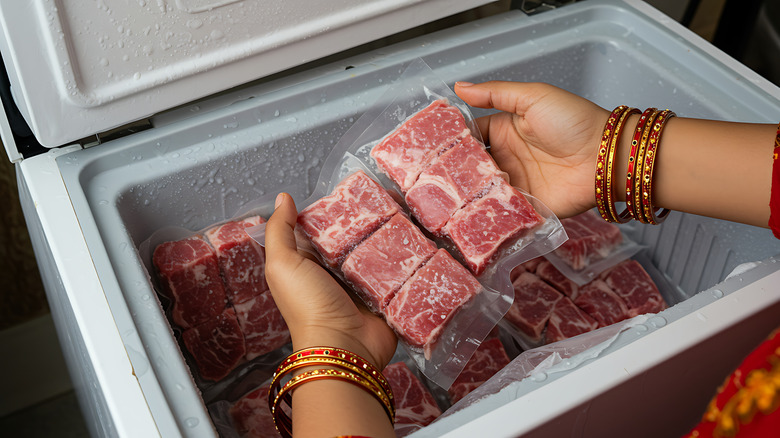
Similarly to a refrigerator, if you have a freezer chest in your kitchen or elsewhere in your home, it's probably running 24 hours a day. While freezer chests don't use quite as much energy as a fridge, they can still cost you around $6.64 per month in energy charges, which is much more than other appliances on the lower part of this list. Rather than run a smaller refrigerator and a large ice chest, you're better off investing in a larger refrigerator-freezer combination, which will ultimately use less energy.
The good news is that there are a number of freezer chests that are Energy Star certified, so if this is an appliance you need to invest in, it's worth buying a lower-energy model. An energy-efficient freezer can save you up to $300 throughout its life. To get the most bang for your energy buck, look for a chest freezer instead of a stand-up freezer (better cold air retention), and purchase one with manual defrost instead of automatic defrost (this type of freezer can use up to 50% less energy). Finally, only buy as much freezer space as you absolutely need; buying an oversized freezer that isn't filled means using more energy on wasted space.
Electric oven and stove
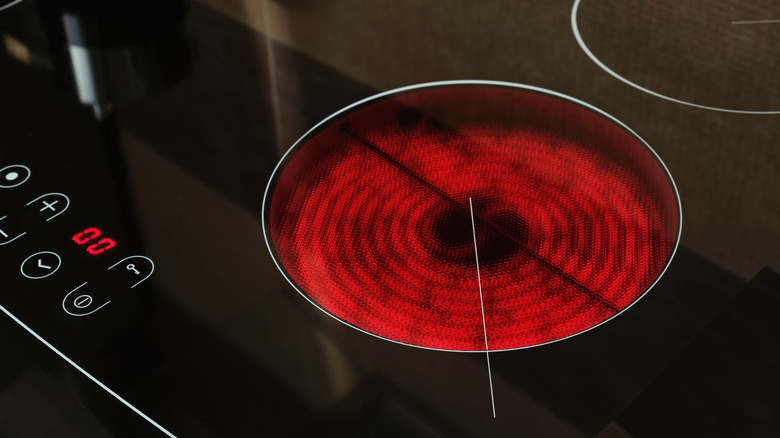
Ovens and stovetops are slightly more unique appliances in terms of energy usage because, while they consume quite a bit of energy, they aren't used 24 hours a day the way a refrigerator and freezer are. And an electric oven and stove combination will use more energy than a gas oven and stove combination (so, for the purpose of this article, we're talking about electric appliances).
Electric ovens use anywhere from 2,000 to 5,000 watts per month on average, while an electric stove uses between 1,000 and 3,000 watts. To break this down, if you use your stove and oven for one hour per day, your monthly cost will be just over $12. These are just averages, though, and it ultimately depends how often you cook and what oven and stove settings you're using. For example, a 350-degree oven won't use as much energy as a 450-degree oven. How often you clean the oven, too, will affect the yearly energy bill, as it costs around $1 of energy per oven-cleaning cycle.
Dishwasher
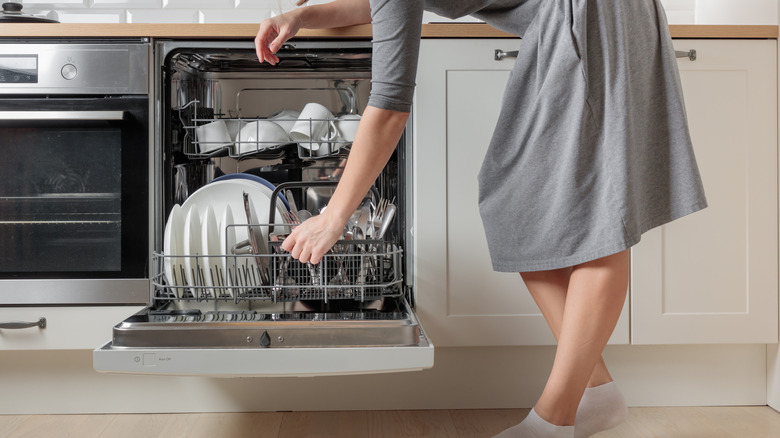
Dishwashers use a good amount of energy — with wattage that's similar to a stove but less than an oven — but it's not used at all hours. Dishwashers are a more energy-efficient option than hand-washing those plates and bowls because they use much less water. But it should be noted that this is assuming your dishwasher is fairly new. If your dishwasher was made after 2013 and is Energy Star certified or at least offers energy-efficient cycle options, then there's no need to hand-wash dishes.
You can expect the average dishwasher to use around 1,800 watts each cycle, meaning it will cost you anywhere from $4 to $7 per month to use the dishwasher in your home; this is based on running the dishwasher five times per week. If you run it just three times per week, that cost could be significantly reduced. To reduce the dishwasher's energy even further, opt to skip the heat-drying phase and hand-dry the dishes instead. The heat-drying phase uses anywhere from 400-800 watts per cycle.
Air fryers and other small appliances
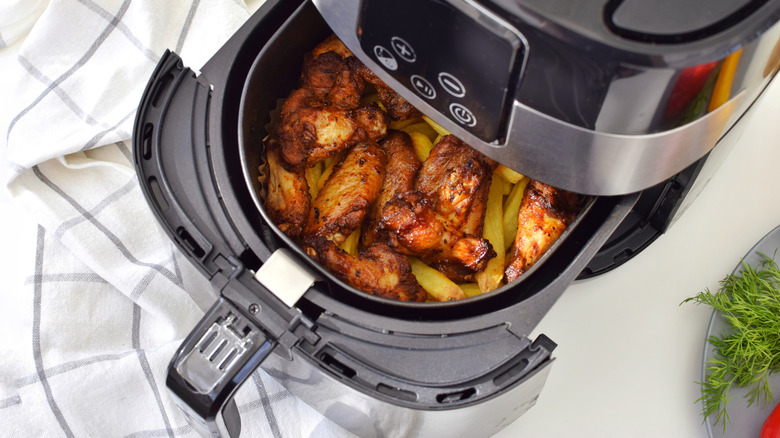
We've already noted that unplugging appliances whenever you can will help to reduce your energy costs. But how much energy do those appliances use when they're plugged in and running? One of the biggest energy-sucking culprits of the small appliance world is the air fryer. Per month, air fryers consume anywhere between 800 and 2,000 watts of energy. Air fryers vary greatly in terms of size, power, and features. Some have smart features while others are more basic, and this all plays into the appliance's total energy. Running an air fryer in your home can cost anywhere from $2 to up to $8 monthly.
Another appliance that uses a lot of energy is an espresso machine. While it might be nice to have a little at-home cafe at your fingertips — and Chowhound has a few espresso machine recommendations if you really need one — these appliances use as many as 1,800 watts per month. Both a smart air fryer and an espresso machine use more energy than a microwave, which consumes anywhere from 600-1,000 watts per month, on average.