

Can You Freeze Cooked Ribs To Enjoy Later? What To Know
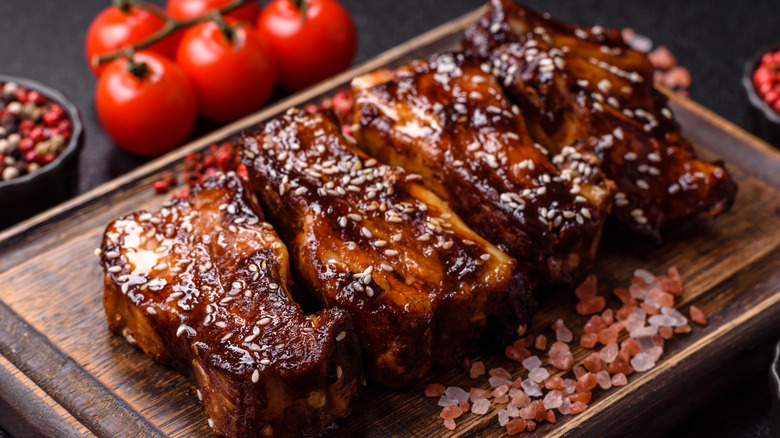
Rich, juicy, and irresistibly tender, ribs are an American classic. Whether marinated in a simple olive oil, soy sauce, and ketchup blend, oven-baked with homemade barbecue sauce, or maybe even smoked at low heat for hours, ribs never fail to deliver. However, if you've gone a little overboard and ended up cooking more than you could possibly finish, the good news is that you don't have to let them go to waste. You can simply toss them in the freezer and save them for another time.
Cooked ribs freeze incredibly well. Meats like ribs have natural protective layers which can help preserve their quality. Their fat also locks in moisture, which allows ribs to stay juicy even after reheating. Still, proper storage is crucial to preserve their flavor and texture. When handled right, cooked ribs can stay in the freezer for months, even as long as a year.
Before you freeze ribs, be sure to cook them thoroughly. Uncooked or undercooked meat can be unsafe for consumption. According to the U.S. Department of Agriculture, this is because certain bacteria may survive if undercooked meat is refrigerated. That's why, when cooking the ribs, always make sure they reach an internal temperature of 145 degrees Fahrenheit to eliminate potential risks.
Don't delay freezing the ribs once they're fully cooked
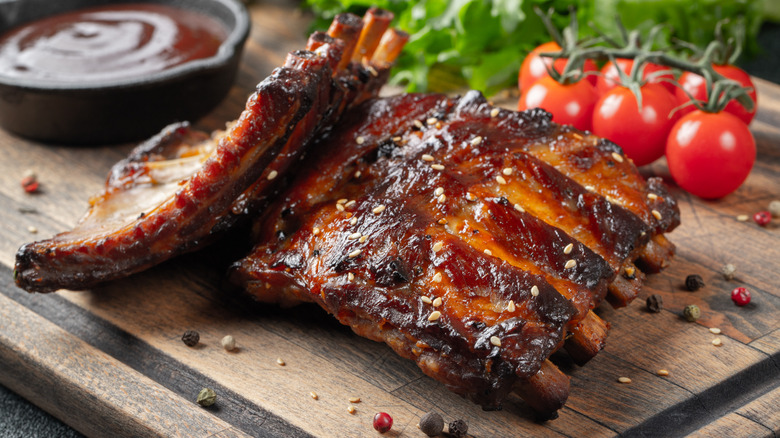
Once they're off the heat, let the ribs cool down, but don't leave them out in the open for too long. Once exposed to temperatures between 40 and 140 degrees Fahrenheit, meat enters the so-called "danger zone," where bacteria multiply quickly. In fact, bacteria can double in as little as 15 minutes at this temperature range. So while letting your ribs cool at room temperature is alright, never let them sit out for more than two hours, and freeze them as soon as you can.
When ready to freeze, don't forget to wrap the ribs in foil before putting them in airtight plastic freezer bags. It's one of those simple yet crucial freezer hacks to save you money and effort. Limiting air exposure by vacuum sealing the freezer bags will significantly minimize moisture loss. At the same time, splitting them into smaller portions makes them easier to handle, and allows you to label each bag with the date and portion size for better planning.
Even though ribs can last up to a year in the freezer, it's best to consume them within three months. So, when those cravings kick in, take them out and thaw them before warming them slowly in the oven. To reheat them so they're nice and crispy, steam them on the stove before transferring them to a frying pan to get crisp edges. When they're done, just sit back and enjoy every bite!