

Leave Bacon Behind For This Savory Breakfast Meat That Has Less Fat But All The Flavor
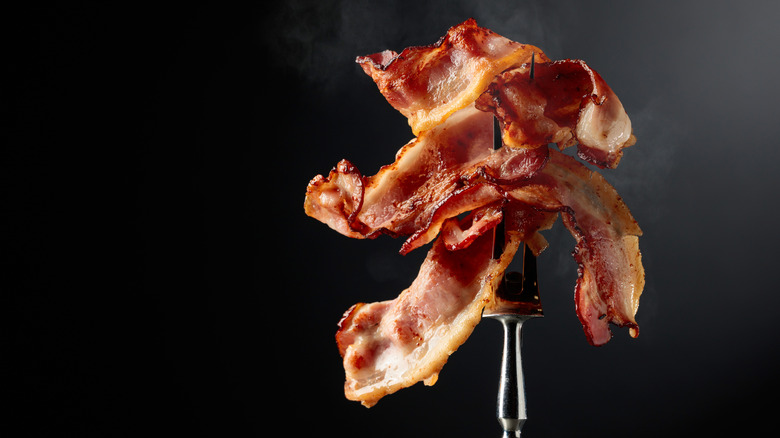
Breakfast is widely considered the most important meal of the day. No wonder, when there is bacon to look forward to. Whether crisped to golden perfection and paired with pancakes and maple syrup, served as part of a full English breakfast, or even added to a rich, satisfying omelet, this savory, greasy treat has the power to make every morning better. However, if there's one contender that can challenge this addictive, fatty delight, it's none other than good old speck.
A popular choice for charcuterie boards, speck hails from Italy's South Tyrol (Alto Adige) region, one of the country's wealthiest and northernmost provinces. This is the reason it's commonly referred to as Italian bacon. Speck also carries PGI (Protected Geographical Indication) status. This means that only South Tyrol is allowed to produce authentic, high-quality speck.
Speck can be considered a type of bacon, despite the fact it comes from a pig's hind leg. Just for comparison, traditional bacon comes from pork belly. Still, it's often compared to prosciutto due to how thinly it's sliced. At the same time, it's denser than prosciutto, drier, firmer, and more complex than bacon, and boasts a distinct spicy and savory kick with notes of juniper, bay leaf, and black pepper. What's more, speck is only lightly smoked and cold cured. Because of its rich flavor profile and lower fat content (about 19 grams of fat per 100 grams of speck, compared to bacon's 42 grams of fat per 100 grams), it makes an incredible alternative to bacon and an even better breakfast choice.
Speck works wonderfully in countless breakfast combinations
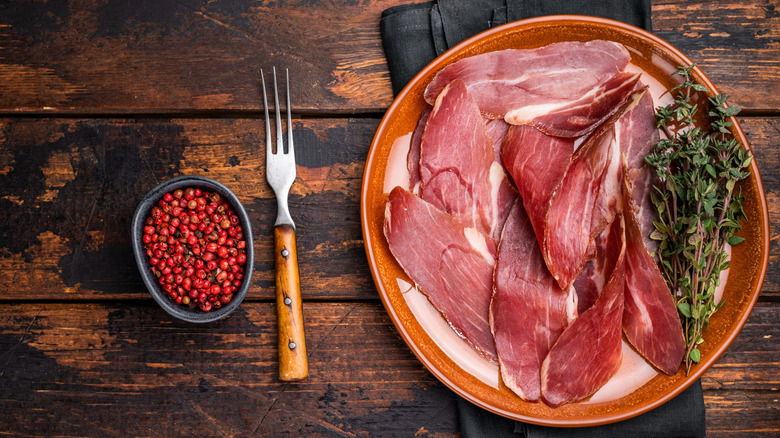
If you're tempted to try speck, the simplest way to begin is by replacing bacon with it in your favorite breakfast dishes. For starters, you can weave the speck before cooking it and make your breakfast sandwich 10 times better. If you have some extra time and want to make things fun, you can turn speck into your own version of bacon bites. Coat them in a sweet, tangy glaze, then bake them until the speck caramelizes and becomes wonderfully crispy and golden-brown. You could also upgrade your deviled eggs by loading them with crunchy speck pieces. While it may not be a good fit for a traditional carbonara due to its low fat content, speck still fits beautifully in many pasta dishes.
Apart from the classics, you could also experiment with traditional Italian speck recipes, such as the iconic spatzle panna e speck. This delicious, comforting dish combines soft, tender dumplings, rich cream, and flavorful speck for a satisfying meal. Although typically enjoyed as a first course, there's really nothing stopping you from enjoying it whenever you prefer, especially on a cold winter day. You could also add speck to bread dumplings. Canederli, a classic Italian dish, uses speck for extra depth of flavor. Ultimately, if you need something to soothe the soul, swap the meat for speck and elevate your basic tomato and herb vegetable soup. Whichever way you decide to go, speck doesn't ever disappoint.