

Why Jack Daniel's Whiskey Tastes Like Bananas To Some Drinkers
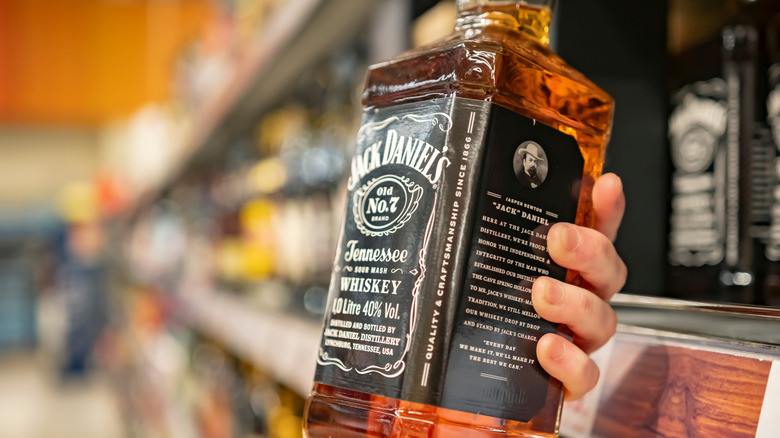
When you've made a consistent product for over 150 years, you don't make it by chance or feel. You've undoubtedly developed a process that's documented and repeatable, to give you the same results that meet your customers' expectations every time. Certainly, Jack Daniel's understands there is a science to making whiskey. Every step of the whiskey-making process can be tweaked to result in differences in the taste, smell, and look of the whiskey. And for Jack Daniel's, the process yields a distinct banana flavor to some drinkers. While some argue it's maple and not banana, Jack does have a distinct sweetness on the nose and palate. Even Martha Stewart recommends Jack Daniel's in a whiskey sour due to its notes of banana.
According to the brand, a big part of its taste comes from the Cave Spring water in Tennessee, where the distillery is located. Another proprietary ingredient in Jack Daniel's whiskey is its yeast strain, which feeds off the mash. Yeast consumes sugars and turns them into ethanol and carbon dioxide. It's during this process that organic compounds known as esters are formed. These esters, depending on the molecules that form them, provide a wide array of flavor notes. The Jack Daniel's fermentation process produces the ester isoamyl acetate, which gives off fruity aromas and flavors, particularly banana and pear. This is the compound responsible for the banana note you may notice when you first try Jack Daniel's whiskey.
Let's get into the science of whiskey
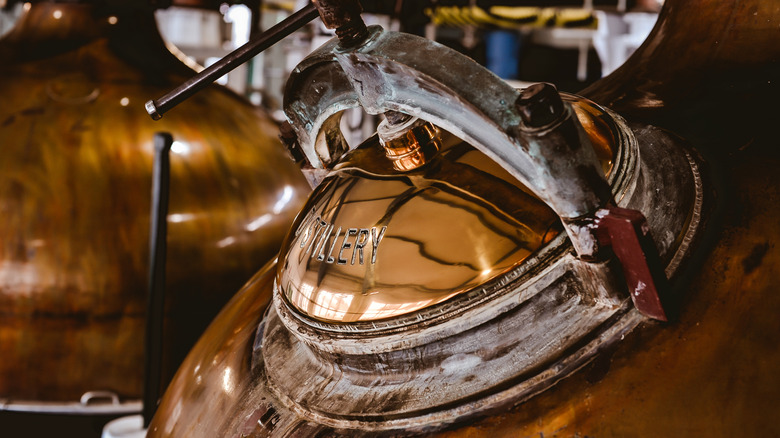
But seriously, what are esters? To truly understand, we have to start with the function of yeast. Yeast is a living microorganism that feeds on the sugars of the grains it receives. In the case of Jack Daniel's, that's the mash bill of corn, barley, and rye. As the yeast consumes sugar, it turns it into ethanol and carbon dioxide. In addition to sugar, yeast also interacts with amino acids, which helps create esters.
When the right combination of alcohols and the amino acid leucine is present, you get isoamyl acetate, the ester responsible for banana-like flavors and aromas. Other esters that could affect the taste of a whiskey or other spirit include butyl butyrate and ethyl isovalerate, which can lead to notes of pineapple and apple, respectively.
While esters are formed during fermentation, they continue to evolve throughout the whiskey-making process, all the way through barrel aging. Esters more commonly associated with aging include guaiacol, which imparts smoky or leathery notes, and furfural, which adds toasty, caramel-like notes.
The days of bathtub whiskey or the old jug with the three Xs (you know the one) are long gone. There's a fine science to making whiskey, and when it comes to the whiskey Frank Sinatra once called "the nectar of the gods," it's all in that curiously sweet note of isoamyl acetate.