

The Right Way To Store Garlic Confit To Avoid Risky Consumption
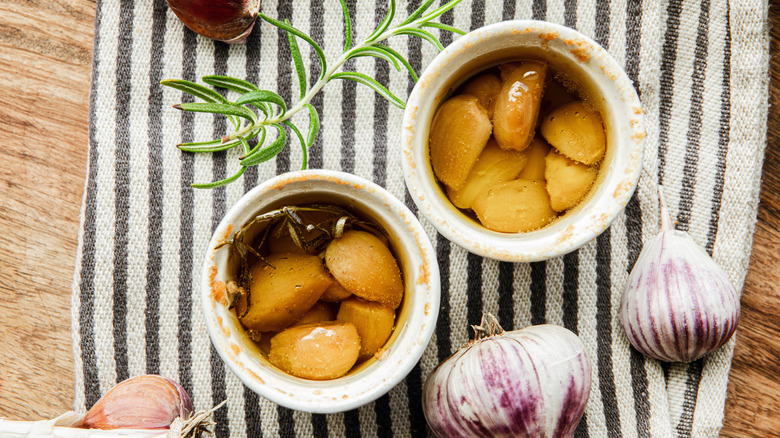
Rich, nutty, and wonderfully buttery, garlic confit can blend easily into many dishes. Whether used to give creamy mushroom pasta a gentle garlic flavor or to add complexity to classics, such as chicken Parmesan and roasted ribeye steak, garlic confit is a versatile kitchen staple. It's also the genius ingredient that adds a burst of flavor to fried eggs. Regardless of how deliciously sweet and flavorful it is (even when simply spread on a piece of toasted bread), garlic confit comes with a health risk: botulism. This is why proper storage makes all the difference.
Botulism is a rare, serious condition caused by a toxin made by Clostridium botulinum bacteria. It targets the nervous system and can be life threatening. This is why, according to research carried out by the National Center for Home Food Preservation, storing garlic confit at room temperature is something you should absolutely avoid. Instead, the U.S. Department of Agriculture suggests keeping it in airtight containers or glass jars in the fridge (ideally at or below 40 degrees Fahrenheit) for no longer than a week. Garlic confit can also be safely stored in the freezer for up to three months. In this case, leave ½ inch of space at the top of the jar. Moreover, don't forget to include a label showing the freezing date for reference. But freezing it isn't the only precaution; there are several other steps to help prevent toxin formation and keep the garlic confit safe to eat.
A bit of lemon juice or vinegar can work wonders
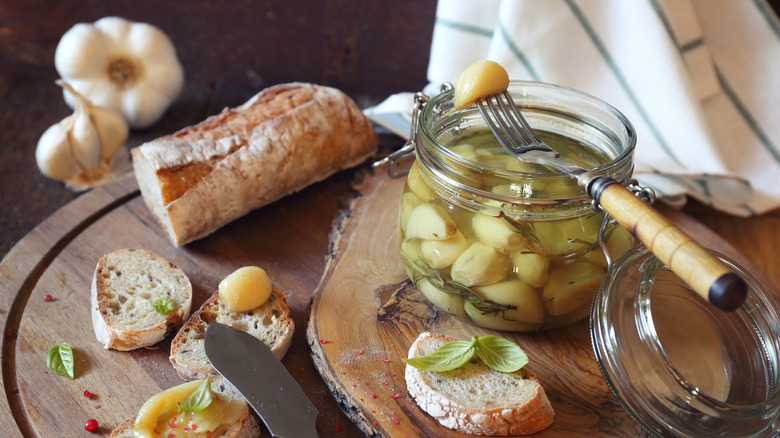
While proper storage is key, the ingredients you prepare garlic confit with matter just as much. This is why you should avoid using spoiled or moldy cloves. There's also the olive oil rule you need to follow: always stick to high-quality bottles (for tips, check out the ultimate guide to buying olive oil). At the same time, remember to sterilize and sanitize your equipment and jars to reduce the risk of contamination.
When cooking garlic confit, always keep the heat low, aim for a soft simmer, and don't let it drop under 250 degrees Fahrenheit. The USDA Food Safety and Inspection Service confirms this temperature eliminates botulinum spores. Still, to stay on the safe side, adding a small amount of acid, such as lemon juice or vinegar, to the confit before cooking can help suppress botulinum growth — the toxin favors low-acid environments, so by acidifying the confit, you make it safer to eat. Another way to completely kill the bacteria is to heat the garlic confit to 185 degrees Fahrenheit for at least several minutes before consuming it. If the confit shows signs of discoloration, such as cloudy oil, a mushy texture, a sour smell, or even mold, it's not worth the risk. In such cases, throw the garlic confit away and prepare yourself a fresh batch.