

The 4-3-2 Rule For Foolproof Pan-Seared Steak
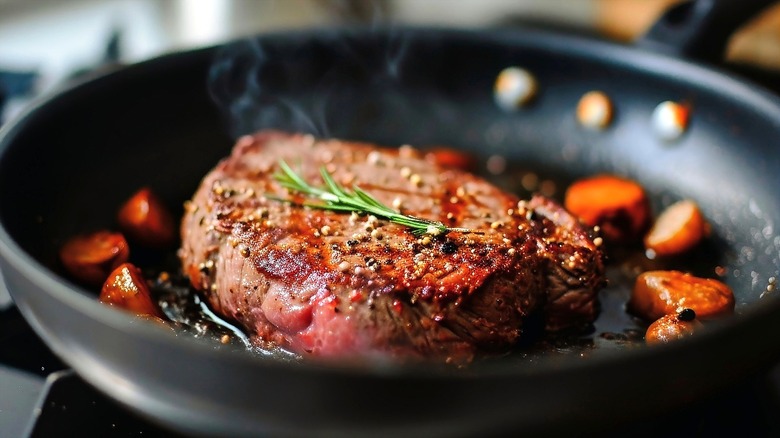
Do you avoid cooking steak at home fearing the wrong cooking method could leave you with tough, rubbery meat? Fortunately, if you enjoy medium-rare or medium steak, the 4-3-2 searing method is the quickest, most efficient way to give your next home-cooked steak a perfectly crisp exterior and tender, juicy meat. To follow the 4-3-2 method, all you need to do is sear your steak for four minutes on one side, flip and sear the other side for three minutes, and then rest your steak (off the heat) for two minutes.
Though, in order to pan-sear steak the right way, you need to start with the best cut of meat for the job. Steaks with an even exterior that aligns directly with the surface of your pan work best. These options include boneless ribeye, New York strip, or tenderloin. Especially when it comes to the relatively short 4-3-2 cooking method, all corners of your steak should have direct contact with your skillet to achieve the correct internal temperature.
When making your selection, choose steaks with a thickness around 1 or 1.25 inches. If you choose a thicker cut, adjust the cooking time accordingly, adding extra time to each phase of preparation. Fortunately, besides choosing the right cut of meat, all you need to follow the 4-3-2 cooking method is a hot cast iron skillet. When pre-heated properly, cast iron skillets retain heat well and provide the consistent temperature needed for evenly seared steak each and every time.
Pointers for using the 4-3-2 cooking method on your next steak
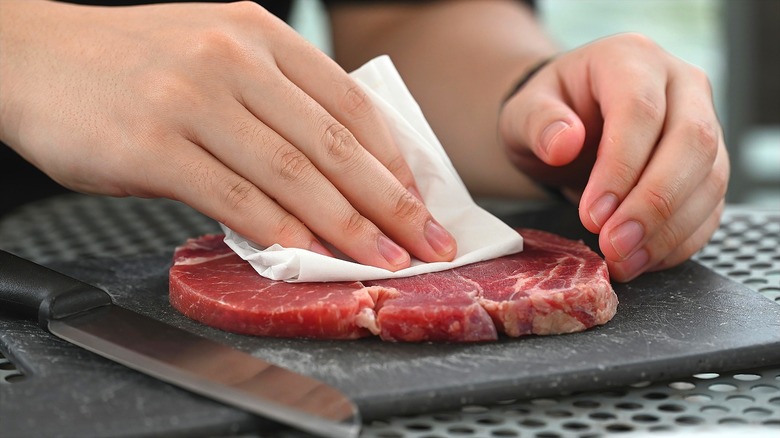
In order to use the 4-3-2 method with precision, apart from making sure your cast iron pan is properly pre-heated, it's important to thoroughly dry your steak before seasoning. This ensures the elimination of residual moisture, which leads to faster, more pronounced browning via the Maillard reaction. A whole variety of new, complex flavors emerge when proteins and sugar combine under high heat.
Nevertheless, upon adding a decent amount of salt and pepper, when you're ready to sear your steak, do so on a smoking hot, dry pan. For this technique specifically, skip butter-basting your steak for the last five minutes of cooking, and instead, pour a small amount of melted butter onto your steak (off the heat) before serving. Since the key is to minimize moisture during the cooking process, you should also avoid overcrowding your pan with meat. Even if you're using a large cast iron skillet, cook no more than two steaks at a time to avoid cooling down your pan. An overcrowded pan can also cause your meat to steam instead of sear.
On that note, make sure to allow your steak to cook undisturbed for the full four minutes before flipping it to the other side. If you're worried about cooking your meat to your preferred temperature using the 4-3-2 method, simply safeguard the process with a digital meat thermometer. This way, you can focus more on achieving that perfect sear.