

7 Foods You Should Always Avoid Storing In Plastic Containers
We may receive a commission on purchases made from links.
As home cooks, ditching our plastic food storage containers might be the smartest move there is. We get how convenient they are, especially when you fancy meal-prepping or indulge in GrubHub once a week. But synthetic containers just aren't doing us — and our beloved foods — any favors. In fact, there are certain times when plastic exacerbates common storage mistakes, leading to spoiled, comprised foods.
When it comes to all foods, converging with plastic inspires chemical cross-over — bisphenol A (BPA) found in certain plastics and resins can be absorbed directly into the contents we eat and possibly cause harmful effects on the body. But health concerns aside, plastic storage containers can also be more of a hassle than necessary. Smellier dishes are notorious for trace odors, for example, while other ingredients stain or bleed into surfaces, requiring a miracle to scrub out. Even with containers that are safe to reheat (BPA-free), all that wear and tear can still foster abrasions, leading to unhygienic conditions for future leftovers we wish to stash down the line.
Below, we'll uncover what foods shouldn't mix with plastic and provide alternative methods you can utilize to maintain a fresher, healthier kitchen set-up. Four experts in the nutritional field have chimed in, with picks ranging from refrigerated condiments to cupboard essentials. Here are seven foods you should always avoid storing in plastic containers.
1. Sauerkraut and kimchi
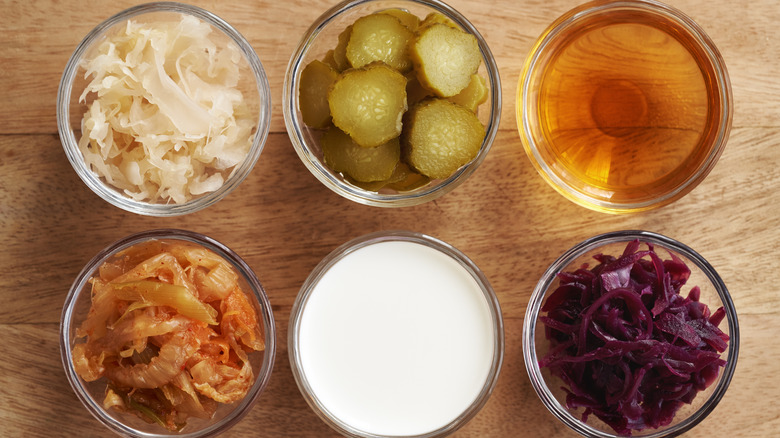
Pickled vegetables are a great staple, made for squirreling away in our fridges for culinary experiments on future horizons. But it absolutely matters what they're stored in to appreciate the tangy complexity at its fullest. According to Grace Vallo, who runs the popular recipe blog Tastefully Grace, "Fermented foods like sauerkraut or kimchi can stain plastic and absorb odors," providing ample proof of plastic's inferior environment.
When marinating the veggies, brines, vinegars, and other preservatives unleash lactic acids, kicking off the aging process that creates the trademark zesty bite. Those microbes produce strong gases, and a flimsy synthetic tub is no match for them. Because plastic is pliable, the material will get distorted, especially after months of allowing the food to steep under a closed lid.
If you've been gifted a batch of excess dills or cabbage you'd like to hold onto, springing for glassware is the optimal choice. Mason jars will offer a tighter seal, helping to promote the conditions needed to allow the crisp veggies to flourish. Getting a handle on the proper vessels ensures your condiments stay in tip-top shape, letting you continue to use kimchi to jazz up pulled pork sandwiches with gusto.
2. Tomato sauce and other high acid foods
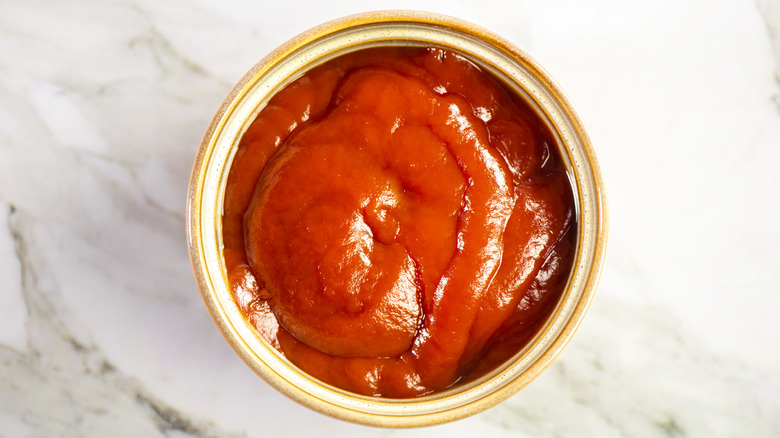
When storing tomato-based sauces or vinaigrettes, always avoid plastic containers when you can: It spells trouble. The reason? They're high in acid, and those compounds are incredibly corrosive to any plastic holders. Additionally, exposing the containers to high heat — such as in microwave ovens — guarantees the containers a much shorter shelf life over the long haul.
Another issue with vinegar-y or zesty condiments? They're a pain to clean thoroughly, according to Kezia Joy, a medical adviser with health care marketplace Welzo. "Acidic foods, like tomato sauce and citrus-based marinating liquids, can have an even greater potential to affect the plastic and impart color to it as well as create odor residue in the plastic that is difficult to remove," she says.
To prevent those orange-y stains that just won't quit, use glass jars instead. Unlike plastic, glass is impermeable, meaning it won't sponge up smells, and it boasts none of the particles that can sneak into your ingredients (for a solid deal, look into this set of glass food storage containers from Amazon Basics). You can also opt for stainless steel to maintain delicious spaghetti sauce night after night.
3. Oily, high-fat foods
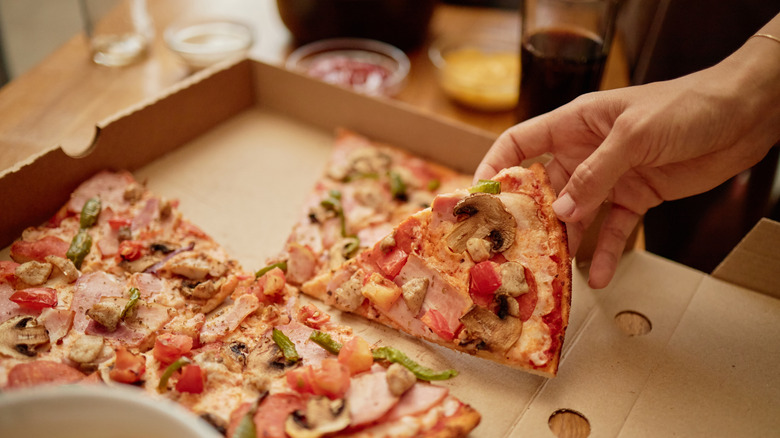
Takeout understandably dominates our kitchen spaces — in fact, you probably have carryout containers from your favorite Chinese restaurant as we speak. Yet when we asked our experts which foods shouldn't mix with plastic, virtually all fatty foods made the cut. Items rich in oils and grease are notorious for extracting micro-plastics at an increased rate. "Fatty foods tend to absorb more of these compounds," explains Jason Iuculano, founder of the company ZeroToxins.
To revive day-old tikka masala or a batch of zucchini fries, it's crucial to have containers on hand that won't invite harmful particles into your grub. Nor do you want to deal with any of the mundane nuisances, such as pesky orange chicken glaze rooting into those sneaky, hard-to-reach crevices. "Glass is generally cleaner than plastic for all of these types of foods," Kezia Joy notes. Additionally, glass is excellent at maintaining other oil-dense foods, too — such as bulk stashes of almonds or extra heavy cream from a baking project.
4. Onions and garlic
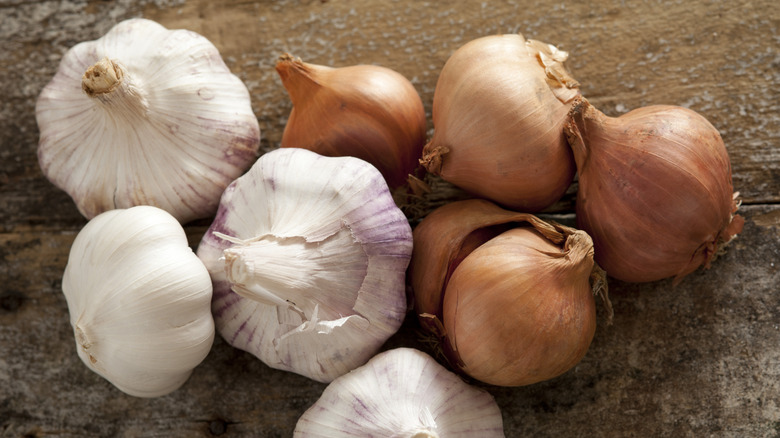
Deloris Gibson, a registered dietitian nutritionist and diabetes educator at Penn Highlands DuBois, reiterates how "plastic is porous and can absorb odors from food." With this in mind, synthetic containers pose notable disadvantages for produce such as onions and garlic. These have stronger aromas, capable of hanging around a container after repeated uses. What's more, plastic chokes off oxygen, which these alliums need in order to remain fresh and not descend into gray, mold-studded bulbs. For reference, they thrive in cool areas with a lot of ventilation — the polar opposite of plastic's environment.
In order to stave off dry, moldy bulbs, try abandoning plastic for a breathable alternative. Bags made out of mesh are preferable, but a paper sack will also provide the ideal conditions. If you've already peeled and chopped these vegetables, set them aside in ceramic or glass holders for best results. The makeup of these materials forms a natural barrier against smells, which is a win for other items in their proximity.
5. Certain cheeses
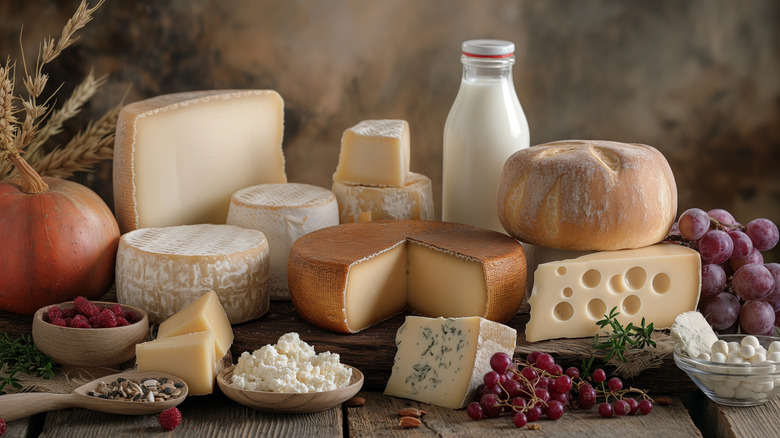
While store-bought cheese comes in plastic wrap, it's not a strategy that'll serve your dairy products once you get home from the supermarket. With certain cheeses, especially types containing higher moisture levels, lidded plastic tubs succeed at choking off oxygen. An environment, enclosed with all those microbes, stokes bacterial activity that encourages rot and in turn a faster trip into the compost bin. It's a notable occurrence among semi-hard wedges and softer, stinkier varieties including brie, stilton, and gouda.
Cheese is not one of the cheaper staples, so it's paramount your wedges remain fresh and spore-free. That's why, if you can track it down, proper cheese paper will offer immense benefits as a preservation technique. Not only does the fiber provide a protective shield, but the breathable lining on the inside also combats early spoilage, given that it nurtures adequate air circulation. If cheese paper isn't accessible to you, fear not: A sheet of parchment paper, such as Reynolds Wrap, imitates the paper's waxy characteristics.
6. Hot foods
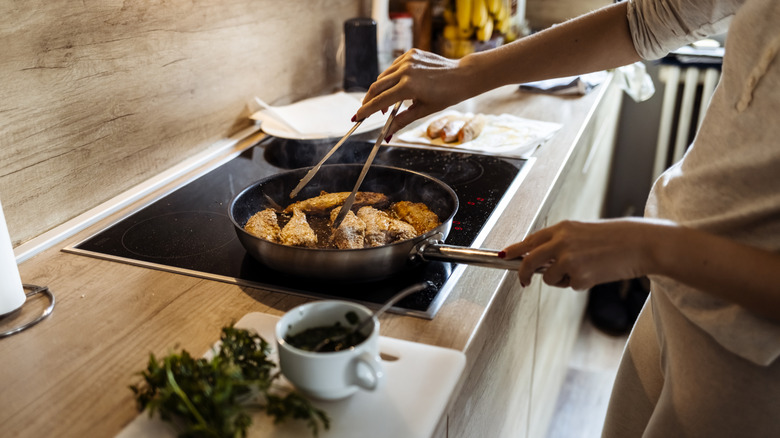
When you've just created the best pot roast of your life, vamoosing those precious extras into the fridge makes a lot of sense. Unfortunately, at high temperatures, freshly cooked foods are not ideal in a synthetic tub, experts say. "Putting really hot foods right into plastic can increase the chance of plastic-leaching chemicals," Grace Vallo explains.
Additionally, this category opens up the floor to a common storage mistake causing faster spoilage – rushing those leftovers into the container before they've cooled. This is a bacteria breeding ground, Kezia Joy tells us. Under a lid, the vapors from your food will continue to thrive, spurring condensation that can stoke germ growth. Those organisms can sprout mold or cause food-borne illnesses — thus ruining what could have been a second round of a delicious meal.
When you've got a busy life, it's understandable to get your meals stashed away pronto. At the very least, give your dish a chance to cool down first, then place it in a container — ideally glass or stainless steel — to protect foods from sudden contamination. Just make sure you don't leave your entree too long at room temperature: Per Food and Drug Administration guidelines, the danger zone only has a two-hour cut-off before harmful germs can start to appear.
7. Tender herbs
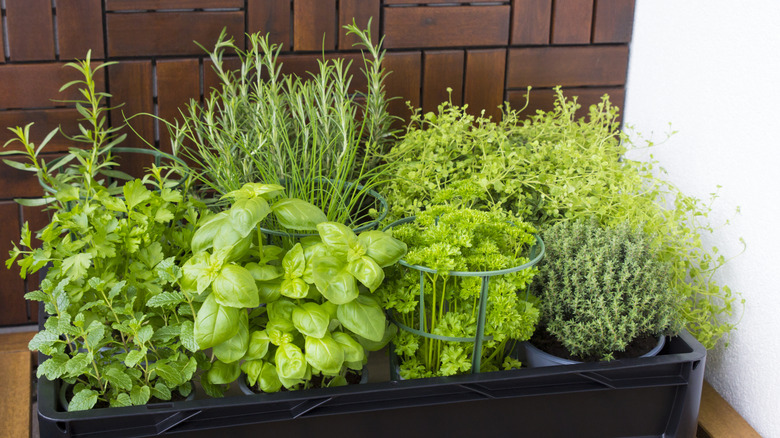
During the summer months, we can't wait to purchase gorgeous bouquets of parsley or basil fresh from the farmer's stand. Avid cooks, in optimizing their ingredient prep, may be stowing herbs in plastic containers without a second thought. But beware: It'll strip those lovely greens of nutrients and rot tendrils to a brown, swampy mess if you're not careful. And no one wants that.
Prolong the lifespan of your aromatics by skipping the stackable containers altogether. Instead, treat them exactly as plants one would tend to in a garden. Popping them into a vase or jar — with regular watering — will keep your herbs spry, fresh, and well-ventilated with oxygen flow. By pinching off just what you need at the time, you'll allow the herbs to continue growing and ensure they are always ready for your next dish.