

Give Boxed Cake Mix A Bakery Quality With One Easy Oven Trick
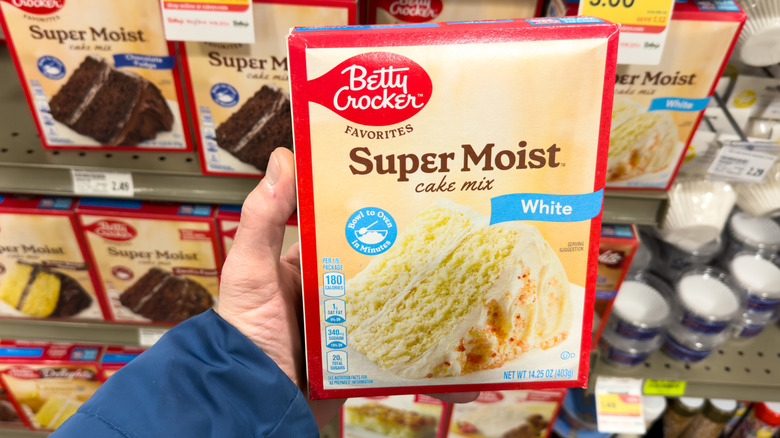
Don't get it twisted. Boxed cake mix can be great. You can upgrade any cake mix with simple ingredient swaps if you feel so inclined, but even if you simply follow the recipe on the package, you can still create a delicious dessert. We've come across a way to take cake mix to the next level, however, and you don't need to add any extra ingredients. The key to creating bakery-soft, next-level cakes in your kitchen? Cook low and slow. Lowering your oven temperature by just 25 degrees Fahrenheit can make a serious difference in the texture and moisture level of your cake — and it can also help you create flat, even cakes for layering.
Most recipes recommend baking cakes between 325 and 350 degrees Fahrenheit, so this means you'll be lowering your oven temperature to 300 or 325 degrees Fahrenheit, depending on the recipe's directions. Of course, cooking your cake at a lower temperature means it'll need to stay in the oven for a bit longer (more on that in just a moment).
Another important tip: Invest in an oven thermometer. While using an oven thermometer is certainly a crucial step you need to take before cooking in a new oven, it's also important to help you know whether your tried-and-true oven is cooking at the right temperature to create low-and-slow-cooked bakery-style cakes.
How long to bake your cake, and how to know when it's done

Reducing your oven's temperature by 25 degrees Fahrenheit can make a difference in the flavor, moisture level, and texture of your cake, but it's important you time your low-and-slow bake correctly to get great results. Generally, you'll add at least 10% to the baking time — for example, if you're supposed to cook the cake for 18 minutes, you'll end up closer to 20 minutes. You might need to inch up to 20%, depending on how fast or slow your cake is cooking. And though it can be tempting to open the oven door to take a peek, resist the urge. Opening the oven door before you should is a common mistake that can actually sabotage your cake, as the cold air that enters the oven can stop your cake from rising.
When your adjusted cooking time comes to an end, double check to make sure your cake is actually done. When you take your cake out of the oven, you should see the edges are beginning to pull away from the pan a bit (this only works as a cue if you greased the pan before you started baking). You can also give the old-school toothpick test a try — poke a toothpick in the middle of the cake, and if it's free from crumbs or liquid batter when you pull it out, your cake is done. Be sure to let your cakes totally cool (if you can manage to be that patient) before frosting. Then, you can dig into your bakery-esque, low-and-slow cake-y goodness.