

Forget White Rice: Bring This High-Fiber Grain To The Dinner Table Instead
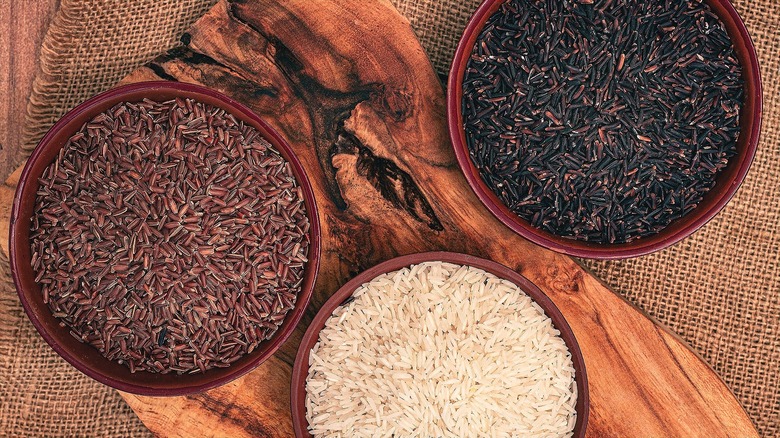
When you need a simple side dish to pair with whole roasted chicken or pan-fried steak, white rice may be your preferred accompaniment due to its mild taste and fast-cooking capabilities. While this popular, basic grain may be a surefire crowd-pleaser, to up the nutritional content of your meals on the whole, consider swapping out white rice for black rice.
While there are many types of rice you're probably familiar with, such as brown, basmati, and jasmine, black rice has a more elusive quality. Commonly known as forbidden rice, black rice has a nuttier flavor and heartier texture compared to other well-known varieties. While there's no doubt you've seen black rice in the dry goods aisle of your neighborhood supermarket, you probably purchase white rice time and again for comfort and familiarity. However, black rice is loaded with fiber and comes with a host of additional health benefits.
Rice is a whole grain that contains three edible parts: the bran, germ, and endosperm. Unlike white rice, which has the bran and germ removed, black rice has all three components and contains much more fiber per serving. Fiber not only improves digestion, but prevents blood sugar spikes, stabilizes blood pressure and cholesterol, and helps you feel fuller for longer. Fiber aside, there's more than one reason you may want to ditch your basic stovetop white rice for this darker, high-fiber grain.
Black rice has more nutritional benefits than you realize
Surprisingly, black rice contains anthocyanins, or flavonoid plant pigments rich in antioxidants that may reduce your long-term risk of cancer and inflammation. If being rich in antioxidants isn't enough, black rice also has more protein per serving than white rice. While a 3.5-ounce serving of white rice contains roughly 6.8 grams of protein, black rice contains 8.9 grams of protein per serving. Given this hearty grain is also loaded with fiber, it undeniably makes for more satisfying meals.
However, preparing black rice takes a little more time than conventional white rice. Upon rinsing black rice in a fine mesh colander to remove excess starch, cook these fibrous grains in water over your stove for roughly 30 minutes. Lastly, steam them off the heat for another 10 minutes before consuming.
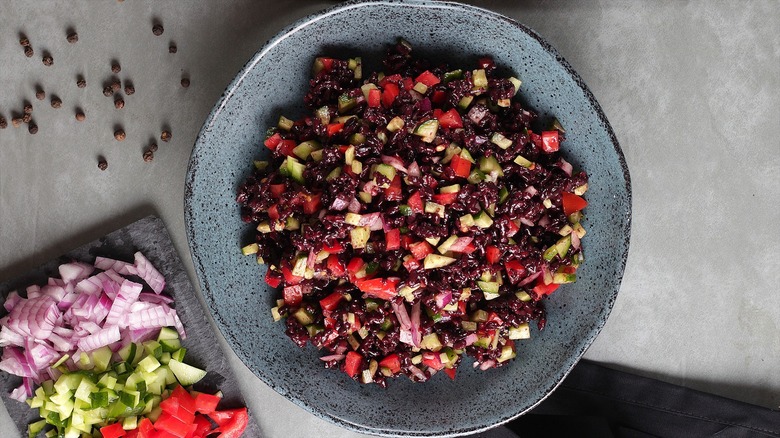
While you may be hesitant to try black rice, it has a satisfying, ultra-chewy texture that pairs well with many different foods. If you're looking for meal inspiration, turn black rice into a dinner salad by adding a simple protein, such as grilled chicken, and your choice of colorful extras, including roasted butternut squash, pomegranate arils, and chopped pistachios. Or, serve black rice as a robust, visually appealing base for simple meals, such as pan-seared salmon with mango salsa. You can also add more flavor to your rice by cooking it in stock instead of water.