

The Storage Mistake That's Spoiling Your Food Faster
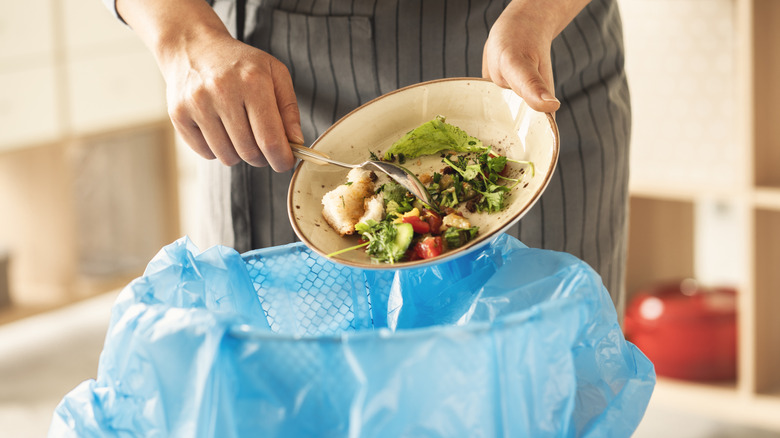
Storing leftovers is a great way to reduce food waste, but if you don't store them properly, that food might spoil sooner than expected. There are some well-known food storage rules, such as always keeping perishable foods in the refrigerator and consuming most types of leftovers within three to four days. A lesser-known storage mistake could be ruining your food, and it has to do with the moisture content in those food-saving containers.
When food storage containers get washed or go through hot water in the dishwasher, they often leave leftover moisture behind. If the containers get sealed, that leftover moisture can lead to bacteria growth. "Trapped moisture from washing your containers is a real problem," Shanina C. Knighton, PhD, and registered nurse certified in infection control, told Chowhound, adding that dishwashers clean containers, but don't fully sterilize them. "When you put that lid back on a container that still has moisture sitting in it, and then put your food right on top of that, you are essentially introducing whatever was left on that dish directly into your food." Knighton, a research associate professor at the Frances Payne Bolton School of Nursing at Case Western Reserve University, refers to moisture as the "vehicle" that bacteria need to grow and multiply.
Make sure food containers are dry before stacking them
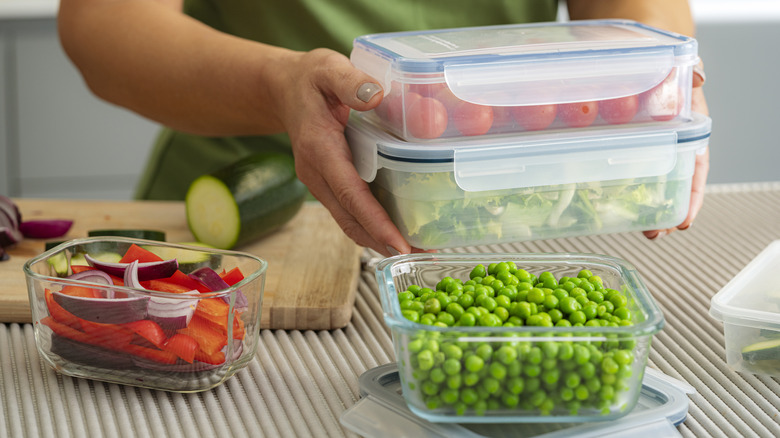
Inspect your food storage containers and make sure they're completely dry before putting them away. Since these container types tend to be stacked, you could trap moisture without realizing it. "Stacking damp containers compounds the problem, and storage location matters," Shanina C. Knighton said, noting that you shouldn't store food containers too close to the ground or they could pick up contaminants from foot traffic, such as dust and dirt. "The priority is making sure everything is fully dry before putting [anything] away."
Not all foods last in storage like you might think, and the effects of leftover moisture have a greater impact on porous foods, such as bread and fresh fruit. "Bread will soak that moisture right up and go stale or moldy fast," she said. "Fresh fruit is also very vulnerable, and really anything you are storing cold, leftovers included, can be affected because moisture accelerates spoilage." Knighton notes that it isn't necessary to place paper towels between containers because it could be a waste of resources; just do a visual inspection to confirm those containers are fully dry.