

Don't Expect Traditional Italian Restaurants To Pull This Olive Garden Maneuver
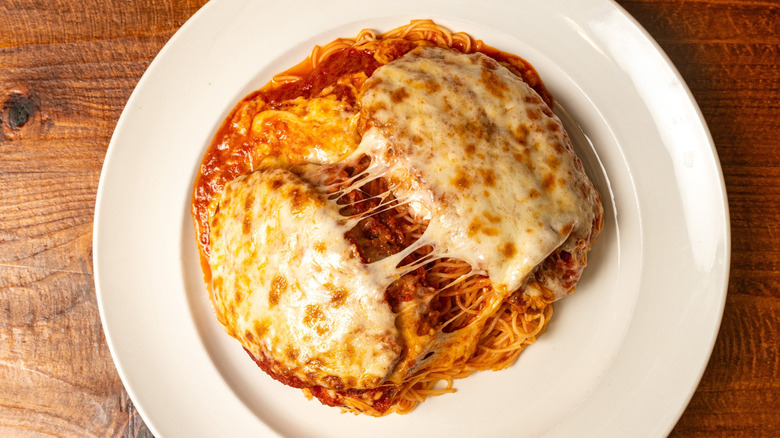
If you're pulling up for bottomless breadsticks, endless soup and salad, or hearty bowls of pasta at America's favorite fast Italian restaurant chain, you're probably not expecting authentic Italian dining. That said, it doesn't make Olive Garden's menu any less delicious in its own right. Most of us are not operating under the delusion its never-ending helpings of pasta are what a true Italian nonna would serve. When comparing casual Italian chain menus to traditional Italian restaurants, when it comes to the cheese, the differences are especially obvious.
To discuss the nuances between culinary styles and why you shouldn't expect layers of melty cheese smothering your baked ziti or eggplant parm at a more authentic Italian spot, Chowhound caught up with Michael Cacace, chef and owner of Michael's of Brooklyn — a beloved Italian restaurant in NYC — as well as a line of sauces sold nationally under the Michaels of Brooklyn label.
At his restaurant, which he describes as authentic Italian, and other establishments that skew closer to what you'd find in real Italian cooking, he says, "[Chefs treat cheese] as a finishing touch rather than the main event." Cacace explains, "Many chain Italian restaurants are more heavy-handed [with cheese], while true Italian cooking lets the sauce shine as the star." He notes copious amounts of cheese can mask the true flavors of ingredients, like fresh pasta and handmade sauces, even though it's delicious in its own right, especially when using high-quality, fresh mozzarella.
Expect differences in quantity and type of cheese used
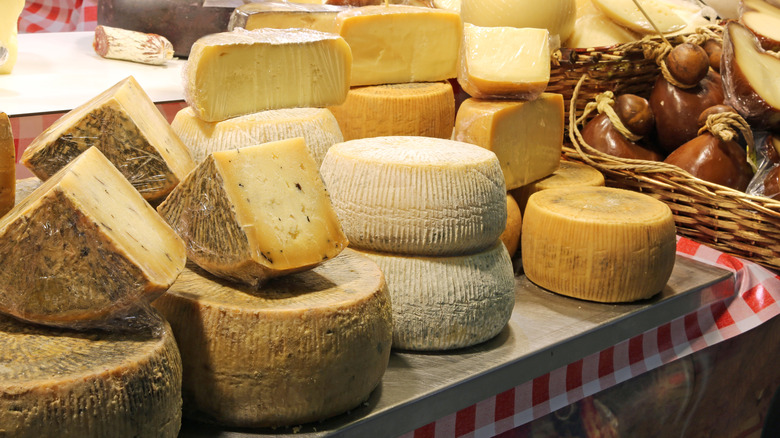
The food you find in Italy differs greatly from Americanized fare like you find at Olive Garden, which is also different from more traditional — but still American — Italian restaurants. Italian and Italian American cooking has evolved and adapted over time as regional influences and changing appetites leave their mark. But putting the question of authenticity aside, even Michael Cacace admits cheese-forward Italian American fare can be good.
While he notes authentic Italian spots give more thought to using cheese sparingly, there are differences in both the quantity of cheese used as well as its quality. "Chain restaurants often rely on average ingredients, pre-measured portions and tightly controlled recipes dictated by a corporate home office," he explains. Conversely, he says, "Authentic Italian restaurants ... source fresh, high-quality varieties like Parmigiano-Reggiano, pecorino Romano, mozzarella, and ricotta to complement, not overpower, the dish."
At the end of the day, taste is subjective, and if you're craving a cheese-forward, comforting vat of pasta with those delicious, (albeit not freshly baked), breadsticks from Olive Garden — zero shame in that game. You can enjoy your fast casual Italian fare and have more authentic culinary experiences, too. Cacace recommends using social media to discover more unique, lesser-known restaurants and out of the way places. Regardless of where you're dining, you may want to think twice about ordering any of these Italian entrees — and opt, instead, for more complex, harder-to-replicate-at-home dishes.