

Why Flaky Salt Tastes Less Salty Than Table Salt
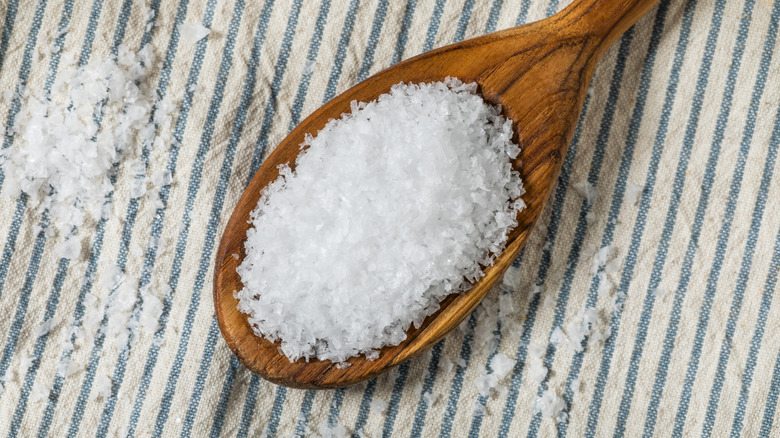
As any seasoned cook can tell you, salt matters. Without it, steaks are bland, caramels are too sweet, and baked goods are boring. However, it is important that you choose the right salt for your cooking goals. While all salt has the same basic chemical structure (cooking salts are sodium chloride across the board), they do vary in texture and potency. For example, you might have noticed that flaky salt tastes much less salty than your typical table salt. But why is this?
It comes down to a few key factors. For one, the crystals that make up table salt are small, uniform, and dense. This makes it much more potent, especially when you're salting by volume. Plus, its small crystals cause it to dissolve really quickly, making it easy to oversalt food. Flaky salt, on the other hand, consists of larger, thinner — you guessed it — flakes. Because flaky salt is so thin, it's dense than table salt, so it doesn't pack the same saline punch. Plus, flaky salt lacks the metallic-tasting iodine that table salt has. This gives it a more clean, mild taste that makes it loved by foodies the world over.
How to use your flaky salt
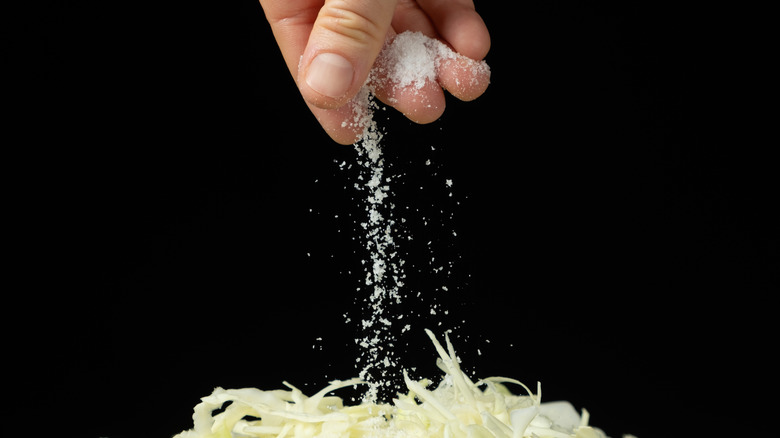
Thanks to flaky salt's thin, flat structure and light, mild taste, it makes a great finishing touch and topper for many dishes. It is also known as finishing salt for this reason. Here, its lower potency is a benefit, allowing cooks to add the perfect salty touch without worrying about oversalting a dish. Plus, its large, flat flake shape makes it a more visually appealing option than other salts, such as table salts. This shape also makes for easier eating, as you won't be met with any overwhelmingly salty chunks, as might happen if you topped a dish with table or kosher salt.
Flaky salt makes a visually stunning topper for cookies (think a salty-sweet chocolate chip cookie), candies, such as chocolate truffles or caramels, and cupcakes. You can also use it to rim your cocktail glass if you want something more delicate than kosher salt. Or, you can use it as a finishing salt for most any cooked dish, from steak to pasta and more.
And not just any kosher salt will do. Many culinary experts, including Alton Brown and Ina Garten, prefer Diamond Crystal brand kosher salt, which tends to have a less dense, more pinchable texture than other brands, such as Morton. For even more pizzazz, try adding flavored flaky salt to give even more taste to your finishing touch. Flavored flaky salts can be spicy, savory, smoky, herbaceous, and even a little fruity. So you can customize your salt to fit your dish.
When to skip the flake
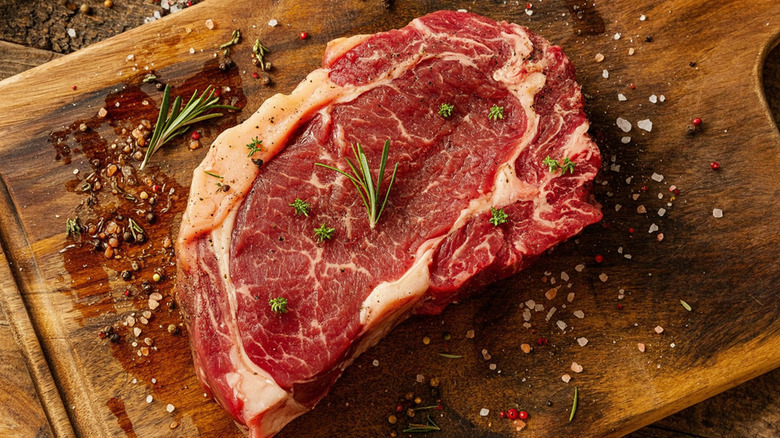
Flaky salt makes for a deliciously stunning final touch to dishes both sweet and savory. However, this doesn't mean that using flaky salt is always the best choice. For example, if you're salting meat in preparation for grilling or cooking, you should opt for kosher salt, as it is both less expensive (you'll need more than a pinch for large portions of meat) and tends to dissolve more slowly, allowing for moisture to be drawn out properly.
You might want to avoid flaky salt when baking, especially since many baking recipes, such as cakes and cookies, require precise measurements for cooking. In these instances, table salt might be your best bet, as it tends to disperse more evenly in your batter or dough than either flake or kosher salt. If you want to avoid using table salt, follow Alton Brown's advice and blend your kosher salt to a fine powder. This allows for more even results in baked goods.