

Are Grocery Store Lobsters Honestly Any Good? Here's What You Should Know
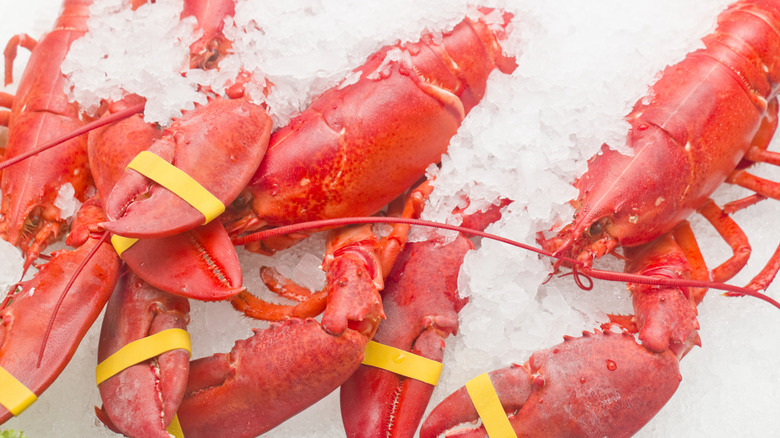
Lobsters were once considered food for the poor. As a matter of fact, they were incredibly abundant in the 17th and 18th centuries. Not only were they fed to servants and prisoners, they were also used to feed farm animals, such as pigs and goats. By the 1840s, the dish's status took a wild turn as railroads, canneries, and tourists began reshaping people's perception of it, finally transforming lobster into the luxury food item it is today.
Lobsters are now a staple on most good restaurants' menus, but they're also easy to find at local grocery stores. Still, if you're wondering whether supermarket lobsters are any good, there are a few important red flags to look out for when buying them. There are actually a couple of crucial signs that can help you determine if you're buying a fresh lobster at the grocery store, or if spending about $15 per pound is worth it.
First things first; when purchasing a grocery store lobster, you have to deal with the fact that it doesn't taste the same as a freshly caught one. A store-bought lobster can taste less sweet and become mushier, which largely depends on how the store keeps it. The storage conditions, including the quality and temperature of the water in the tank, have a massive impact on its flavor and texture. The shipping process also matters. Lobsters kept too long in transit or poor conditions can eventually become stressed, and lose quality.
There's no way to know how long lobsters have been stored
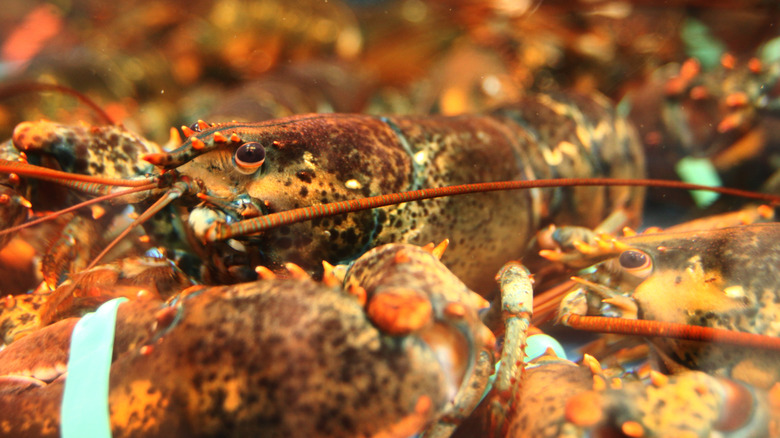
When it comes to grocery store lobsters, you can never be sure how much time has passed since they were actually caught. In some cases, they can spend months in wholesaler facilities before being shipped out. What's even worse is that, once they arrive at the grocery store, they can remain inside the tanks for another two weeks or more. Meanwhile, the tanks at most supermarkets are frequently overcrowded. In certain cases, the lobsters are even displayed alive on ice. This not only puts the animals under a significant amount stress, it also impacts their overall quality and health.
Adequate storage is essential because once a lobster dies, it needs to be cooked within 12 hours. Without proper handling, bacteria inside the lobster can quickly begin to spread and release toxins that make the flesh not only unpleasant, but also unsafe for consumption. While grocery store lobsters can be good, it all depends on their handling standards. Ultimately, if your fishmonger can't confirm the lobster's origin or its shell stage then you need to stop shopping for lobsters immediately.
Keeping live lobsters in a tank isn't a simple task. It requires strict monitoring and carefully controlled conditions. The water needs to be oxygenated, properly salted and maintained between 40 and 50 degrees Fahrenheit. In addition, the tanks need to be frequently filtrated to handle the lobsters' waste. If these basic standards aren't met, it might be best not to come back.