

Why Ordering The Whole Pig Is The Smartest Way To Buy Pork
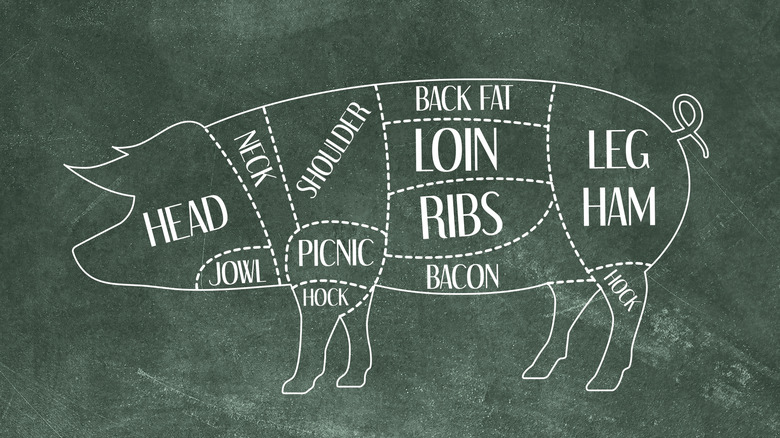
When you go to the grocery store, value is likely always near the top of your list of priorities. Especially if you're shopping for a family, making sure that you get reliable, affordable essentials that deliver on quality as well as price is an absolute must. For some ingredients, this is as simple as heading to your local grocery store and buying in bulk — but that's not the easiest when it comes to meat. If you're planning on cooking or freezing a whole bunch of meat, then it's going to cost you a pretty penny — but with a little skill in butchery (and a healthy dose of bravery,) you can get the best value pork possible with one simple change: Buy the whole pig!
While this may sound like a slightly scary prospect, buying a whole hog can be a really sensible decision — you get far more meat for your money, and you'll pick up some fun new culinary skills along the way. This is actually a trend that's been on the rise for a while now, since the pandemic made buying in bulk a more attractive proposition than ever. A pig from the butcher will likely be raised slower, and better, and as such will almost certainly be tastier than meat from a big box store like Costco or a larger grocery store.
Buying a whole pig also means that you'll be getting everything — not just the popular cuts like butt and belly that you'll likely be familiar with. The pig is one of the most delicious animals out there, and from nose-to-tail, almost everything on it is tasty as well as more sustainable.
Why buying a whole pig can be cheaper by the pound
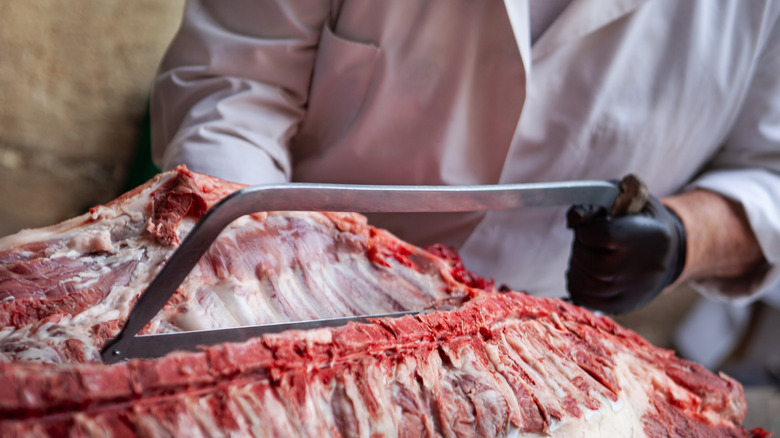
The obvious plus when it comes to buying a whole pig is the economics of the thing. When you buy pork from the supermarket, you're not just paying for the meat. You're also paying for things like the retail markup, packaging costs, the transportation of the pork from processing centers — as well as the rearing and processing of the pig, of course. You're also paying the cost of inflation on those more popular cuts like the pork belly, ribs, and shoulder. Buying from a butcher bypasses many of these costs, and you can be sure that your money is going towards good quality meat. Many butchers' suppliers are a lot more transparent about where their meat actually comes from — plus without the industrial machinery associated with buying meat from the grocery store, more of your cash will be going to the pork itself.
You'll also be maximizing the yield you get out of a single pig. Up to around 75% of a hog can end up being usable for eating and cooking, which can add up to around 150 pounds or more of meat (via University of Wisconsin-Madison Extension). Of that meat, some of it will be the premium cuts you're probably familiar with — pork chops, tenderloin, and the classics we mentioned earlier — but you'll also get plenty of minced pork (perfect for stir fries like a crispy Pad Kra Pao) as well as underrated cuts like hog jowl, and bones, which you can roast to make a delicious pork stock — and are also ideal for freezing! Butchers can also often give you a customized breakdown of the pig, so you can request the degree to which you'd like the prep done for you.