

This North Carolina Whiskey Brand Is Dedicated To Regenerative Agriculture
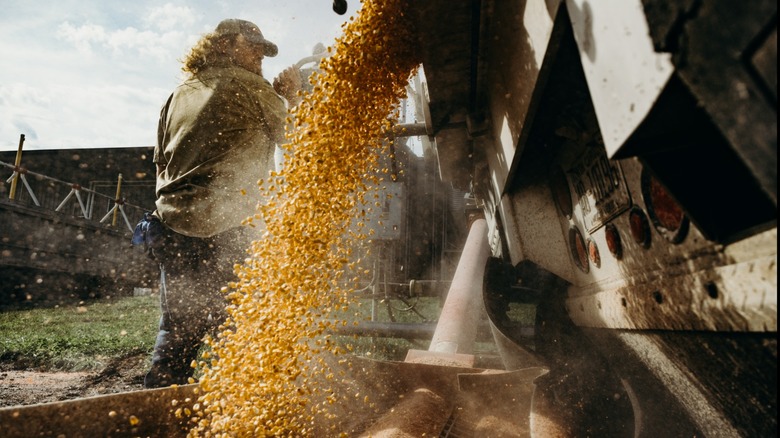
The city of Statesville, North Carolina, was once home to a massive whiskey industry built by small local farmers. Today, Pete Barger and his wife, Vienna, who own Southern Distilling Company, one of the Tar Heel State's best-known (and fastest-growing) distilleries, are reviving this city's boozy past by investing in the future. Southern Distilling sources nearly all its grains from local farms that practice regenerative agriculture to produce farm-to-bottle whiskey, including its award-winning Southern Star Paragon Wheated Straight Bourbon and Hunting Creek Straight Rye Whiskey. "The reason alcohol production thrived here more than a century ago — abundant water resources and strong access to fermentable crops — is the same reason it makes sense today," Pete Barger told Chowhound.
Regenerative agriculture is a sustainable approach to farming that eschews synthetic chemicals and instead uses practices like crop rotation, sowing cover crops to restore nitrogen, and forgoing soil tillage, according to Barger. These techniques keep the soil nutrient-rich and able to retain more moisture, while also preventing soil erosion. "In many ways, regenerative agriculture is a return to generational farming wisdom, using nature's own cycles rather than industrial shortcuts," Barger said. "It's about long-term stewardship instead of short-term yield." And while this is great for the land, it's also a win for the Bargers' whiskey. "By using regenerative and sustainable practices, we produce higher-quality grain, which leads to better fermentation, more consistent distillation, and ultimately a better final product."
Sustainability beyond the farm
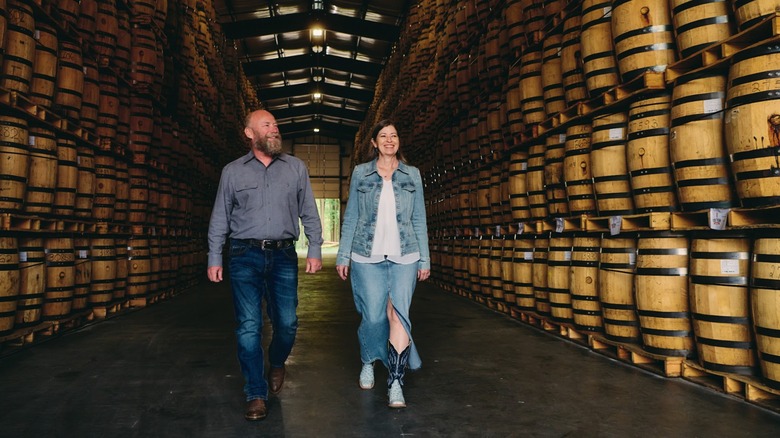
Rather than sourcing its grain from multinational suppliers that use industrial farming methods, the Southern Distilling Company gets around 90% of its grains from in-state contract growers who use regenerative farming practices. This means better quality control. The Bargers work hand in hand with farmers who either already practice this type of farming or are willing to employ these sustainable methods. The brand has grown so much that the company has outstripped the state's capacity to produce malted barley and rye and is currently sourcing these grains from Montana, according to Pete Barger.
Beyond using regenerative farming for its mash bills, the distillery employs other sustainable practices that directly support local agriculture and healthier soil. The spent grains are used as cattle feed, and other organic matter from the distilling process benefits the land as a soil amendment. "By recycling outputs from one stage into inputs for another, we create a closed-loop system that reduces waste, conserves resources, and strengthens the entire agricultural ecosystem," Barger said. The result is a win-win for local agriculture and for the Bargers' whiskey and bottom line.
The proof is in the product
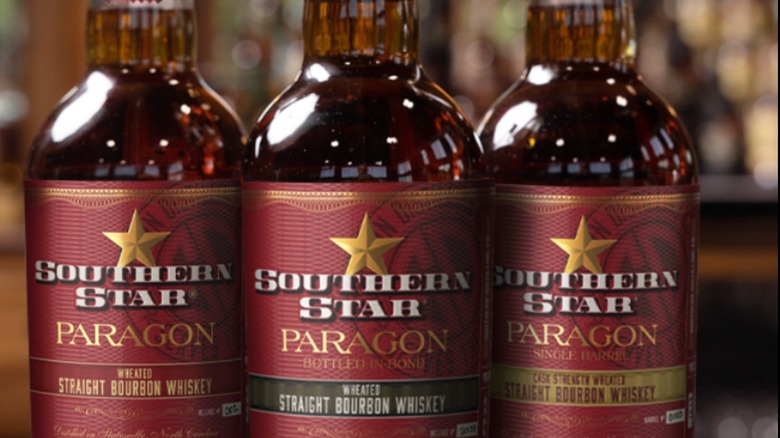
Pete Barger strongly believes using grains grown sustainably produces a better bottle of whiskey and the prestigious San Francisco World Spirits Competition agreed. In 2024, the distillery took home four awards, including double gold for its Paragon Wheated Straight Bourbon Cask Strength, proving that while Kentucky may be the bourbon capitol of the world it's not the only state with fantastic bourbon. Another award winner from 2024 (and a favorite of ours) is the company's Double Rye, a blend of two of its rye whiskeys aged in bourbon barrels and bursting with rye spice, brown sugar, and citrus. The distillery also released a limited-edition American single-malt, the newly designated whiskey category made from 100% malted barley, to great acclaim in 2025. Also in 2025, the American Distilling Institute, a craft distillery organization, named the company "Distillery of the Year."
Pete and Vienna Barger have an abiding love for the history of Statesville, where they're based. In the 1800s, it was known as the "Liquor Capital of the World." Companies relied on local farmers for their grains, but Prohibition, which came into effect across North Carolina in 1909, destroyed the industry. However, it wasn't a harking back to the past that drove the Bargers' decision of where to procure their grains. "We source locally not because of nostalgia, but because it produces a superior product," Barger said. "Working closely with North Carolina growers gives us better quality control, stronger consistency, and a competitive advantage." That's worth toasting.